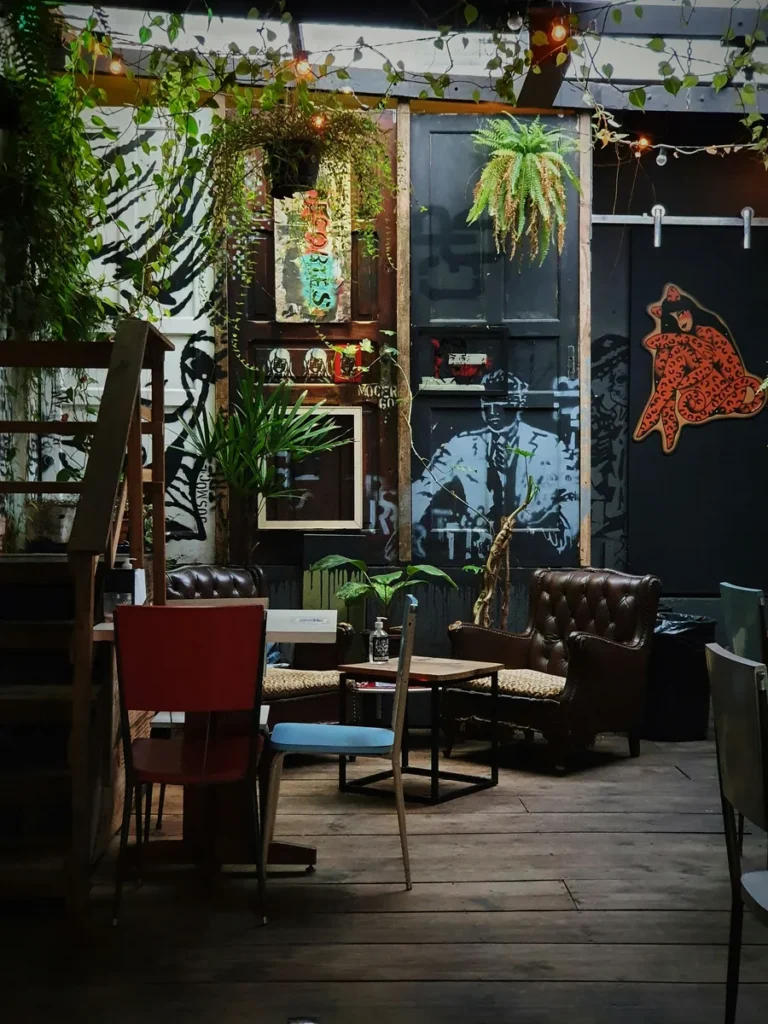

Why Small Restaurants Demand Integrated Thinking
Designing and building a small restaurant is one of the most demanding challenges in the hospitality sector. Limited square meters, tight budgets, strict regulations, and intense operational needs leave little room for error. Unlike large venues, small restaurants cannot hide mistakes behind scale.
In successful small-scale restaurants, architecture, construction, and interior design must operate as one system. Every decision—structural, spatial, material, or aesthetic—directly affects workflow, guest experience, and financial performance.
When done correctly, a small restaurant can feel intentional, memorable, and profitable. When done poorly, it can feel cramped, inefficient, and expensive to fix.
Architecture: Shaping Identity and Function from the Start

Architecture as the Framework of Experience
In small restaurants, architecture is not just about form—it is about organization. The layout determines how guests move, how staff work, and how efficiently the restaurant operates.
Key architectural priorities include:
- Clear separation between front-of-house and back-of-house
- Efficient circulation for staff
- Logical zoning of seating, kitchen, service, and storage
- Maximizing usable space without overcrowding
A strong architectural layout solves problems before interior design begins.
Street Presence and First Impression
For small restaurants, the façade is a critical marketing tool. Architecture must:
- Clearly communicate the restaurant’s concept
- Be visible and inviting from the street
- Balance openness with intimacy
Even minimal architectural gestures—door placement, window proportions, signage integration—can significantly impact foot traffic and perception.
Construction: Precision, Compliance, and Cost Control
Why Construction Is Especially Critical at Small Scale
In small restaurants, construction tolerances are tight. A few centimeters lost to poor execution can affect seating count, circulation, or kitchen functionality.
Construction teams must work with:
- Exact measurements
- Clear detailing
- Strict sequencing
Errors are harder to absorb and more expensive to correct.
Regulatory and Technical Constraints
Small restaurants are subject to the same regulations as larger venues, including:
- Fire and life safety
- Ventilation and extraction
- Food safety and hygiene
- Accessibility requirements
Early coordination between architecture, construction, and MEP systems is essential to avoid redesigns and delays.
Budget Discipline and Buildability
Construction decisions must always be aligned with budget reality. Overly complex details, custom solutions, or unsuitable materials can quickly exceed financial limits.
Successful small restaurant construction focuses on:
- Simple, robust construction systems
- Durable finishes
- Clear construction documentation
- Efficient build-out timelines
Buildability is as important as design intent.
Interior Design: Atmosphere Without Excess
Designing for Emotion and Comfort
Interior design in small restaurants is where architecture becomes emotional. Guests may not analyze details, but they feel:
- Proportions
- Lighting
- Acoustics
- Material warmth
Good interior design creates atmosphere without overwhelming the space.
Seating Strategy: Comfort vs Capacity
One of the most critical interior design decisions is seating layout. Increasing capacity at the expense of comfort often backfires.
Key considerations:
- Comfortable spacing between tables
- Clear circulation paths
- Flexibility for different group sizes
- Acoustical comfort
In small restaurants, quality of experience often outweighs maximum seat count.
Lighting as a Spatial Tool
Lighting is one of the most powerful—and underestimated—elements in small restaurant interiors.
Effective lighting design:
- Defines zones without walls
- Enhances materials and food presentation
- Creates intimacy
- Adapts from day to night
Overly bright or poorly positioned lighting can destroy atmosphere, regardless of how well the space is designed.
The Kitchen: Where Architecture, Construction, and Design Must Align
Function Before Aesthetics
In small restaurants, the kitchen often occupies a significant percentage of total area. Its design must prioritize:
- Workflow efficiency
- Health and safety compliance
- Ventilation and heat control
- Ease of cleaning and maintenance
Even in open kitchens, aesthetics should never compromise performance.
Relationship Between Kitchen and Dining Area
The connection between kitchen and dining space influences:
- Service speed
- Noise levels
- Guest perception
Careful architectural and interior design coordination ensures the kitchen supports the dining experience rather than disrupting it.
Material Selection: Durability Meets Identity
Materials That Perform Under Pressure
Small restaurants experience high wear in concentrated areas. Material selection must consider:
- Durability
- Ease of cleaning
- Resistance to moisture and heat
- Availability of replacements
Choosing the wrong materials can significantly increase long-term maintenance costs.
Expressing Concept Through Materials
Materials are also storytelling tools. Wood, stone, metal, tile, or plaster can express:
- Cultural identity
- Culinary philosophy
- Price positioning
The key is consistency and restraint, not excess.
Integration: Why Coordination Is Non-Negotiable
One Vision, Multiple Disciplines
Small restaurant projects benefit enormously from early integration between:
- Architect
- Interior designer
- Construction team
- Kitchen consultants
This coordination reduces conflicts, improves cost control, and accelerates delivery.
Design-and-Build Advantage at Small Scale
Integrated design-and-build approaches often work particularly well for small restaurants because they:
- Reduce communication gaps
- Allow faster decision-making
- Align design ambition with construction reality
For owners and investors, this means lower risk and better predictability.
Common Mistakes in Small Restaurant Projects
What to Avoid
- Designing without understanding kitchen operations
- Prioritizing aesthetics over comfort
- Overcomplicating construction details
- Ignoring acoustics
- Underestimating regulations and approvals
Most failures in small restaurants are not conceptual—they are practical.
Small Restaurants Reward Precision
Small-scale restaurants demand discipline, clarity, and collaboration. Architecture sets the framework, construction delivers precision, and interior design creates emotion—but only when all three work together.
Successful small restaurants:
- Use space intelligently
- Design for operations and guests equally
- Control costs through smart construction choices
- Build atmosphere through proportion, light, and material
In small restaurants, nothing is secondary. Every decision is visible, every mistake is felt, and every success is amplified.
When architecture, construction, and interior design are aligned, small spaces can deliver big experiences.