The First Step: Entering Space, Not Just a Street
You step outside with no destination in mind. No schedule, no urgency. Just a walk.
Almost immediately, architecture begins to speak—not loudly, not in words, but through sensation. The height of the buildings narrows or opens the sky. The pavement changes texture beneath your feet. Light reflects, absorbs, flickers. You are no longer simply in the city; you are inside a sequence of spaces carefully—or sometimes accidentally—shaped around you.
Architecture is not something you only look at. It is something you move through, breathe within, and feel without realizing you are doing so.
Scale: When Buildings Speak to the Body
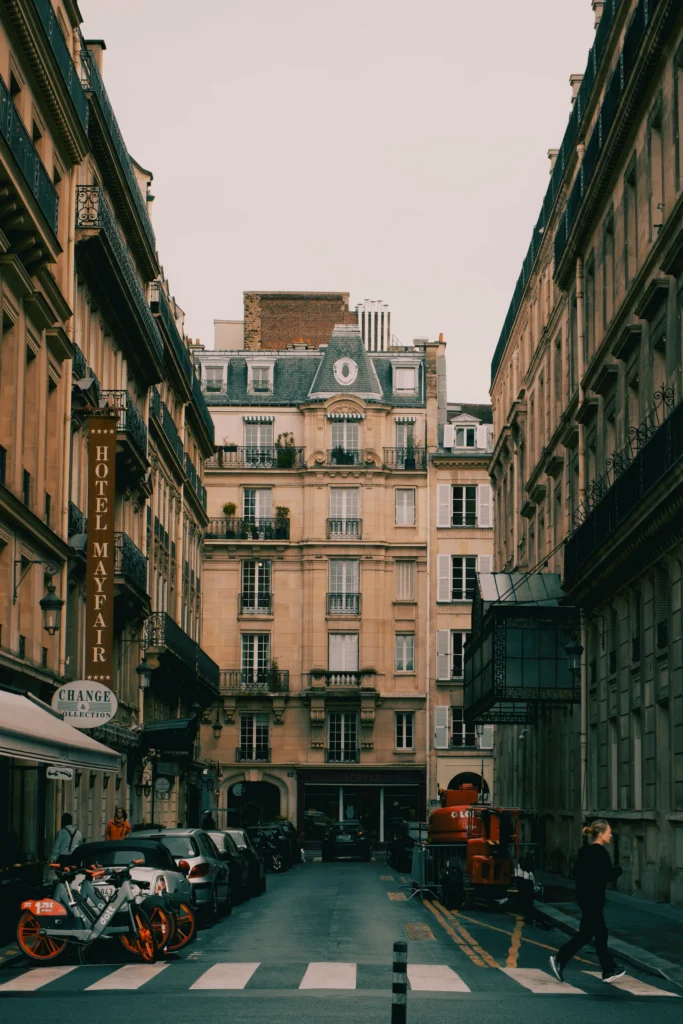
As you walk, scale is the first thing your body understands.
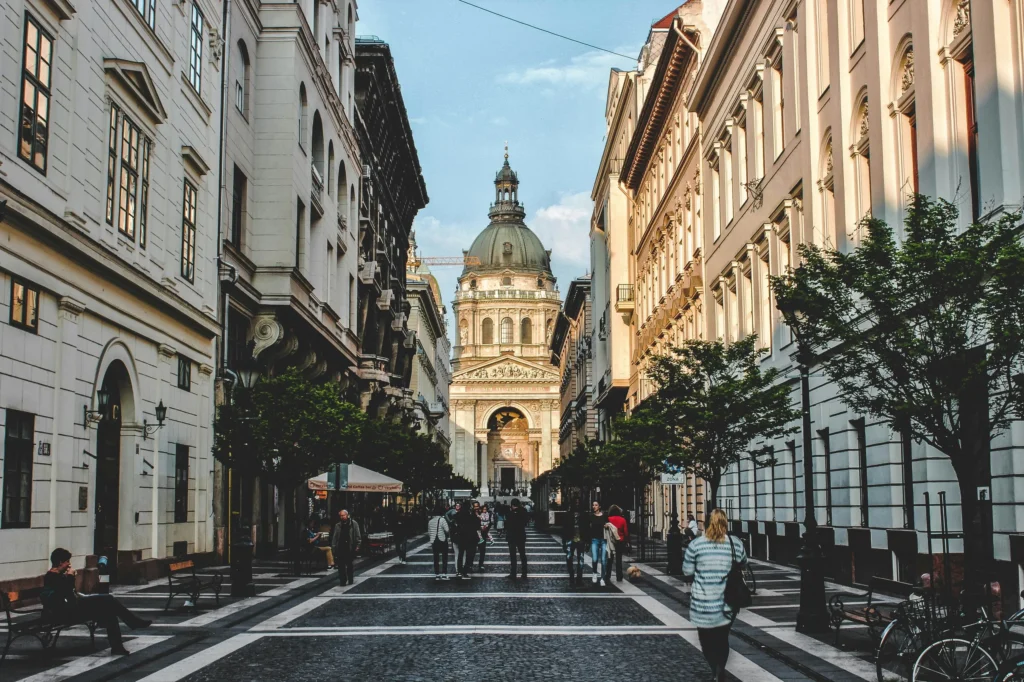
A narrow street pulls you inward. Your shoulders draw slightly closer together. Your pace slows. You feel protected—or watched. A wide boulevard does the opposite: it stretches your stride, lifts your head, invites movement and visibility.
You don’t calculate proportions, but your body does. Architecture constantly negotiates with your sense of comfort:
- Too tall, and you feel small.
- Too wide, and you feel exposed.
- Just right, and you forget the buildings entirely—and that is often the point.
Good architecture does not demand attention. It supports presence.
Materials: Touching with the Eyes
As you walk, your eyes read materials the way fingers read surfaces.
Stone feels cool even before you touch it. Wood suggests warmth and age. Concrete can feel heavy, honest, or oppressive, depending on how it meets the light. Glass reflects you back at yourself, reminding you that you are part of the scene.
Older materials often carry memory. Weathered walls, chipped edges, softened corners—they speak of time and use. New surfaces feel sharper, more precise, sometimes distant.
Your emotional response is immediate and physical. Architecture becomes a sensory language you understand instinctively.
Light and Shadow: Architecture as a Moving Experience
Light is never static when you walk.
A building casts a shadow that shortens as you approach, then disappears behind you. A sudden opening floods the street with brightness. Balconies, cornices, and overhangs break sunlight into fragments that shift with every step.
Architecture choreographs light like a silent guide:
- Dark passages feel intimate or tense.
- Bright spaces feel open and safe.
- Transitional zones slow you down without asking.
You don’t think about it—but your mood follows the light.
Sound: The Invisible Architecture
Architecture shapes sound as much as it shapes space.
Footsteps echo differently in narrow alleys than on open squares. Voices bounce off stone walls or disappear into soft façades. Traffic hum becomes distant or overwhelming depending on how streets are shaped.
Some places absorb noise, allowing thoughts to surface. Others amplify it, pulling you outward, alert, awake.
On a walk, sound tells you where you are before you fully see it.
Rhythm and Repetition: The Pace of the Walk
As you pass windows, doors, columns, trees, and streetlights, a rhythm forms.
Repetition creates calm. Variation creates curiosity. Sudden breaks make you stop.
Architecture sets the tempo of your movement:
- Long, uniform façades encourage steady walking.
- Irregular patterns slow you down.
- Unexpected details pull you closer.
You realize that your pace is not entirely your own. The city is walking with you.
Memory and Emotion: When Buildings Feel Familiar
Sometimes a street feels familiar even if you’ve never been there.
A stairway reminds you of somewhere from childhood. A courtyard smells like a past summer. A building triggers no specific memory—but a feeling you recognize.
Architecture stores emotion. Not intentionally, but inevitably. People live, wait, argue, celebrate, and grieve within spaces. Those traces linger.
On a quiet walk, you don’t just observe architecture—you resonate with it.
The City as a Companion, Not a Backdrop
A walk changes your relationship with the built environment.
Instead of seeing buildings as objects, you experience them as companions—sometimes gentle, sometimes demanding, sometimes indifferent. The city becomes a participant in your thoughts.
You notice:
- How some places invite lingering
- How others push you through
- How certain corners make you breathe deeper
Architecture shapes behavior not through rules, but through atmosphere.
When Architecture Fails—and You Feel It
Not all architecture supports the human experience.
Some places exhaust you. They rush you, confuse you, or make you feel unseen. Endless blank walls, aggressive scales, lack of shade or seating—your body reacts before your mind explains why.
You shorten your walk. You speed up. You want to leave.
Feeling architecture includes recognizing when space does not care for the people moving through it.
Slowness as a Way of Seeing
To truly feel architecture, you must slow down.
When you walk without urgency, details emerge:
- The curve of a handrail
- The alignment of windows
- The way a tree negotiates space with a building
Slowness turns architecture from background into experience. The city reveals itself not as a composition, but as a living system responding to time, weather, and people.
Architecture Lives at Walking Speed
Architecture is often discussed in drawings, photographs, and theories. But it truly exists at walking speed.
It exists in the way your steps echo, the way your shoulders relax, the way your thoughts wander as streets unfold. You don’t need architectural knowledge to feel it. You only need attention.
A simple stroll becomes a dialogue:
- Between body and space
- Between memory and form
- Between the individual and the city
When you walk with awareness, architecture stops being something you pass through—and becomes something you experience, moment by moment.