Skip to content

Architecture in modern Greece cannot be understood as a simple chronological progression from ancient to contemporary forms. Instead, it functions as a palimpsest, where layers of history, ideology, and social change coexist within the same physical and cultural space. From the enduring presence of classical ruins to the neoclassical revival of the 19th century, the pragmatic modernism of the postwar era, and the environmentally sensitive designs of today, Greek architecture reflects the country’s ongoing negotiation between heritage and modernity.
Modern Greece, established as a nation-state in the 19th century, used architecture as a tool of identity formation, seeking legitimacy through visual references to antiquity while responding to the demands of modernization. This tension-between reverence for the past and the realities of the present-has shaped the built environment in uniquely complex ways. Architecture in Greece is therefore not merely functional or aesthetic; it is deeply political, symbolic, and cultural.
Ancient Greek Architecture as a Living Presence
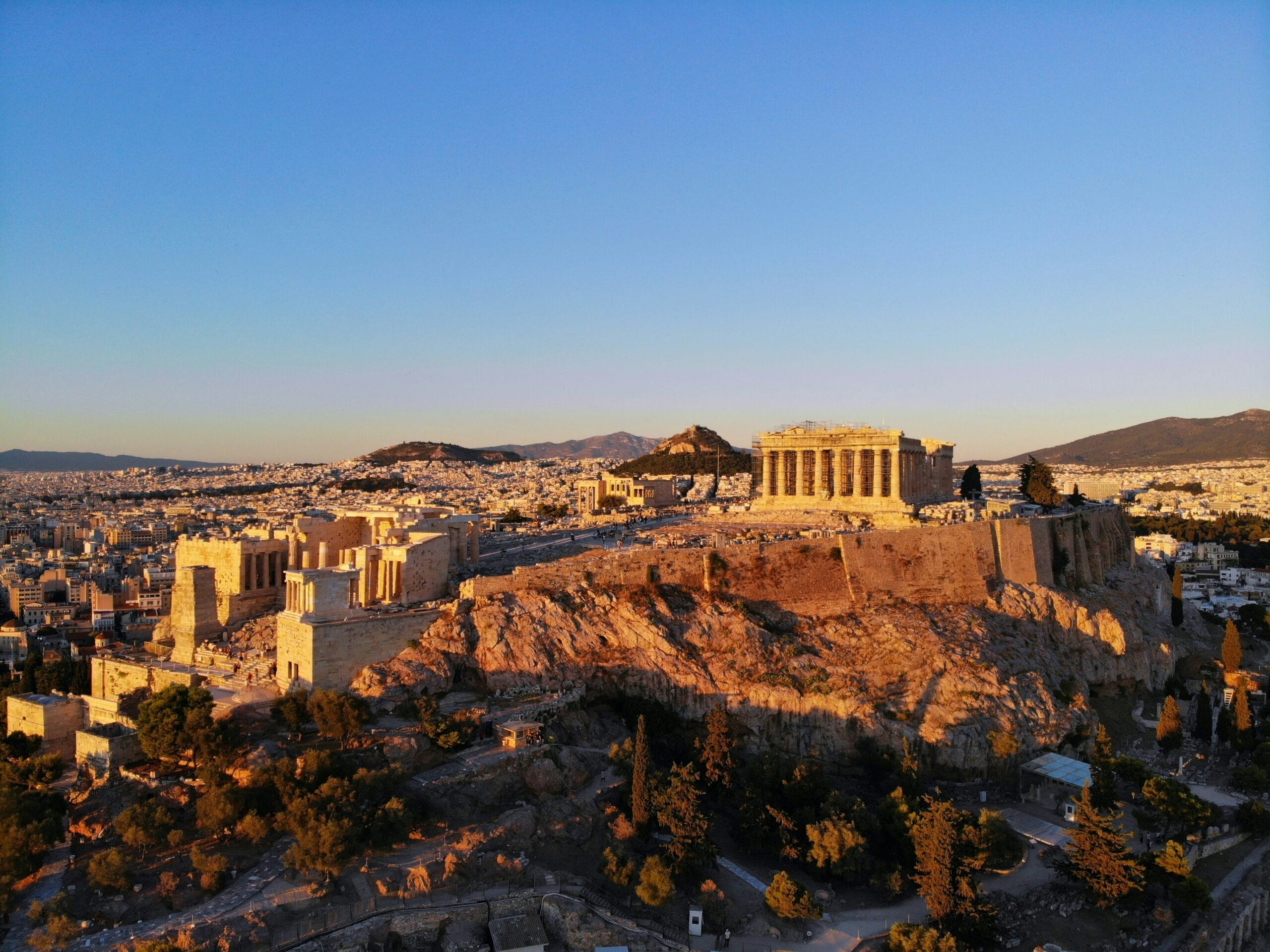
Ancient Greek architecture forms the conceptual foundation of Greece’s architectural identity. Structures such as the Acropolis and the Parthenon are not only archaeological monuments but enduring symbols of democracy, rationality, and aesthetic harmony.
Key characteristics of ancient Greek architecture include:
- Mathematical proportion and symmetry
- Structural clarity
- The classical orders: Doric, Ionic, and Corinthian
- Architecture as a civic and ethical expression
Unlike many countries where ancient ruins are isolated from daily life, in Greece they remain embedded within the modern city, especially in Athens. The visual dominance of the Acropolis continues to influence urban planning restrictions, sightlines, and architectural discourse. This creates a condition where contemporary architecture must coexist with, rather than overshadow, antiquity.
Importantly, ancient Greek architecture has also been filtered through modern interpretations. What modern Greeks inherit is not antiquity in its original form, but antiquity as reconstructed, idealized, and mythologized-particularly through Western European scholarship of the Enlightenment.
Neoclassicism and the Architecture of Nation-Building
Following independence from the Ottoman Empire in 1830, Greece faced the challenge of constructing not only a state but a national identity. Architecture played a central role in this process. Neoclassicism was adopted as the official architectural language of the new nation, symbolically reconnecting modern Greece with its ancient past.
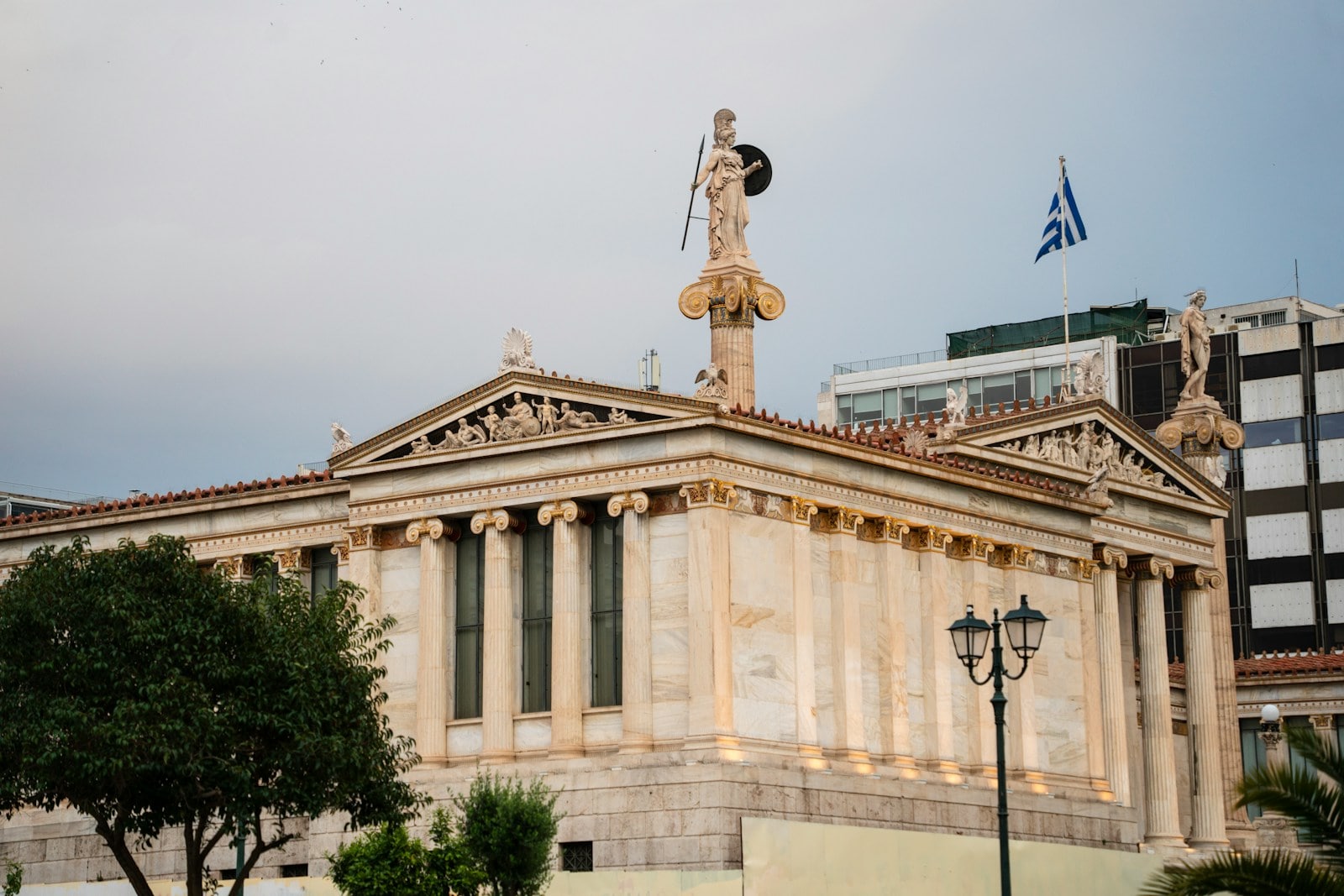
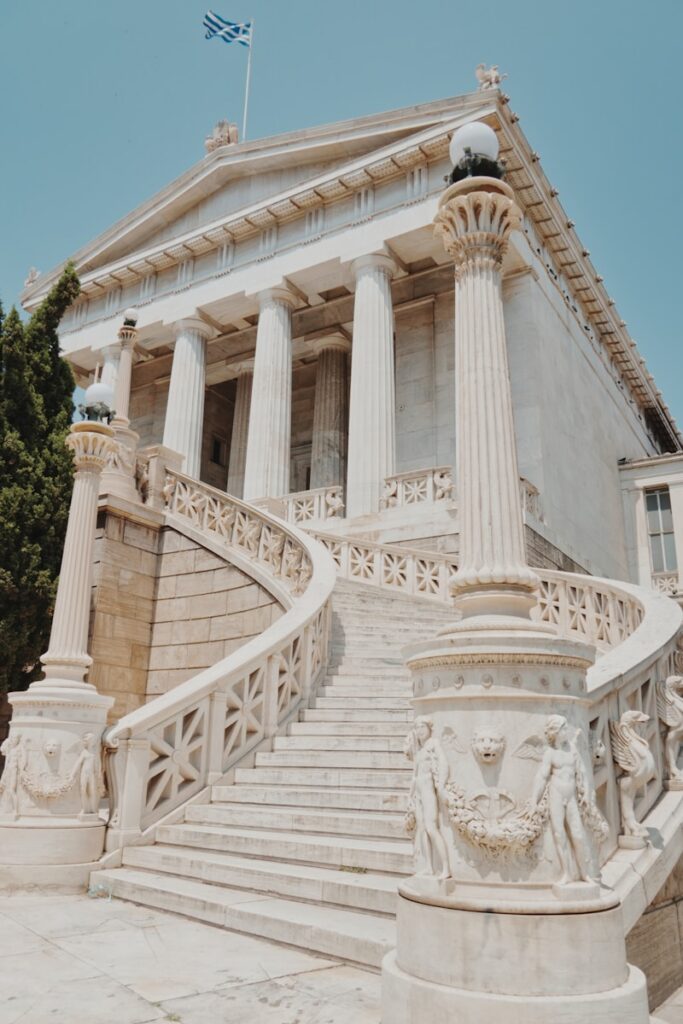
Athens, chosen as the capital, was transformed from a small Ottoman town into a European-style city. Landmark buildings such as the Academy of Athens, the University of Athens, and the National Library of Greece-often referred to as the “Neoclassical Trilogy”-embodied ideals of education, enlightenment, and civic virtue.
Key features of Greek neoclassicism include:
- Monumental façades
- Classical columns and pediments
- Symmetry and axial planning
Adaptation of ancient forms to modern institutions
This architectural movement was heavily influenced by German and French architects, reflecting Greece’s desire to position itself within the European cultural sphere. While neoclassicism successfully projected continuity with antiquity, it also excluded vernacular and Ottoman architectural traditions, revealing how architecture can function as an instrument of selective memory.
Modernism, Urbanization, and the Polykatoikia
The 20th century marked a radical shift in Greek architecture, driven by rapid urbanization, population growth, and economic necessity. After World War II and the Greek Civil War, Athens experienced massive rural-to-urban migration. The result was the widespread construction of the polykatoikia, a multi-story apartment building that reshaped the city’s skyline.
Influenced by European modernism and the ideas of architects such as Le Corbusier, Greek modernist architecture emphasized:
- Functionality over ornament
- Reinforced concrete construction
- Modular housing units
- Efficient use of limited urban land
The polykatoikia system was often built through antiparochi, a uniquely Greek arrangement in which landowners exchanged property rights for apartments. While this allowed rapid housing development, it also led to overcrowding, limited green space, and visual fragmentation.
Despite frequent criticism, these buildings represent a democratic form of architecture, providing housing to millions and shaping everyday urban life. They reflect the social realities of modern Greece more accurately than monumental architecture ever could.
Contemporary Greek Architecture: Landscape, Sustainability, and Minimalism
In the late 20th and early 21st centuries, Greek architecture has increasingly turned toward context-sensitive and sustainable design. Contemporary architects often seek dialogue with landscape rather than historical imitation.
A landmark example is the Stavros Niarchos Foundation Cultural Center, designed by Renzo Piano. The project integrates architecture, parkland, and infrastructure, emphasizing environmental performance, public space, and visual restraint.
Common characteristics of contemporary Greek architecture include:
- Minimalist forms
- White or exposed concrete surfaces
- Emphasis on natural light and ventilation
- Integration with topography and climate
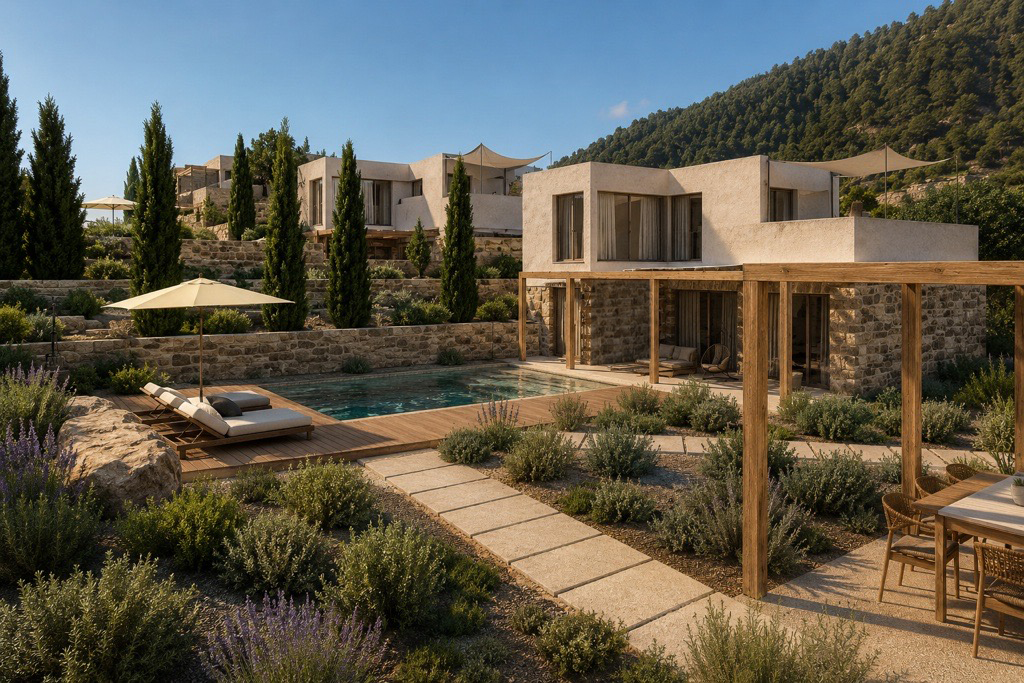
On the Greek islands, modern architecture often reinterprets vernacular forms-flat roofs, cubic volumes, thick walls-using modern materials and techniques. This approach avoids nostalgia while maintaining a strong sense of place.
Architecture, Identity, and Cultural Memory
Architecture in modern Greece operates as a cultural text, encoding values, conflicts, and aspirations. The persistent presence of antiquity creates both inspiration and constraint. While classical heritage provides symbolic capital, it can also inhibit experimentation by imposing aesthetic expectations.
At the same time, Greece’s architectural identity remains plural rather than singular. Ancient ruins, neoclassical monuments, modernist apartments, and contemporary minimalist structures coexist, often uneasily, within the same urban fabric. This coexistence reflects Greece’s historical experience of continuity through disruption.
Rather than seeking architectural purity, modern Greek architecture increasingly embraces hybridity, acknowledging that identity is constructed through layers rather than origins alone.
Architecture in modern Greece is best understood as an ongoing negotiation between memory and necessity, symbolism and function, global influence and local specificity. From antiquity’s enduring presence to contemporary sustainability-driven design, Greek architecture tells a story not of linear progress but of adaptation and dialogue.
This layered architectural landscape mirrors Greece itself: a nation shaped by its past yet continually redefining its place in the modern world. Architecture remains one of its most powerful tools for expressing who it has been-and who it is becoming.