Skip to content
Where Design Begins: Form, Matter and the Art of Looking Closer
Inside the references, materials and unexpected observations that shape the design process at THE ARDE STUDIO®.
Design rarely begins with a drawing.
Before the first plan is made, before dimensions are fixed and materials are specified, there is observation.
A surface noticed in passing.
The proportion of a doorway.
A shadow falling across stone.
A chair seen at an exhibition.
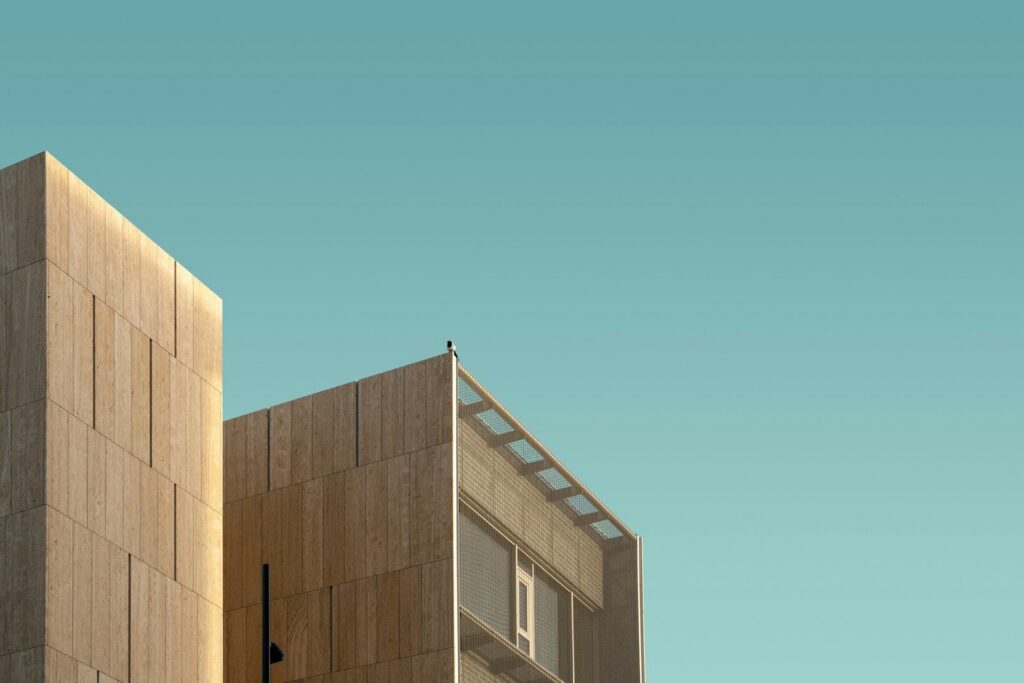
The rhythm of a façade in another city.
Sometimes the starting point is architectural.
Sometimes it is almost incidental.
At THE ARDE STUDIO®, inspiration is less about searching for a single image and more about developing a way of looking.
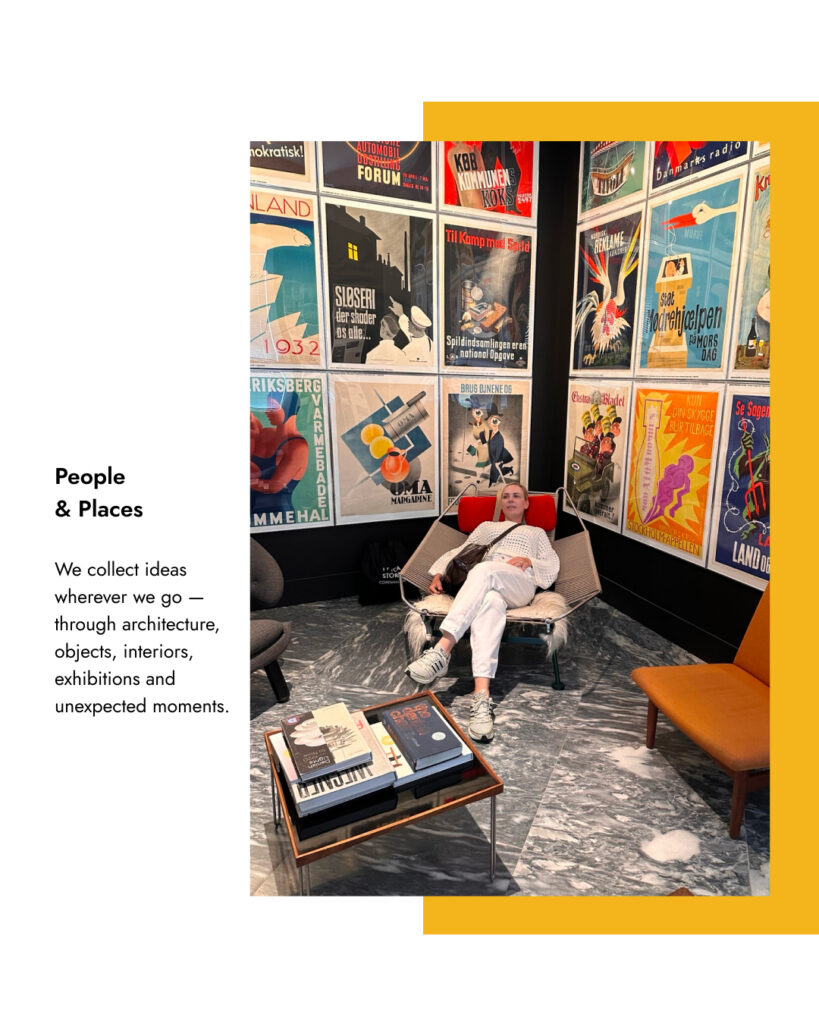
The studio collects references through spaces, objects, materials, colours and details — fragments that may initially have no obvious relationship to a project, but gradually begin to form one.
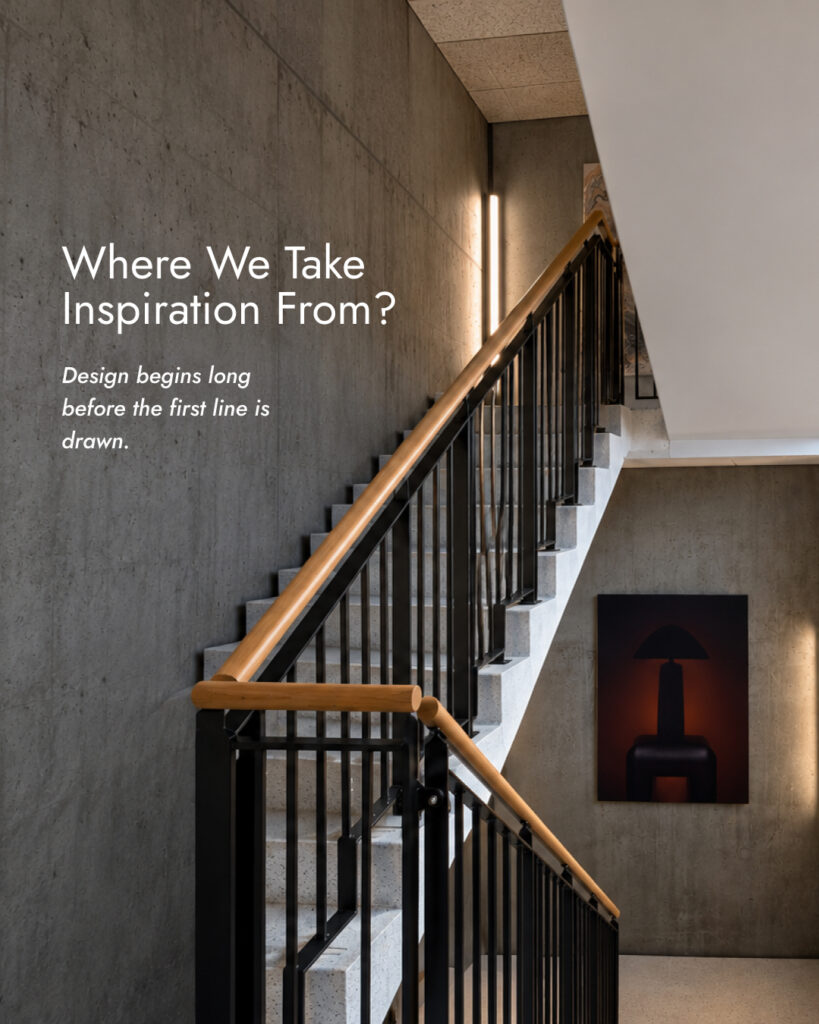
Looking before designing
Architectural ideas do not always announce themselves as architecture.
They can emerge from an exhibition, a piece of furniture, the edge of a material sample or the way two surfaces meet.
During a visit to 3daysofdesign in Copenhagen, for example, the act of looking extended beyond individual objects. The event became a landscape of references: furniture, finishes, compositions, colours and construction details observed together rather than in isolation.
What remains afterwards is not necessarily a particular chair or product.
It might simply be a proportion.
A contrast.
A way of joining two materials.
An idea waiting for another context.
Form is something we experience
A space can be understood through its dimensions, but it is experienced through relationships.
Height against width.
Solid against void.
Repetition against interruption.
Compression followed by openness.
The studio looks closely at proportion, rhythm and composition — not as abstract architectural principles, but as elements that influence the way a person moves through and perceives a space.
A doorway can frame a view.
A ceiling can alter the feeling of intimacy.
A sequence of columns can create rhythm before a single decorative element is introduced.
Architecture often becomes most powerful when these relationships feel effortless.
The geometry may be precise.
The experience should not have to explain itself.
Matter has a memory
Materials are rarely neutral.
Timber carries grain.
Stone records geological time.
Metal changes as light moves across it.
Plaster reveals the hand that applied it.
Textiles soften edges and alter acoustics.
For THE ARDE STUDIO®, texture, imperfection and craftsmanship are not finishing touches added once the architecture is complete. They can become the beginning of an idea themselves.
This is where material research becomes something more than specification.
Samples are touched rather than simply viewed.
Surfaces are placed next to one another.
Finishes are studied under different light.
An unexpected junction can become more interesting than a perfectly controlled one.
The material begins to suggest how the architecture wants to behave.
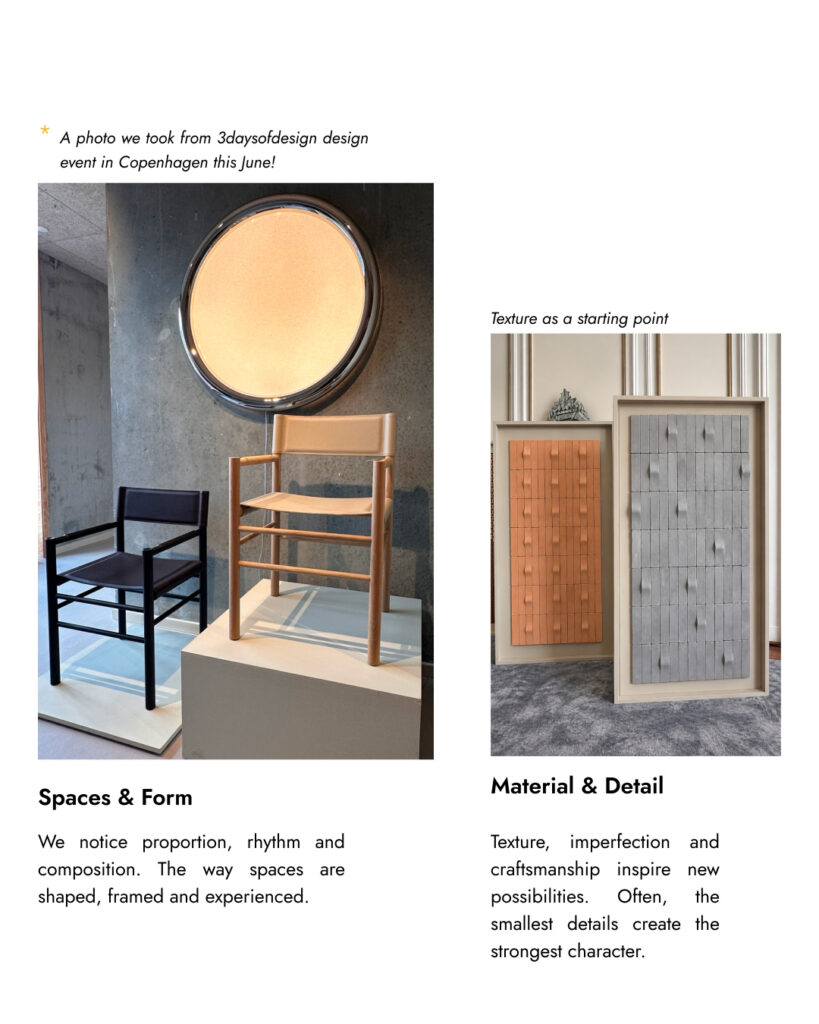
References become conversations
A reference is only the beginning.
Collected images, colours and materials pass through a process of comparison and refinement. What starts as visual instinct slowly becomes a design language.
References become conversations. Colours become palettes. Materials are tested and compared until an idea begins to take shape.
There is an important distinction here.
Inspiration is not replication.
The value of a reference lies in what it triggers.
A colour discovered in one context might later influence joinery.
The proportion of an object may become the starting point for a piece of furniture.
A texture may suggest an entire interior atmosphere.
Design transforms what is observed.
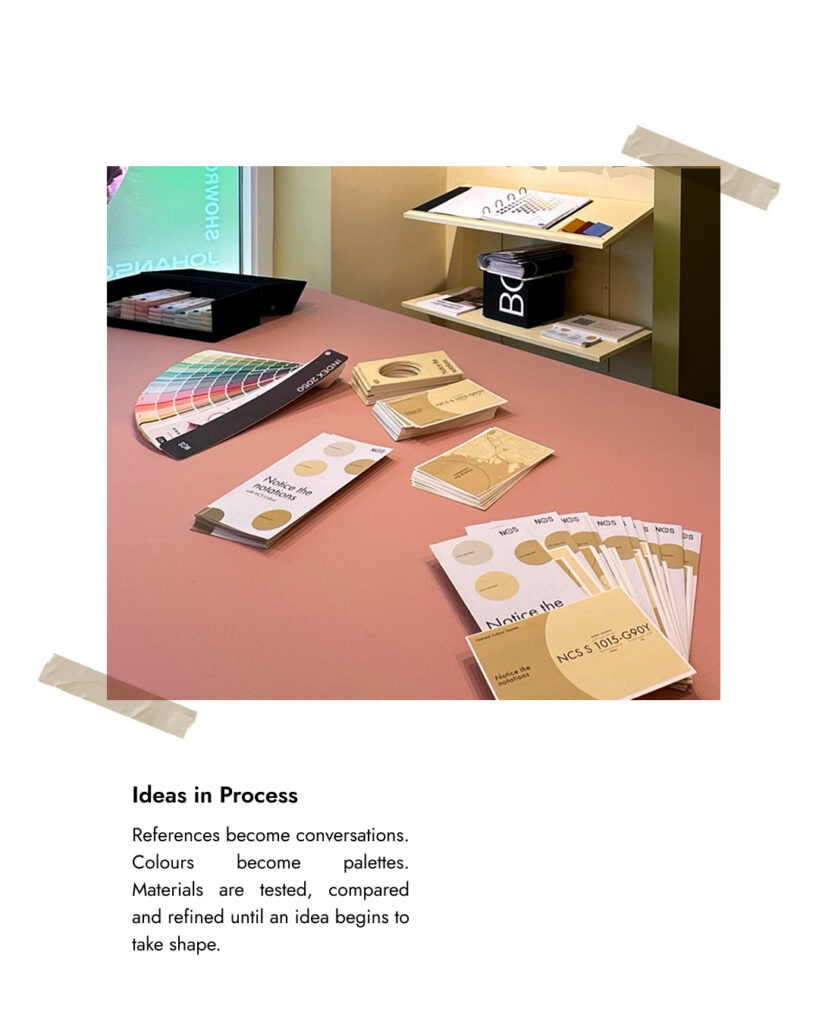
Light completes the material
No material exists independently from light.
The same stone can appear dense in the morning and almost weightless in late afternoon.
Timber becomes warmer.
Metal becomes sharper.
A textured wall changes continuously as shadows move across it.
This is why light is considered alongside material rather than after it.
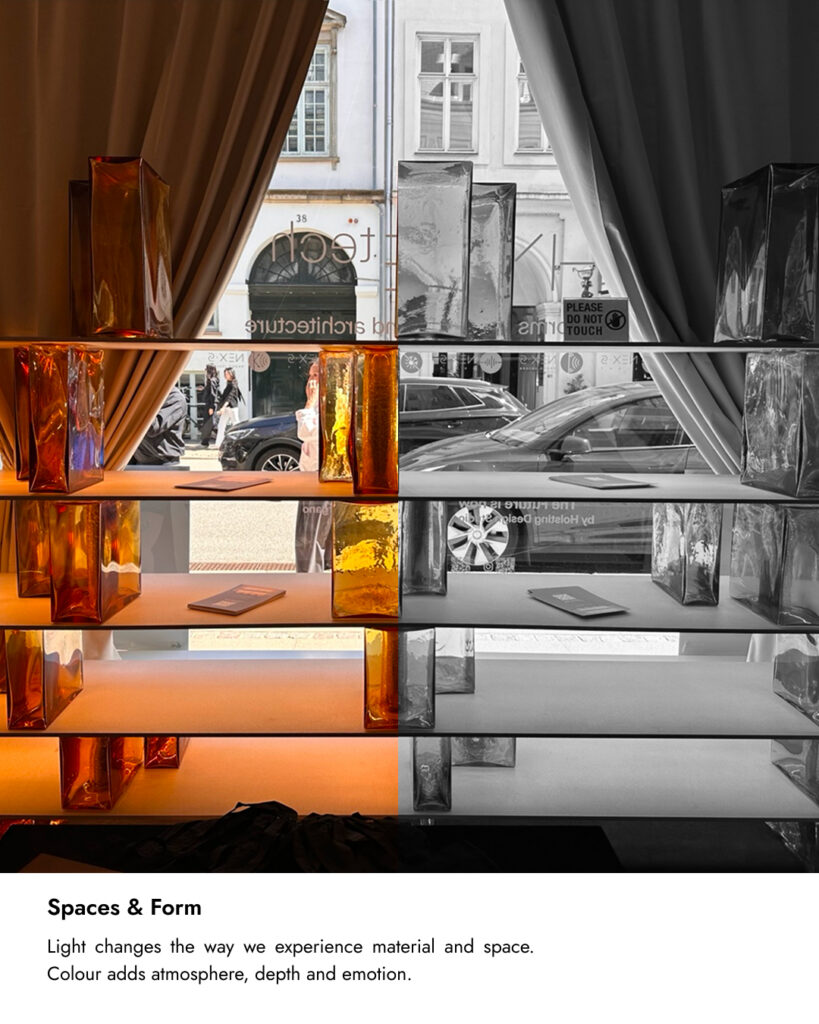
Light changes the way material and space are experienced, while colour introduces atmosphere, depth and emotion.
Architecture provides the structure.
Light makes it temporal.
The space is never exactly the same twice.
Colour is not decoration
Colour often enters a project quietly.
Not necessarily as a painted wall or a deliberately bold gesture, but through the natural tone of stone, the warmth of timber, oxidised metal, fabric or reflected daylight.
A palette can begin with a single observation and develop through repetition, contrast and restraint.
The question is rarely:
Which colour should we add?
It is more often:
What atmosphere should remain?
In this sense, colour becomes architectural.
It can make a space feel grounded or weightless, familiar or unfamiliar, quiet or energetic.
Its role is not simply to be seen.
It is to change how the space is felt.
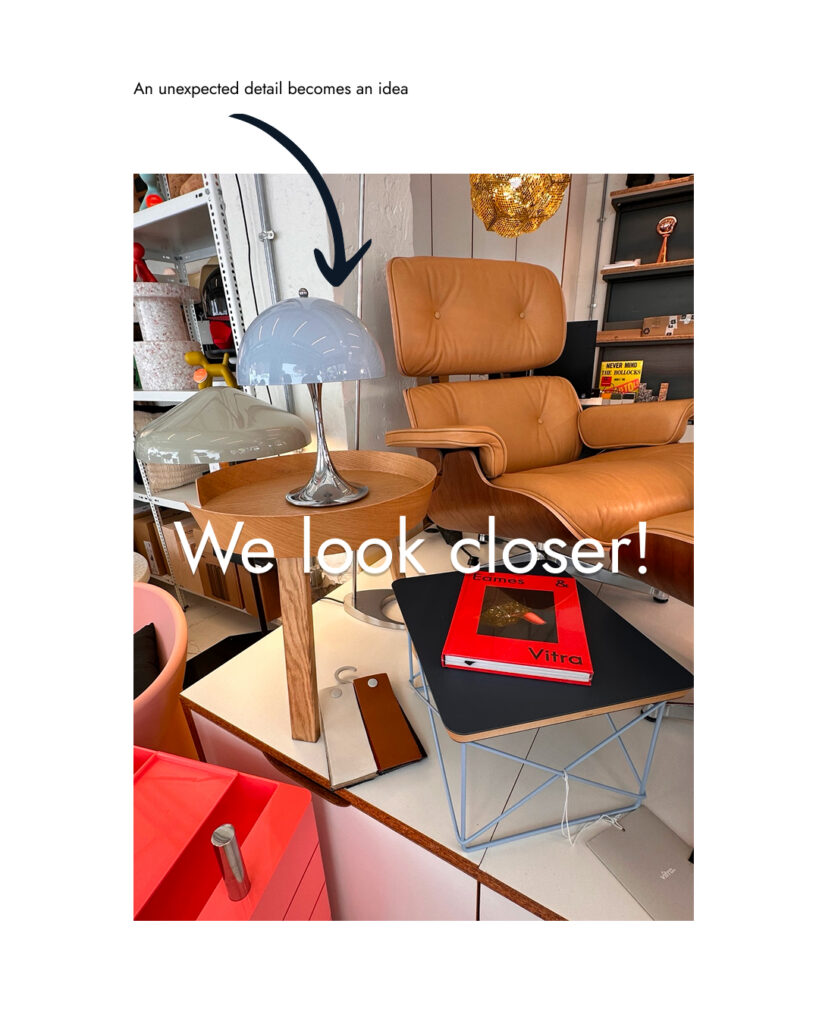
The unexpected detail
Some of the most productive moments in design occur when something does not fit the original expectation.
An imperfect edge.
An unusual construction joint.
A found object.
A material used differently from the way it normally would be.
These moments invite a closer look.
And looking closer is often where a project begins to develop its own identity.
We look closer.
It is perhaps also a useful description of architectural practice itself.
To design is not only to invent.
It is to notice.
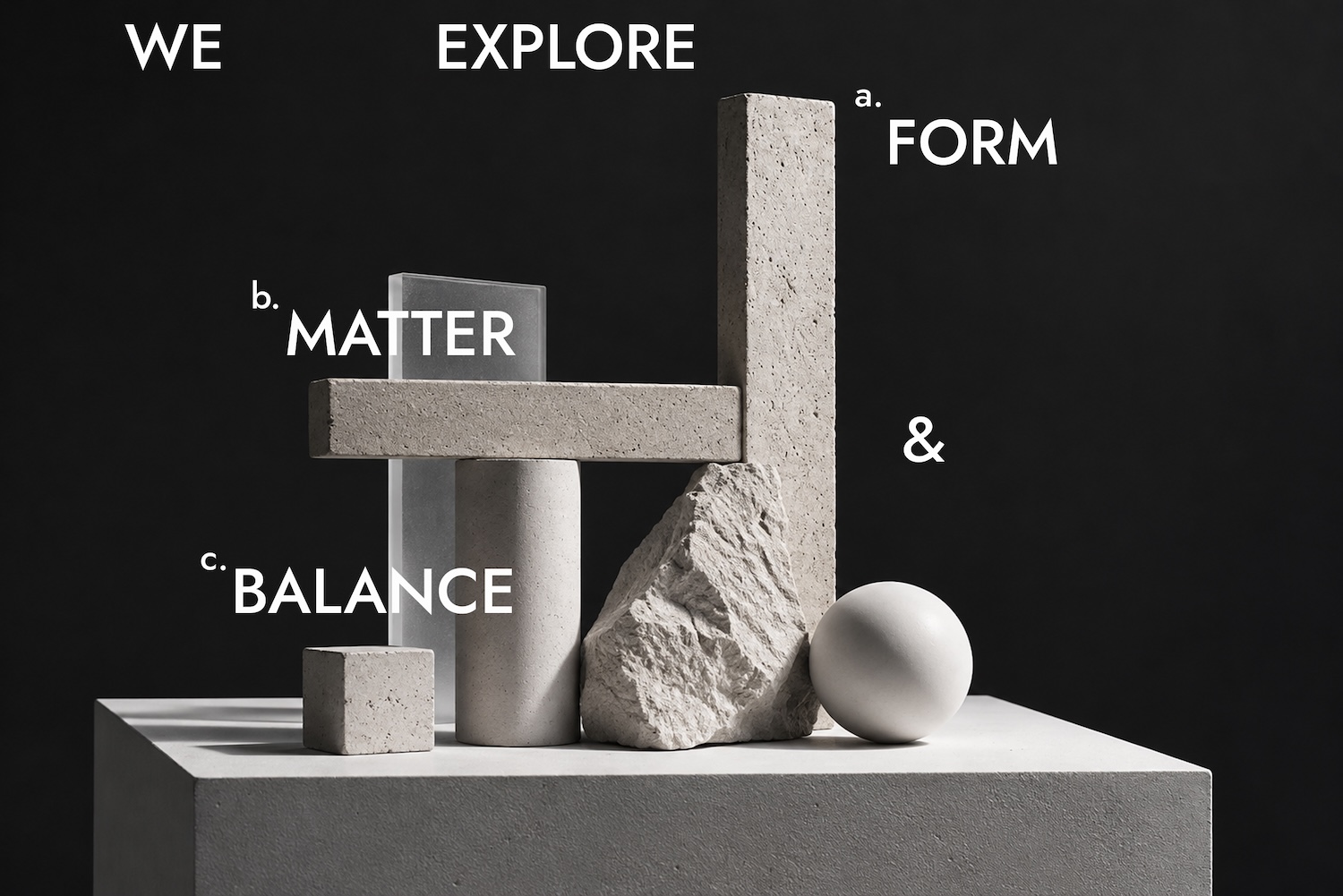
Form. Matter. Balance.
Eventually, the fragments begin to connect.
The proportion observed in one place meets a material discovered somewhere else.
A colour enters the composition.
Light modifies it.
Something is removed.
Something is simplified.
The process moves repeatedly between intuition and precision.
Between form, matter and balance.
Balance does not necessarily mean symmetry.
It may come from tension.
From the relationship between rough and smooth, old and new, heavy and light, precise and imperfect.
Architecture emerges somewhere between these opposites.
Inspiration is not an image. It is a process.
Moodboards eventually disappear.
Samples return to shelves.
Photographs remain somewhere in an archive.
But certain observations stay.
They become part of an evolving visual memory — a vocabulary that continues from one project into the next without producing the same answer twice.
This is perhaps why the question “Where do you take inspiration from?” has no single response.
From buildings.
From objects.
From cities.
From exhibitions.
From materials.
From things deliberately designed and things encountered accidentally.
But most of all, from paying attention.
Because long before architecture becomes a drawing, it begins with the way we choose to see.
THE ARDE STUDIO®
We explore form, matter and balance.