Skip to content

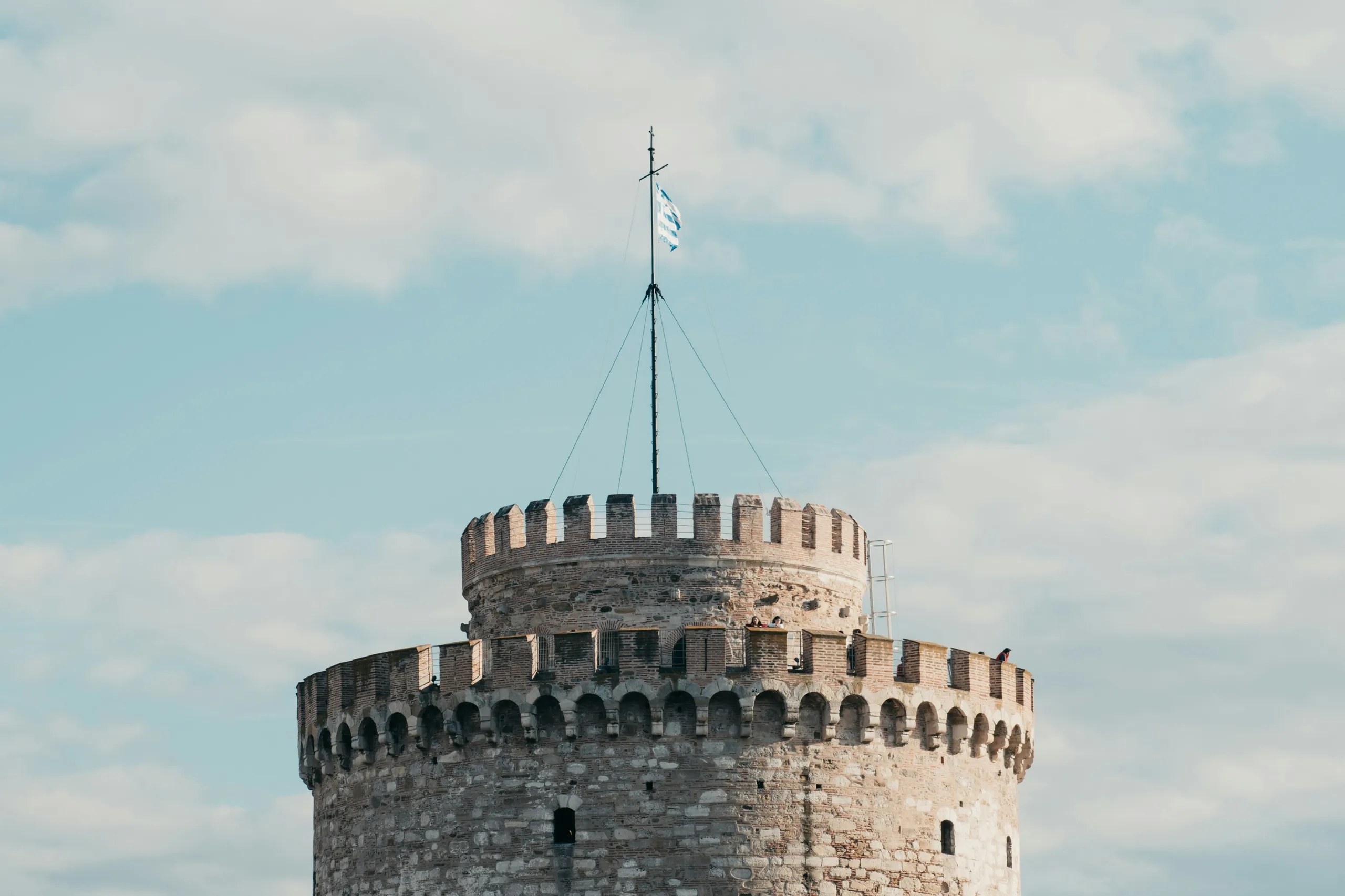
A City That Never Erased Its Past
Thessaloniki is not a city that hides its history. It wears it openly—sometimes proudly, sometimes imperfectly—layered across streets, walls, and buildings that have witnessed more than two millennia of continuous life.
Unlike cities shaped by a single dominant era, Thessaloniki is architectural palimpsest. Roman forums coexist with Byzantine churches. Ottoman structures stand quietly beside neoclassical mansions. Modern apartment blocks rise where once there were courtyards, synagogues, and markets. Architecture here is not linear; it is cumulative.
To walk through Thessaloniki is to move through time.
Roman Foundations: Order, Infrastructure, and Urban Vision
Thessaloniki’s architectural story begins with the Romans, who transformed the city into a major administrative and commercial center of the empire. Roman architecture introduced order, geometry, and infrastructure, setting the urban framework that still shapes the city today.
The Roman Agora reveals a city organized around civic life, trade, and public gathering. The Arch of Galerius and the Rotunda were statements of imperial power and ambition, built to impress and endure. Massive stone, symmetry, and monumental scale defined this period.
What makes Thessaloniki unique is not just that these structures survive, but that they remain embedded in daily life—surrounded by cafés, apartments, and traffic—never isolated as relics.
Byzantine Thessaloniki: Architecture as Faith and Identity
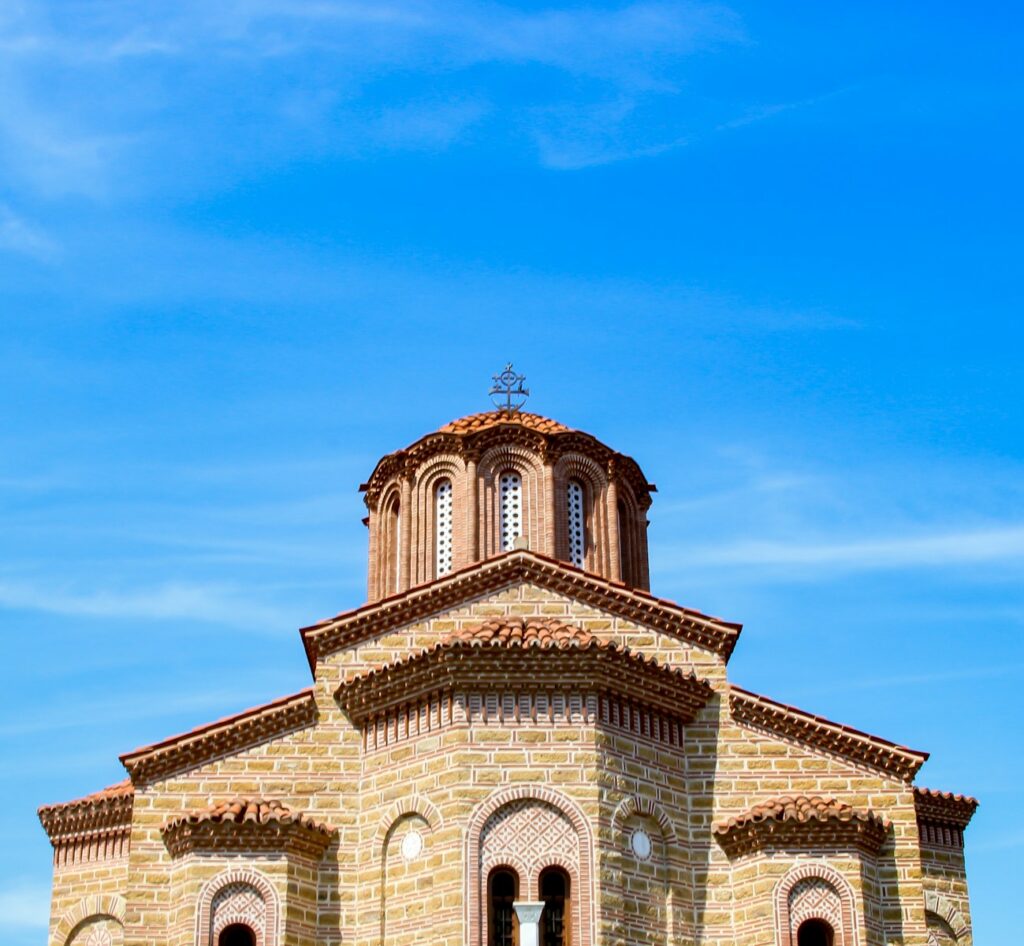
For centuries, Thessaloniki was one of the most important cities of the Byzantine world. Architecture during this era shifted from imperial grandeur to spiritual expression.
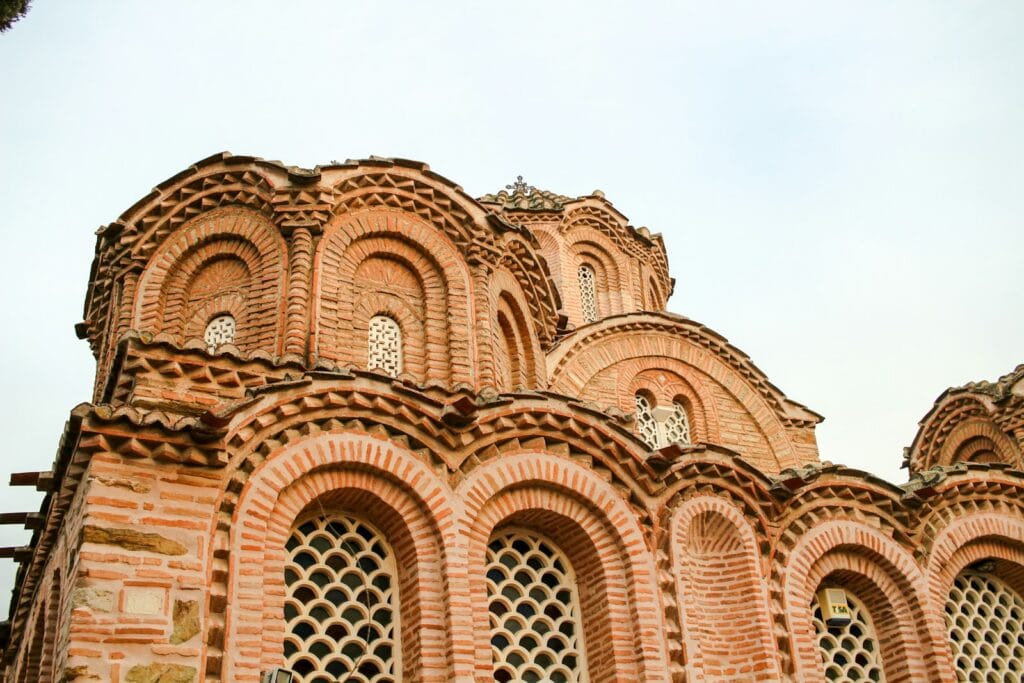
Byzantine churches defined the skyline with domes, apses, and intricate brickwork. Interiors focused less on scale and more on atmosphere—filtered light, mosaics, and symbolic geometry designed to elevate the soul.
These buildings were not merely places of worship; they were statements of cultural continuity. Even during periods of instability, Byzantine architecture asserted Thessaloniki’s identity as a city of faith, learning, and resilience.
Many of these churches survive remarkably intact, creating a rare architectural continuity that few European cities can claim.
Ottoman Thessaloniki: A City of Coexistence
Under Ottoman rule, Thessaloniki became a multicultural metropolis where Muslims, Christians, and Jews lived side by side. Architecture reflected this diversity.
Mosques, baths (hamams), fountains, and markets were introduced, emphasizing functionality, community, and climate-responsive design. Courtyards, wooden upper floors, and shaded streets responded to both social customs and the Mediterranean environment.
Ottoman architecture in Thessaloniki was less monumental and more human-scaled. Buildings were designed for daily life—ritual, trade, rest—woven seamlessly into the urban fabric.
Although many structures were lost or altered, those that remain tell the story of a city that once thrived on coexistence rather than uniformity.
The Sephardic Legacy: Architecture Without Monuments
For centuries, Thessaloniki was known as the “Jerusalem of the Balkans.” Its Jewish population shaped the city profoundly, though often without grand monuments.
Synagogues, schools, markets, and residential buildings were integrated into the urban grid rather than dominating it. This architecture was modest, functional, and deeply connected to community life.
Markets such as Modiano and Kapani became architectural expressions of social interaction—covered spaces where commerce, language, and culture mixed freely.
The tragic destruction of much of this heritage during the 20th century left visible absences in the cityscape. These gaps are as much part of Thessaloniki’s architectural story as the buildings that remain.
Neoclassicism and European Aspiration
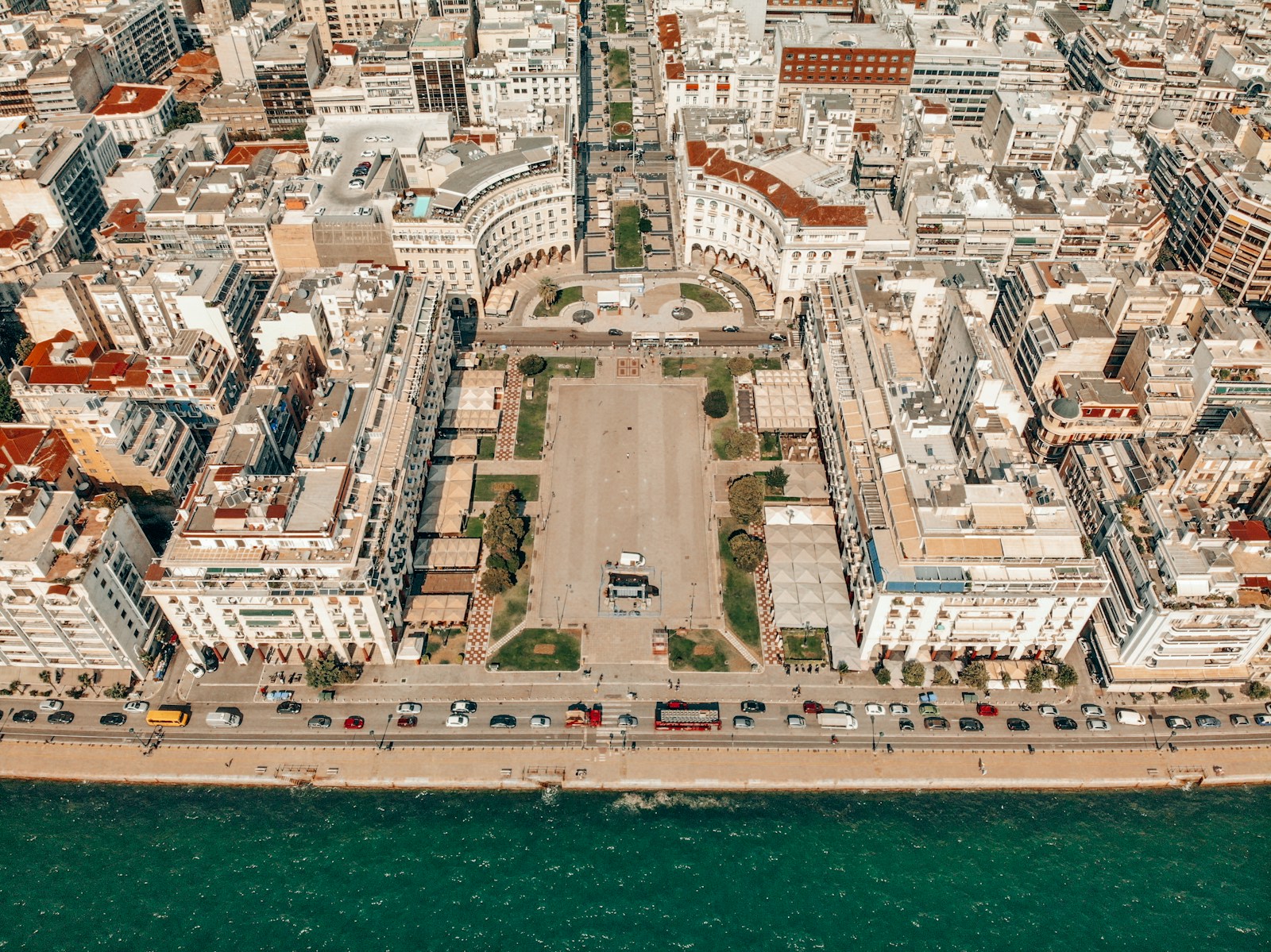
The late 19th and early 20th centuries marked a turning point. Thessaloniki looked westward, embracing European architectural ideals. Neoclassical and eclectic buildings emerged, expressing modernity, education, and civic pride.
Symmetry, ornamentation, and grand façades replaced organic forms. Buildings became symbols of progress and alignment with European cultural centers.
This era gave Thessaloniki some of its most elegant urban moments—many of which survived fires, wars, and redevelopment. They remain reminders of a city constantly redefining itself.
Fire, Reconstruction, and the Modern City
The Great Fire of 1917 reshaped Thessaloniki more than any other event. Vast areas were destroyed, creating an opportunity—and a challenge—to rebuild.
The new city plan introduced wider streets, zoning, and modern infrastructure. While this brought order and hygiene, it also marked the beginning of architectural homogenization.
Post-war construction prioritized speed and density. Apartment blocks replaced courtyards and mansions. Concrete became the dominant material. Beauty gave way to necessity.
Yet even in this era, Thessaloniki retained its contradictions—balconies overflowing with life, views opening unexpectedly to the sea, and ancient ruins appearing between modern buildings.
Contemporary Thessaloniki: Between Memory and Reinvention
Today, Thessaloniki stands at a crossroads. Contemporary architecture navigates between preservation and innovation, memory and necessity.
Renovations of historic buildings coexist with new interventions. Adaptive reuse—turning old warehouses, markets, and houses into cultural spaces—has become increasingly important.
The city’s architecture now asks difficult questions:
- How do you build without erasing?
- How do you modernize without losing character?
- How do you honor complexity rather than simplify it?
Thessaloniki’s strength lies precisely in its imperfections.
Architecture as Collective Memory
In Thessaloniki, architecture is not just about aesthetics. It is about remembering.
Every era left traces—some celebrated, some neglected, some painful. The city does not offer a polished narrative, but a layered one. Buildings do not speak in a single voice; they whisper in many languages.
This complexity is what gives Thessaloniki its soul.
A City Still Being Written
Thessaloniki is not frozen in time. Its architecture continues to evolve, shaped by new generations, new needs, and new interpretations of the past.
What makes the city extraordinary is not perfection, but continuity. Few places allow you to stand in one spot and see two thousand years of architecture coexisting—sometimes clashing, sometimes harmonizing, always alive.
In Thessaloniki, architecture is not a backdrop. It is the story itself—unfinished, layered, and deeply human.