Skip to content
The search for a leading architecture firm in Thessaloniki almost always begins with an image.
A house that seems to have exactly the right atmosphere. Perhaps it is a hotel where every detail feels precisely considered. Elsewhere, a restaurant may stand out through a strong identity. Or it may be a residence where light, materials, and proportions work almost effortlessly.
The portfolio is, of course, important.
However, it is not the whole story.
Behind a resolved space lies a much longer sequence of decisions: understanding the person who will use it, reading the property itself, considering its relationship with the city, defining its function and budget, resolving technical requirements, and ultimately determining whether an idea can become a real construction.
That is why, when someone is searching for an architecture studio in Thessaloniki, perhaps the most useful question is not:
“Which portfolio do I like the most?”
But:
“Which studio can understand what this particular project actually needs?”
Because good architecture rarely begins with a predetermined image.
It begins with an accurate reading of the problem.
A quick guide before you begin your search
| What to consider | What is really worth looking for |
|---|---|
| Portfolio | Projects that reveal a way of thinking, not simply impressive imagery |
| Architectural approach | Design that emerges from the space, the user, and the context |
| Experience | Understanding of projects with a comparable use, scale, or complexity |
| Process | A clear progression from brief and concept through to construction |
| Technical knowledge | The ability to connect an architectural idea with real detailing |
| Budget | Design that acknowledges financial constraints from an early stage |
| Coordination | Collaboration with engineers, consultants, suppliers, and contractors |
| Communication | A clear way of presenting, approving, and documenting decisions |
| Understanding of Thessaloniki | Reading the property within its actual urban environment |
| Construction | The ability to maintain architectural quality through implementation |
There is, therefore, no single architecture firm that is automatically the right choice for every project.
There is the studio that best fits the particular project, the particular person, and the particular place.
What does an architecture firm actually do?
The idea that an architect mainly designs floor plans, elevations, and beautiful interiors remains surprisingly persistent.
The reality is quite different.
In practice, a fully developed architectural process can begin long before the first final drawing appears and continue all the way to the last construction detail.
1. Before the design comes the brief
Every project begins with a person, a need, or a business idea.
Before an architect defines the form of a space, the project needs to clarify:
- who will use it,
- how it will function every day,
- what the real objective of the project is,
- what budget is available,
- what the desired timeline is,
- which needs are essential and which are secondary.
A residence, a boutique hotel, a restaurant, and an investment apartment may even sit within the same building.
Architecturally, however, they require entirely different ways of thinking.
A residence revolves around a person’s everyday life. By contrast, a boutique hotel centres on the guest experience. In a restaurant, atmosphere and operation need to work together, while an investment apartment may prioritise flexibility, durability, and return.
For that reason, the brief is not simply a formal introduction.
It is the point at which the design begins to acquire meaning.
2. The property itself is part of the answer
A space does not offer an empty stage for an aesthetic to occupy.
Instead, it already carries characteristics, possibilities, and constraints.
Therefore, the architect needs to read:
- orientation,
- natural light,
- openings,
- floor level,
- views,
- access,
- structural system,
- clear ceiling heights,
- existing services,
- noise,
- relationship with the street,
- elements that may be worth preserving.
Sometimes a property that initially appears difficult contains the most interesting possibilities.
At other times, however, a space that makes an immediate impression reveals technical or functional problems only after closer evaluation.
Architecture begins precisely with recognising that distinction.
3. The concept is more than an image
People often use the word concept as a synonym for aesthetics.
In architecture, however, a strong concept goes much deeper.
It is the idea that organises the entire project.
It determines:
- how we move through the space,
- how public and private zones relate to one another,
- how people experience natural light,
- how the design organises the façades,
- how the project uses materials,
- which elements of the existing building remain,
- how old and new meet.
When that central idea is clear, individual decisions stop feeling arbitrary.
Instead, they begin to operate as parts of the same system.
4. From idea to architectural precision
A concept alone is not enough.
It then needs to acquire dimensions, materials, junctions, technical requirements, and real construction constraints.
The floor plan evolves.
Details become precise.
At the same time, the design team needs to integrate mechanical and electrical systems.
Material choices also need to work in practice.
At this stage, the difference often becomes visible between an interesting idea and a fully resolved architectural project.
5. The real test is construction
A rendering can be almost perfect.
In practice, however, the reality of a construction site is much more complex.
Therefore, a critical question when choosing a leading architecture firm in Thessaloniki is whether the studio can maintain architectural quality when it encounters:
- real materials,
- construction tolerances,
- technical services,
- changes,
- cost constraints,
- contractors and suppliers.
Ultimately, architecture reaches completion when the idea survives that transition.
Architects Thessaloniki Greece: how to really read a portfolio
When researching architects in Thessaloniki, Greece, the portfolio is inevitably the first filter.
But it is worth looking at it a little differently.
Not simply as a collection of finished photographs, but as an indication of how a studio thinks.
Do not look only for a recognisable style
Consistency in architecture does not mean that every project should resemble the one before it.
In fact, it may be more interesting to find a studio capable of giving different answers to different conditions while maintaining a consistent quality of thought.
Look for:
- precision in proportions,
- a meaningful relationship with natural light,
- clear spatial moves,
- careful material selection,
- functionality,
- detailing,
- respect for the existing building or surrounding environment.
An architect’s real identity is not always visible in the colour of the walls or in a material that appears repeatedly.
It appears in the way decisions are made.
Look for problems of comparable complexity
A firm does not need to have completed exactly the same project you are planning.
However, it does need to have dealt with similar conditions.
| If you are planning… | What is worth observing |
|---|---|
| Residence | Light, planning, privacy, storage, everyday functionality |
| Apartment renovation | How the studio reinterprets and reorganises existing space |
| Villa | Relationship between interior and exterior, landscape, and orientation |
| Boutique hotel | Guest experience, rooms, shared spaces, and operations |
| Restaurant | Circulation, atmosphere, lighting, and back-of-house |
| Retail | Façade, visibility, customer journey, and brand identity |
| Office | Natural light, acoustics, flexibility, and different modes of work |
| Heritage project | Balance between preservation and contemporary intervention |
Ultimately, the most interesting question is not whether two projects look alike, but whether the studio found the right answer to two very different problems.
Thessaloniki is not a single architectural condition
Choosing an architecture studio in Thessaloniki inevitably has a local dimension.
The city changes far more than its relatively short distances might suggest.
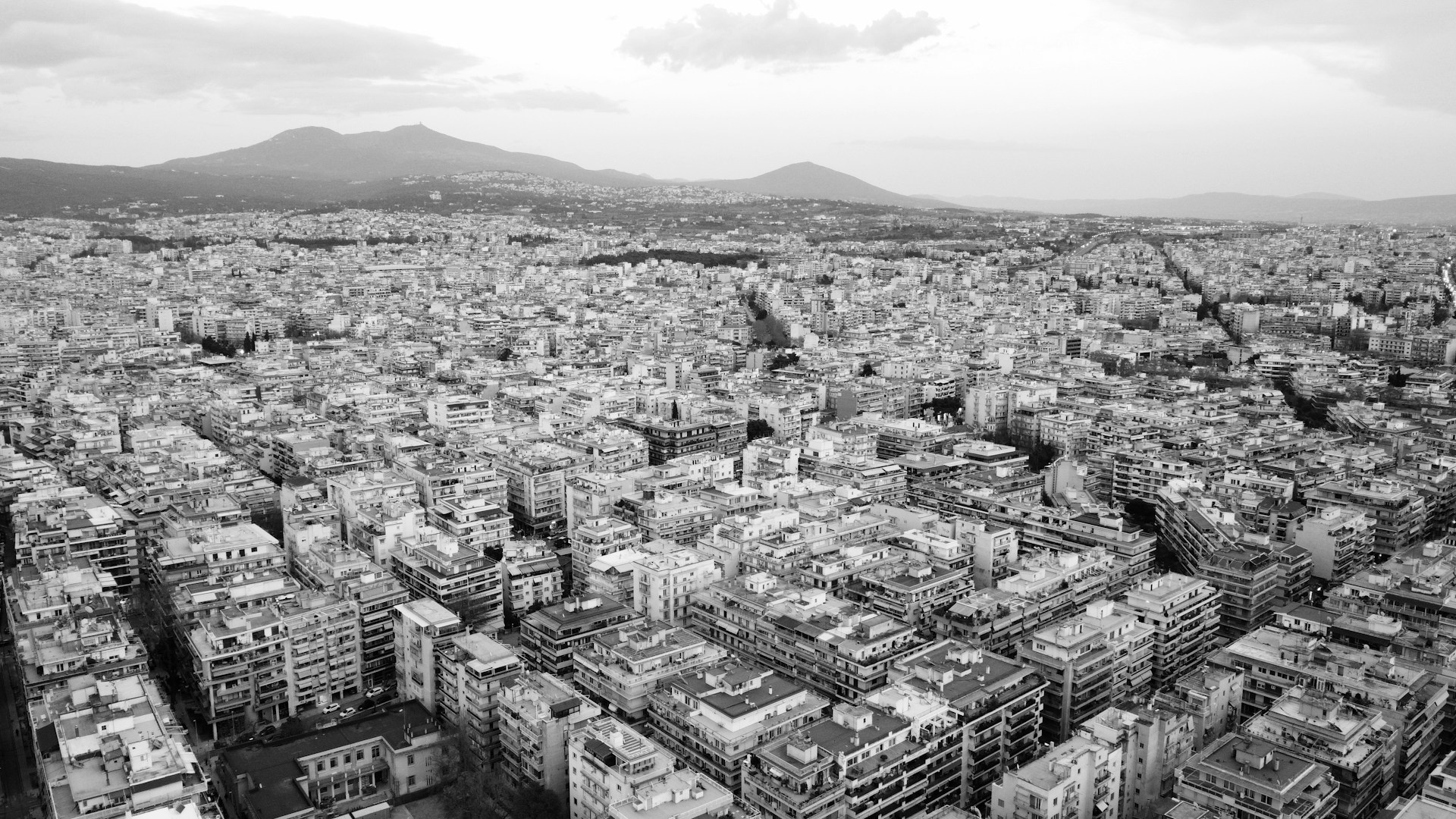
An apartment above Tsimiski Street, a house in Ano Poli, a commercial property in Ladadika, and a contemporary residence in eastern Thessaloniki may all sit within the same city, yet require different architectural strategies.
What changes?
- scale,
- age of the building stock,
- orientation,
- quality of natural light,
- views,
- relationship with the street,
- noise,
- privacy,
- access,
- the everyday character of the area.
In Thessaloniki, therefore, an address does more than identify where a property sits.
It becomes part of the architectural brief.
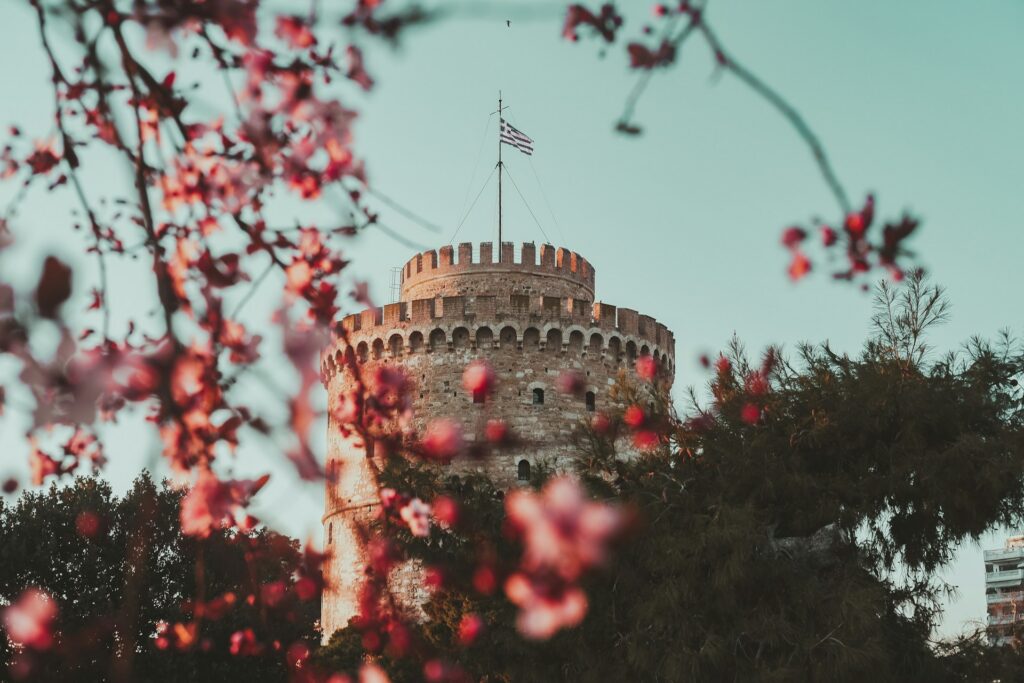
Architecture firms Thessaloniki: 10 criteria worth considering
1. Does the studio understand the type of project?
Not all projects have the same requirements.
For example, a residence revolves around everyday life.
By contrast, a restaurant must balance the guest experience with the operation of the kitchen.
A hotel introduces another set of priorities: repetition, privacy, service, and the arrival experience.
With a renovation, the process begins by understanding what is already there.
Relevant experience therefore is not simply about finding similar images in a portfolio.
It is about whether the studio has dealt with comparable problems.
2. What is the first question they ask you?
The way a collaboration begins can be remarkably revealing.
For instance, does the conversation begin with the client’s needs?
Next, does the studio assess the space itself?
Does it explore different scenarios before settling on a direction?
Or, by contrast, does the process move very quickly towards moodboards and imagery?
A strong project usually begins with several good questions before the first answer appears.
3. Where does the architect’s involvement end?
In some projects, the service may focus primarily on the concept.
In others, the architecture firm remains actively involved in technical development, coordination, and implementation.
There is not necessarily one solution that is right for everyone.
Nevertheless, one thing needs clarity from the beginning:
What exactly does the scope of the collaboration include?
4. Is the budget part of the design?
The budget should not function as a filter applied only after the design is complete.
Instead, it should operate as one of the design parameters from the start.
A mature architecture firm should be able to distinguish:
- where it is worth investing more,
- where the studio can simplify a solution,
- which element has the greatest impact on the experience,
- which choices offer greater long-term value.
Good design is not synonymous with the most expensive material.
Instead, it often lies precisely in getting the priorities right.
5. How close is the design to construction?
A material is not simply a surface.
It has weight, thickness, a fixing method, joints, cost, and maintenance requirements.
A light fitting is not simply a luminous object.
It has wiring, colour temperature, beam angle, and a relationship with the architecture.
Construction knowledge does not appear at the end.
It shapes the design from the beginning.
6. How are the different disciplines coordinated?
The more complex a project becomes, the more architecture turns into an act of coordination.
Structural engineers, mechanical engineers, lighting designers, acoustic consultants, suppliers, and contractors may all affect the final result.
The critical point, therefore, is to prevent individual solutions from operating as independent systems.
Instead, they need to serve the same project.
7. How does communication work?
An architectural collaboration involves hundreds of decisions.
Some are small.
Some significant enough to change the entire direction of the project.
It is therefore worth making clear:
- who the main point of contact is,
- how presentations take place,
- how the team records decisions,
- how the team handles changes,
- who communicates with the other teams.
The quality of communication is not an administrative detail.
It is part of the quality of the project.
8. Can the studio explain the “why”?
A good architectural proposal should be explainable.
What makes the floor plan change?
Why does a particular function move?
What supports the choice of a specific material?
When should an opening become larger or smaller?
Aesthetics remain important.
However, clear logic gives those aesthetic decisions greater longevity.
9. Is the studio designing the project for you or for the portfolio?
Every architect has particular aesthetic and design sensitivities.
That is part of their value.
However, the finished space must ultimately serve the person and the function behind the project.
The client needs to be able to talk about:
- their lifestyle,
- their daily routine,
- their habits,
- their business needs,
- their real priorities.
The architect’s role is to translate that information into space without reducing it to a literal checklist of requirements.
Ultimately, that is where a significant part of the architectural work happens.
10. Is there a process you can understand?
Architecture can be complex.
The process, however, does not need to be unclear.
Depending on the project, it may develop through stages such as:
Brief → Analysis → Concept → Design Development → Technical Coordination → Construction Documentation → Construction → Completion
The titles and phases may vary.
More importantly, every stage should make three things clear:
what the team is deciding now, what it has already decided, and what comes next.
Choosing a leading architecture firm Thessaloniki: what is worth asking at the first meeting
The first meeting with an architecture firm is not simply an opportunity to present your project.
It is also an early indication of how the collaboration may work.
It does not need to feel like an interview.
But there are questions that can reveal a great deal.
About experience
- Have you worked on projects with similar requirements?
- What were the most important challenges?
- How did you resolve them?
About the process
- How does the design process begin?
- What are the main stages?
- At what point are the most important decisions made?
About budget
- How do you incorporate the budget into the design?
- When does a realistic picture of cost begin to emerge?
- How do you address potential overruns?
About construction
- How far do you develop the architectural details?
- How are the technical disciplines coordinated?
- What is the studio’s involvement during implementation?
About communication
- Who will be the main person responsible?
- How are presentations and approvals handled?
- How do you document changes?
Often, how a studio answers these questions reveals more than another page of portfolio imagery.

How do you compare two or three architecture firms?
When considering different architecture firms in Thessaloniki, there is a temptation to turn the final choice into a comparison of fees.
But two proposals may not refer to the same thing at all.
It is more useful to compare the collaboration as a whole.
The lowest fee is not automatically the most economical option for the project as a whole.
Likewise, a higher fee does not in itself guarantee quality.
Therefore, the real question is what each collaboration includes and how strongly it can influence the final result.
What should be clear in a proposal for architectural services?
Before comparing numbers, compare services.
Therefore, a proposal for architectural collaboration should ideally provide a clear picture of:
- the scope of the project,
- design phases,
- deliverables,
- presentations and revisions where relevant,
- technical coordination,
- additional services,
- possible involvement during construction,
- key project milestones,
- the fee structure.
Without this clarity, two apparently comparable proposals may represent completely different levels of work.
Architecture studio Thessaloniki for residential projects: when design becomes everyday life
A residence is perhaps the most personal architectural project.
Here, design is not simply about creating beautiful spaces.
Instead, it considers how a day begins, how someone cooks, where they leave things when they return home, where they retreat, and where they meet others.
For example, an architect may need to understand:
- who uses the kitchen most,
- whether someone works from home,
- how important storage is,
- whether the household needs greater privacy,
- how the household uses outdoor spaces,
- how the family may change over the coming years.
A good floor plan is not only visible in the drawing.
It reveals itself after years of everyday use.
Architecture firm for renovation in Thessaloniki: designing with what already exists
Renovation is a different kind of architectural dialogue.
It does not begin with a blank page.
The building already has a history, a geometry, and constraints.
That is why the first question does not always need to be:
“What do we want to change?”
It may be:
“What is worth keeping?”
For example, in an older apartment, architectural value may lie in:
- the proportions,
- generous ceiling heights,
- openings,
- original materials,
- old timber elements,
- unusual geometry,
- the possibility of allowing light to move through the plan.
Sometimes the best contemporary intervention is not the one that erases the past.
Rather, it is the one that knows where to stop.
Architects Thessaloniki Greece for hospitality, restaurants, and commercial spaces
In commercial projects, architecture has to function simultaneously as a space and as a tool for a business.
A restaurant needs atmosphere.
But it also needs a kitchen that works.
A boutique hotel needs a distinctive arrival experience.
But it also needs housekeeping, storage, technical spaces, and clear circulation.
A retail concept needs identity.
At the same time, it needs to allow the visitor to understand the space almost instinctively.
Here, architecture considers:
- customer journey,
- arrival experience,
- circulation,
- visibility,
- brand identity,
- lighting,
- acoustics,
- back-of-house,
- material durability,
- maintenance,
- staff operations.
As a result, the most successful commercial design often allows the visitor to experience only the result, while the entire mechanism supporting it remains almost invisible.
Architectural fees as part of the overall investment
The question “How much does an architect cost?” is entirely reasonable.
However, it is not the only financial question worth asking.
An equally important one is:
“Which decisions can the architectural design influence?”
Among other things:
- the effective use of floor area,
- the quantity and selection of materials,
- functionality,
- technical coordination,
- the likelihood of changes during construction,
- the lifespan of the selected solutions,
- the quality of the finished space.
On a project with a substantial budget, one poor decision at the beginning can cost far more than the difference between two design fees.
Architectural value, therefore, goes beyond the cost of a professional service.
It also lies in decisions that help avoid mistakes, organise the investment more effectively, and improve the final result.
7 points to watch before choosing an architecture firm
1. The solution appears before the problem has been understood
The more complex a project is, the more difficult it is to offer a meaningful answer before proper analysis has taken place.
2. The entire conversation is about aesthetics
Image is part of architecture.
It is not the whole of architecture.
Function, technical decisions, cost, and construction need to be part of the same conversation.
3. It is unclear what the fee includes
An unclear scope at the beginning often creates unclear expectations later.
4. There is no recognisable process
Design needs freedom.
A project also needs organisation.
5. The budget appears at the end
If the budget is a real parameter, it needs to be part of the thinking from an early stage.
6. You do not know who will actually manage the project
The relationship with the team that will genuinely design and coordinate the project matters.
7. Communication is already difficult at the beginning
The months ahead will involve many more decisions than the first meeting.
If communication does not work from the start, it rarely becomes easier as the project becomes more complex.
Is there a “best architecture firm in Thessaloniki”?
Searches for “best architecture firm Thessaloniki”, “leading architecture firm Thessaloniki”, or “best architects Thessaloniki Greece” are entirely natural.
However, they imply that a single objective ranking can apply to every project.
Architecture is more complex than that.
For example, one studio may be excellent for hospitality but not the most suitable choice for a heritage project.
Another may have exceptional experience in residential architecture or restoration.
Meanwhile, a third may excel on large, technically complex projects.
The right fit exists in the relationship between:
project + property + person + architectural approach + process + construction.
“Best” becomes meaningful only once we first understand best for what.
When is the right time to speak to an architect?
Clients often bring architects into a project after they have already made many important decisions.
They may have purchased the property and defined its intended use.
Perhaps they already have an idea of the floor plan or have even selected materials and contractors.
However, in many cases, architectural thinking creates the greatest value a little earlier.
Before purchasing a property, for example, it may be possible to assess:
- the potential for changing the floor plan,
- natural light,
- the structural system,
- existing services,
- openings,
- whether the property can genuinely support the desired use.
Therefore, one of the most important decisions in a project may happen before the first drawing exists.
Architect’s checklist before making the final choice
Before deciding which architecture studio in Thessaloniki to work with, it is worth returning to a few simple questions.
| Question | Check |
|---|---|
| Did the studio genuinely understand the objective of the project? | ✓ |
| Did they ask meaningful questions about how people will use the space? | ✓ |
| Do they have experience with comparable challenges? | ✓ |
| Can they explain the process clearly? | ✓ |
| Is it clear what the scope includes? | ✓ |
| Is there technical knowledge behind the design? | ✓ |
| Is the budget part of the conversation? | ✓ |
| Is there a system for coordinating consultants? | ✓ |
| Do you know who will manage the project? | ✓ |
| Is there good communication and trust? | ✓ |
| Does the proposal appear to emerge from the project rather than from a ready-made formula? | ✓ |
The last question may be the most important.
Frequently Asked Questions
How do I choose a leading architecture firm in Thessaloniki?
Begin with the project itself.
Consider whether the firm understands the type of work, whether it has dealt with a comparable level of complexity, how it organises the process, how it connects design with construction, and how it approaches the budget.
The portfolio matters; however, it should be read alongside the studio’s way of thinking and working.
What should I look at when comparing architecture firms Thessaloniki?
Look closely at what each collaboration actually includes.
Compare:
- scope,
- deliverables,
- technical development,
- coordination,
- involvement during implementation,
- relevant experience,
- communication process.
Two different fees may correspond to very different levels of service.
How do I find good architects in Thessaloniki, Greece?
A portfolio is a good starting point.
However, look beyond a particular aesthetic.
Observe whether the projects demonstrate thoughtful use of light, functional planning, precision in detailing, and different responses to different conditions.
The first conversation can then reveal whether there is a genuine understanding of the project and a strong foundation for collaboration.
Do I need an architect for an apartment renovation?
The more elements of the home the renovation changes — floor plan, services, lighting, kitchen, bathrooms, custom elements, materials — the more important it becomes to treat them as one architectural system.
As a result, a fully coordinated design before construction helps reduce fragmented decisions during the project.
Should I choose an architect before buying a property?
In many cases, it can be extremely useful.
An architectural assessment can help evaluate the possibilities and limitations of the space before a significant investment decision is made.
An old or apparently difficult property may have exceptional potential.
Conversely, an apparently straightforward property may reveal important limitations.
How are architecture firm fees calculated?
Fees depend on the type, scale, and complexity of the project, the scope of services, the level of design detail required, and the firm’s involvement during construction.
For this reason, before comparing numbers, compare deliverables and scope.
Which is the leading architecture firm in Thessaloniki?
There is no single choice that is objectively best for every project.
The right firm depends on the type of project, its scale, objectives, budget, architectural approach, and preferred way of working.
Rather than searching for an absolute ranking, it is more useful to look for the best fit.
The right choice is made before the first drawing
An architectural collaboration is not only about the final result that will eventually appear in photographs.
It is also about the months — and sometimes years — during which an initial idea develops into a real space.
Along the way, the project demands decisions about light and the floor plan. It asks for choices about materials, budget, and even a joint only a few millimetres wide. At the same time, the team must decide what deserves to remain and what needs to change.
That is why choosing a leading architecture firm in Thessaloniki is ultimately about more than choosing an aesthetic.
It is about choosing the person or team capable of transforming:
needs into a brief, the brief into an architectural idea, the idea into a design, and the design into space.
Perhaps, then, the most useful question is not:
“Which architecture firms in Thessaloniki do I like the most?”
But:
“Who can read this particular project correctly — its place, its building, its needs, and its possibilities — and develop it without losing its essence along the way?”
Planning a residence, renovation, hospitality, or commercial project in Thessaloniki?
The architectural process does not need to begin with a ready-made image.
Instead, it can begin with something far more fundamental:
understanding the property, the people who will use it, and what the project can genuinely achieve within that particular space.
Discuss your project with THE ARDE STUDIO®.