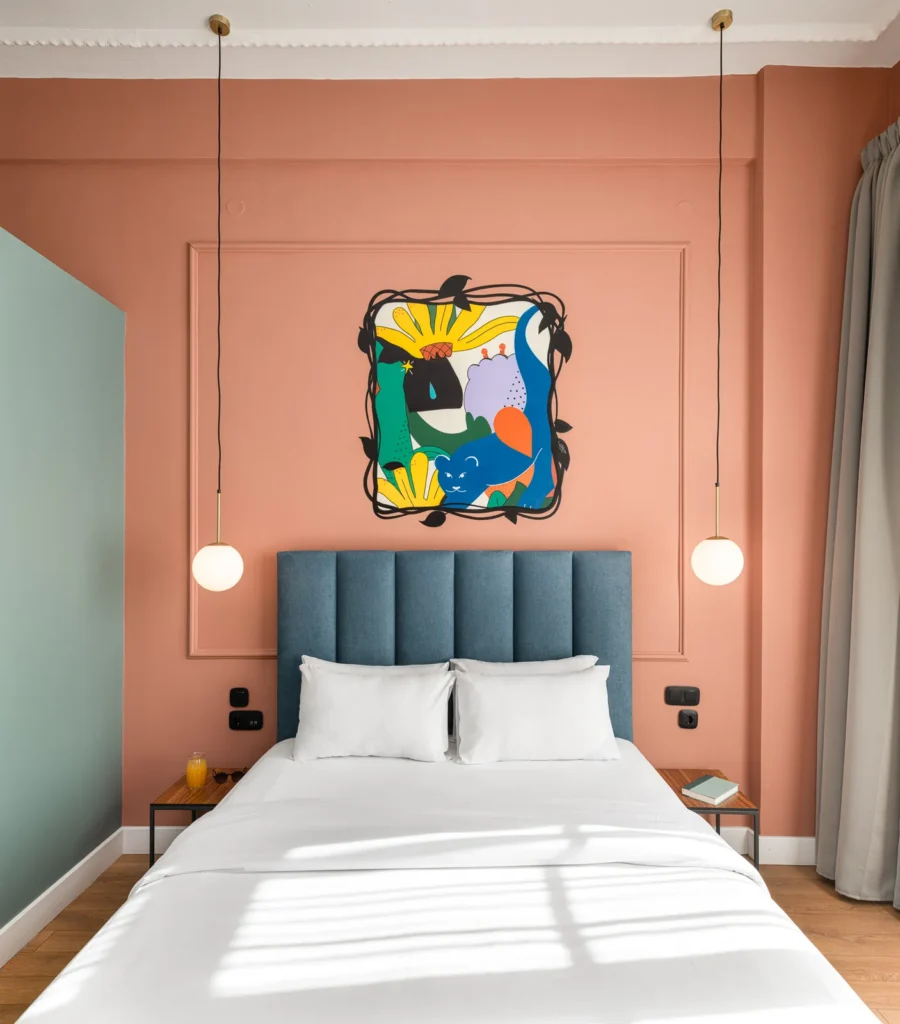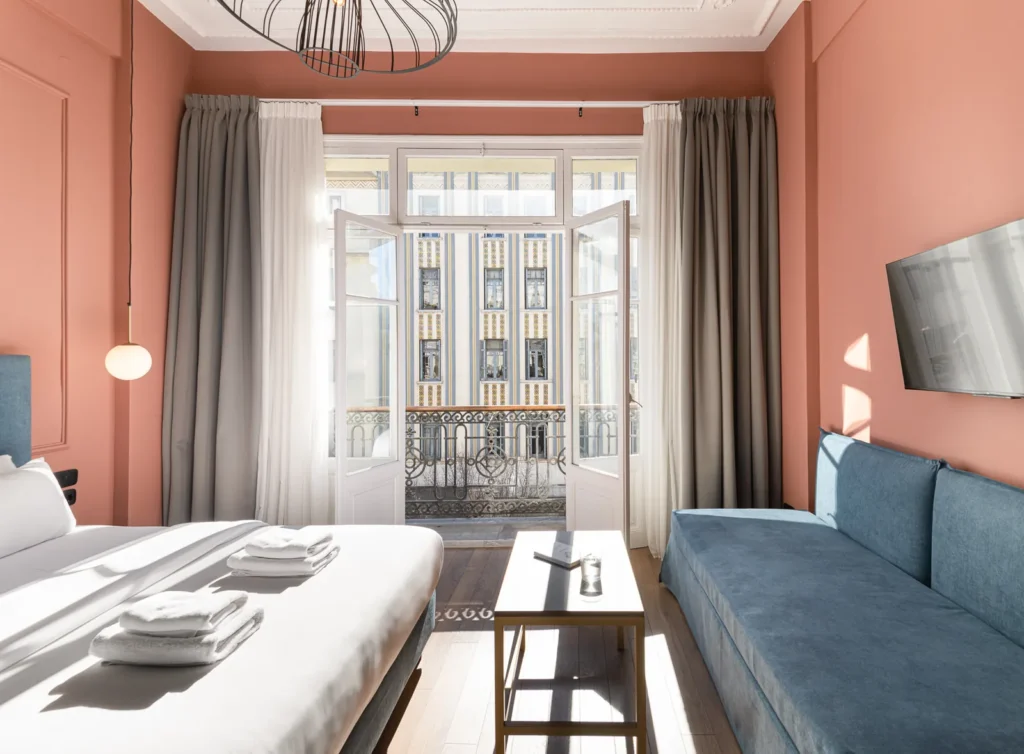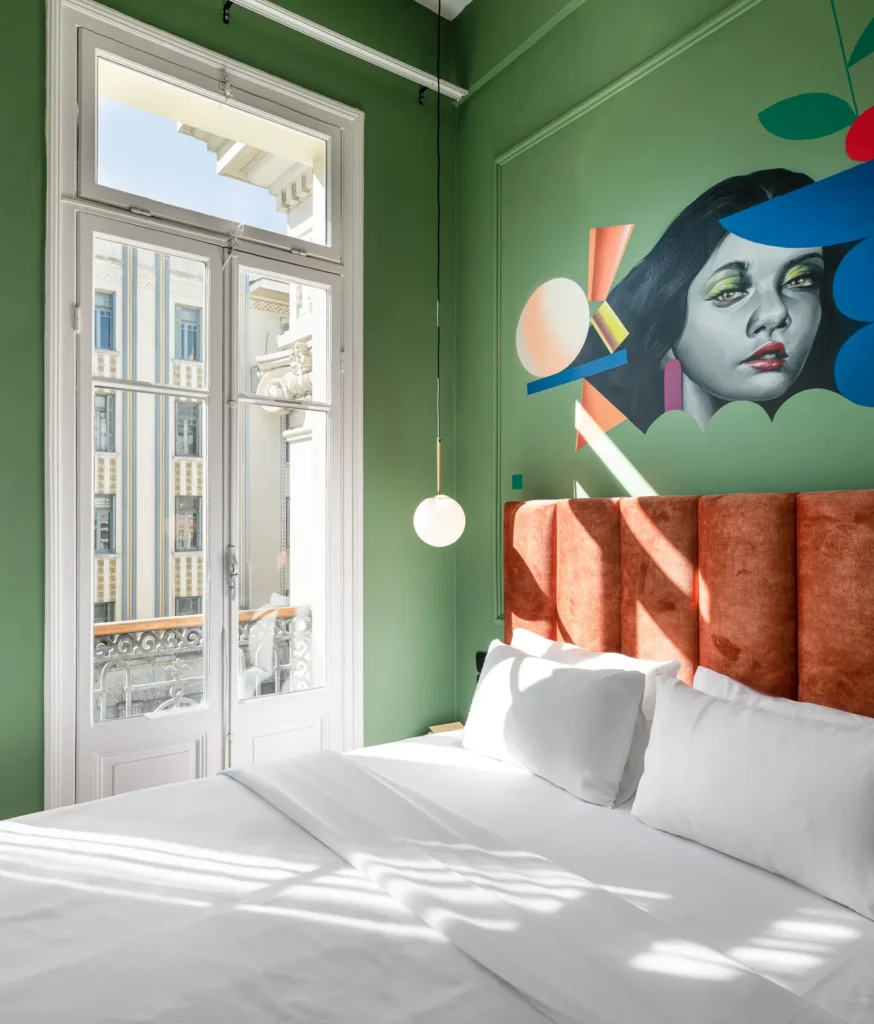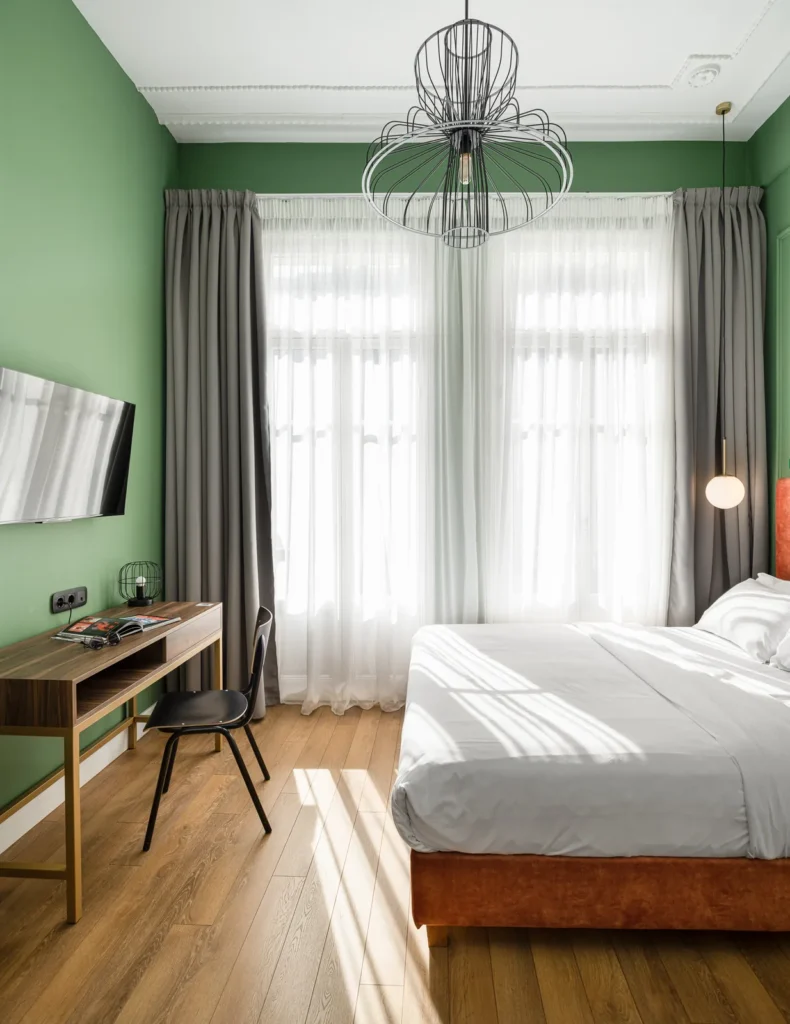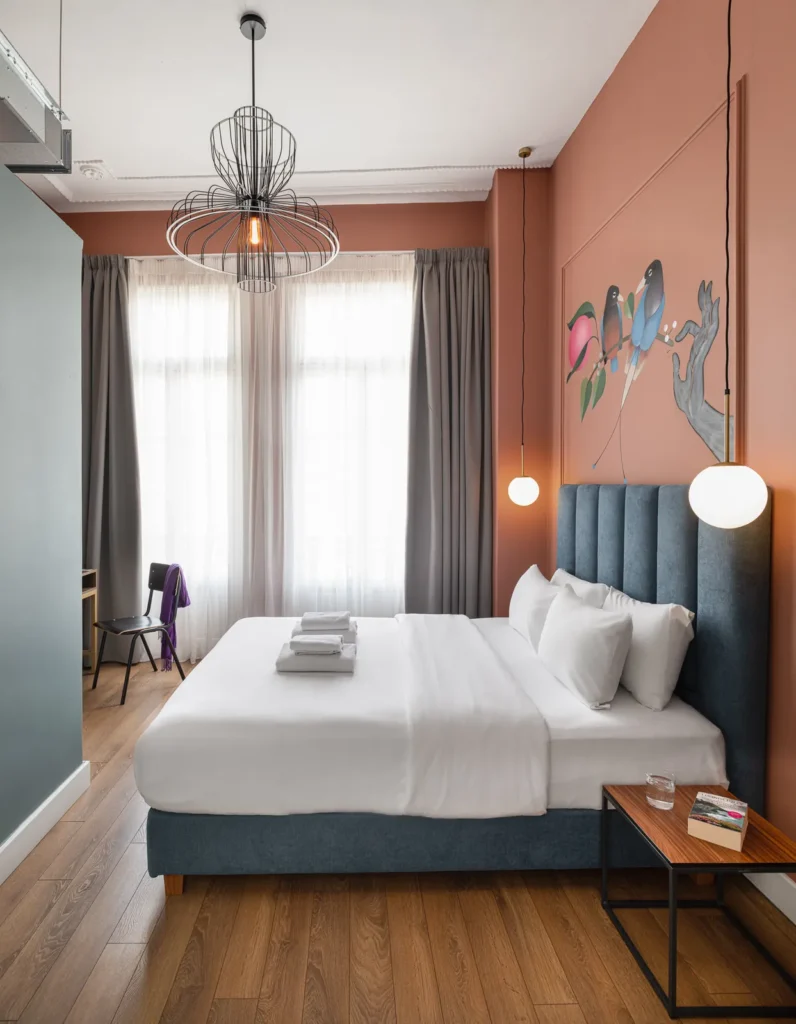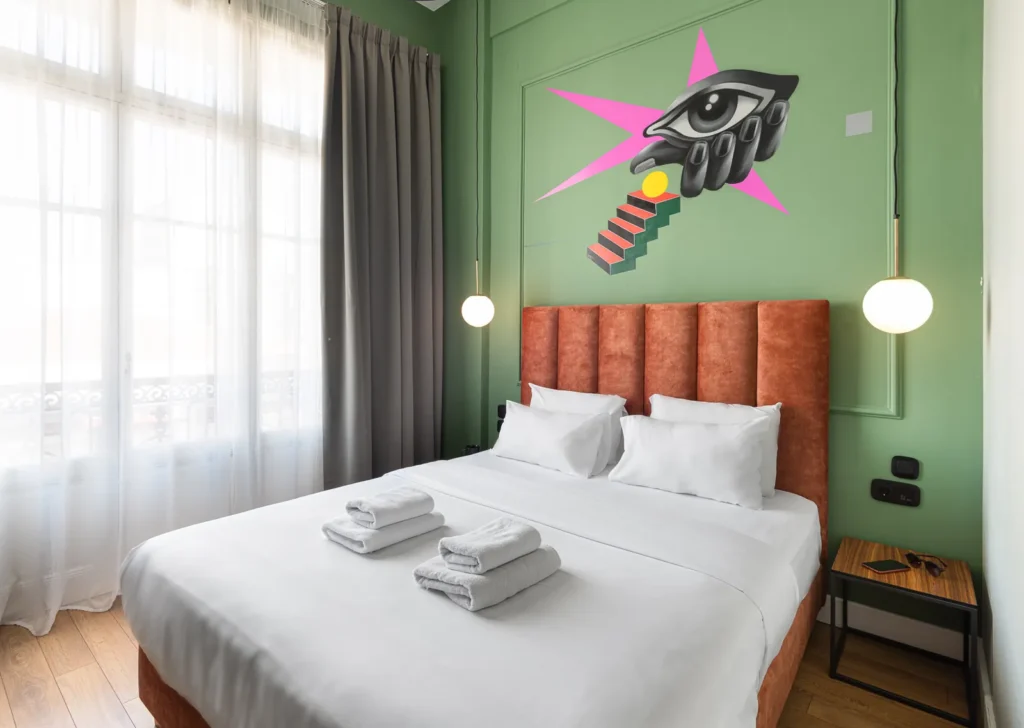
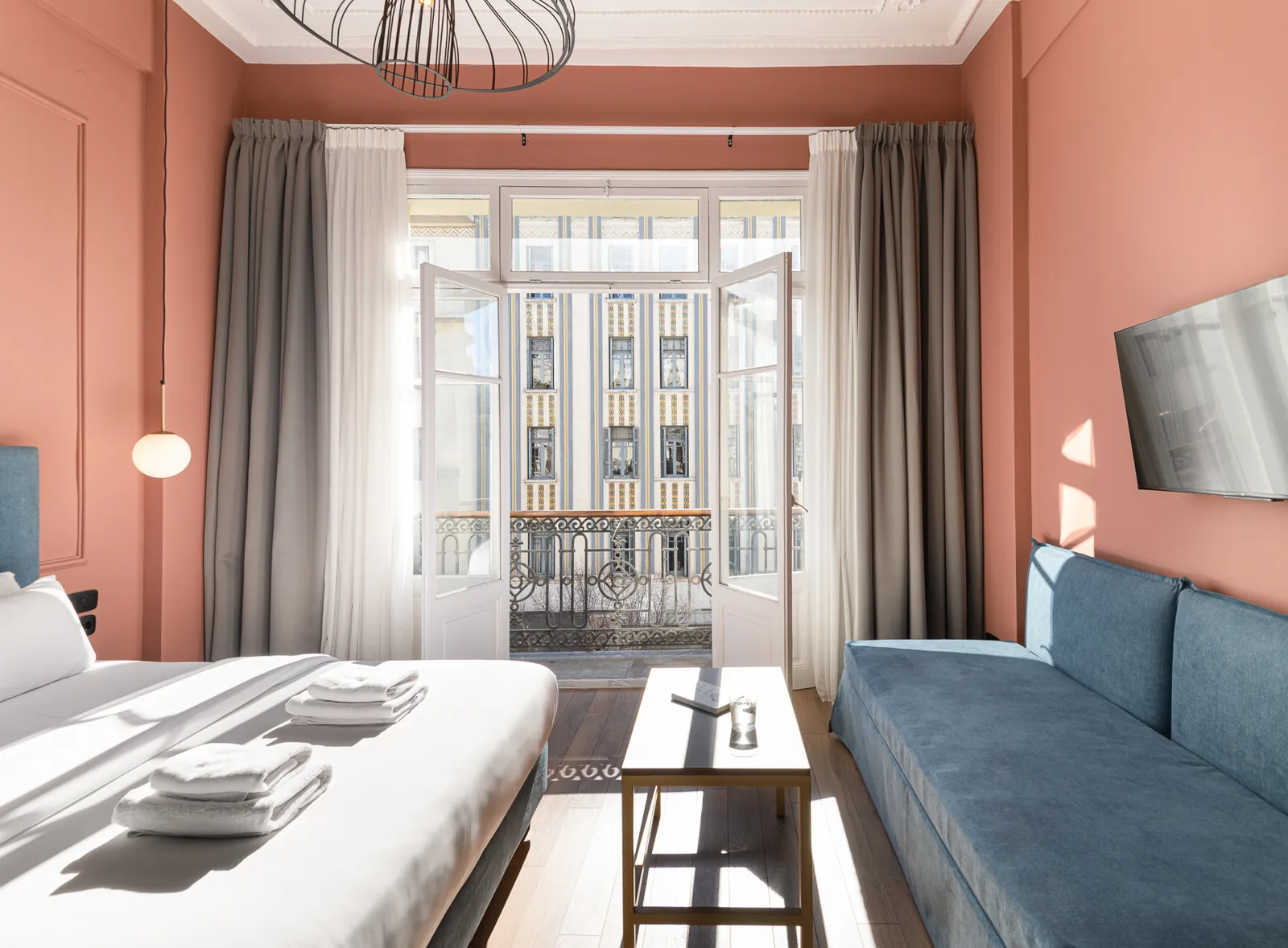
Housed within a listed 1925 building designed by Hasid Fernandez and Jacques Pleyber, Colors Urban Hotel represents a contemporary reinterpretation of heritage architecture in the heart of Thessaloniki. Positioned between Tsimiski and Agiou Mina streets, the building maintains a strong urban presence while accommodating a bold, modern hospitality concept.
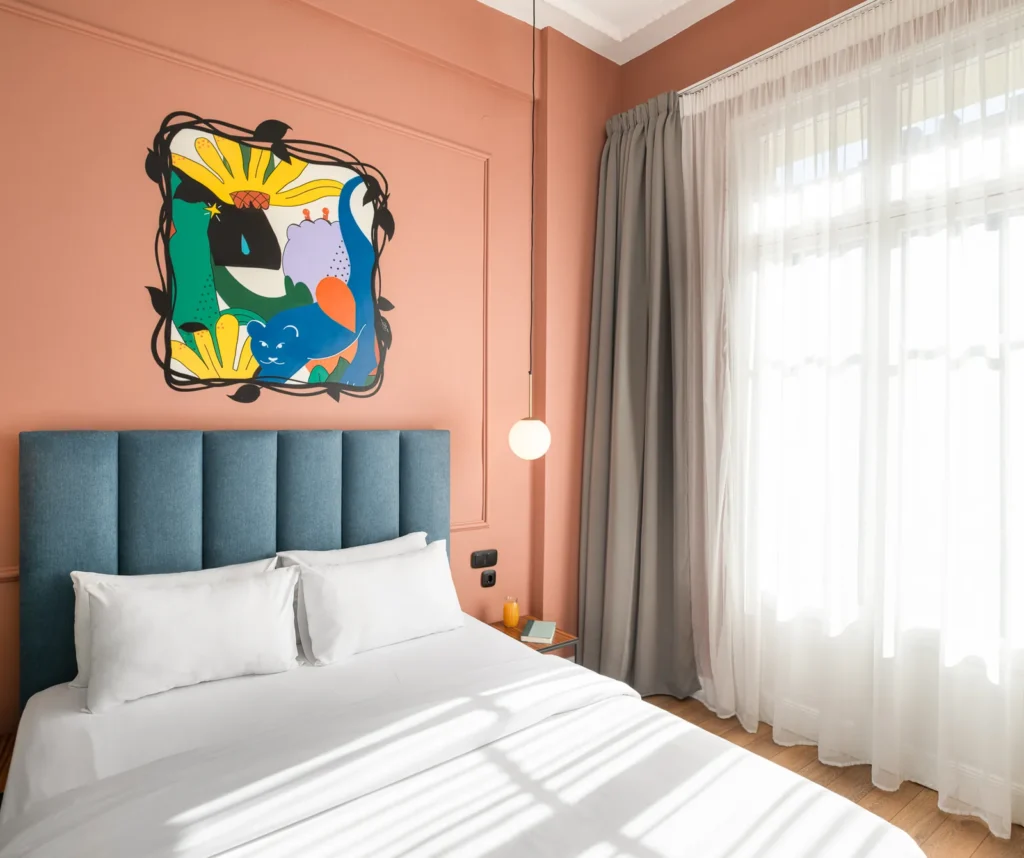
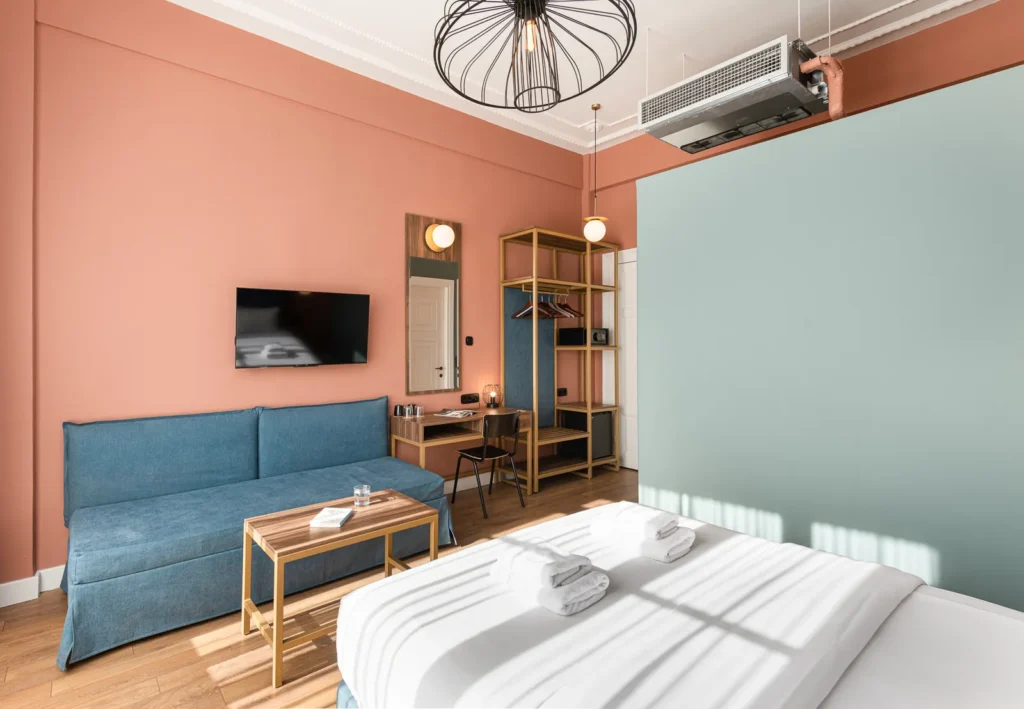
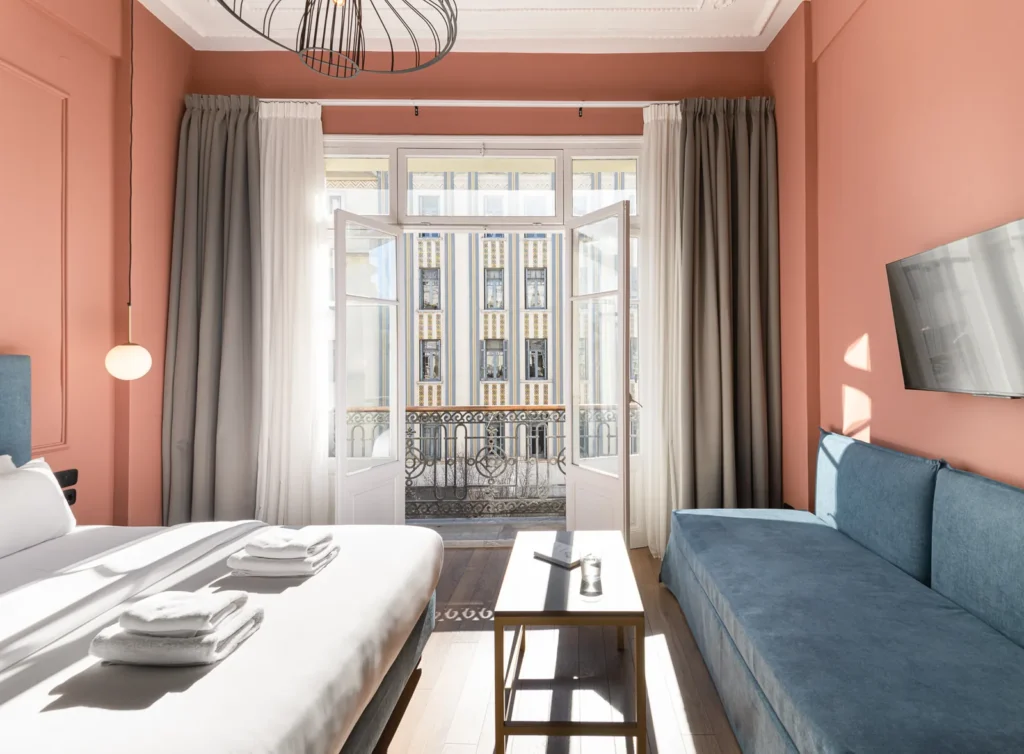
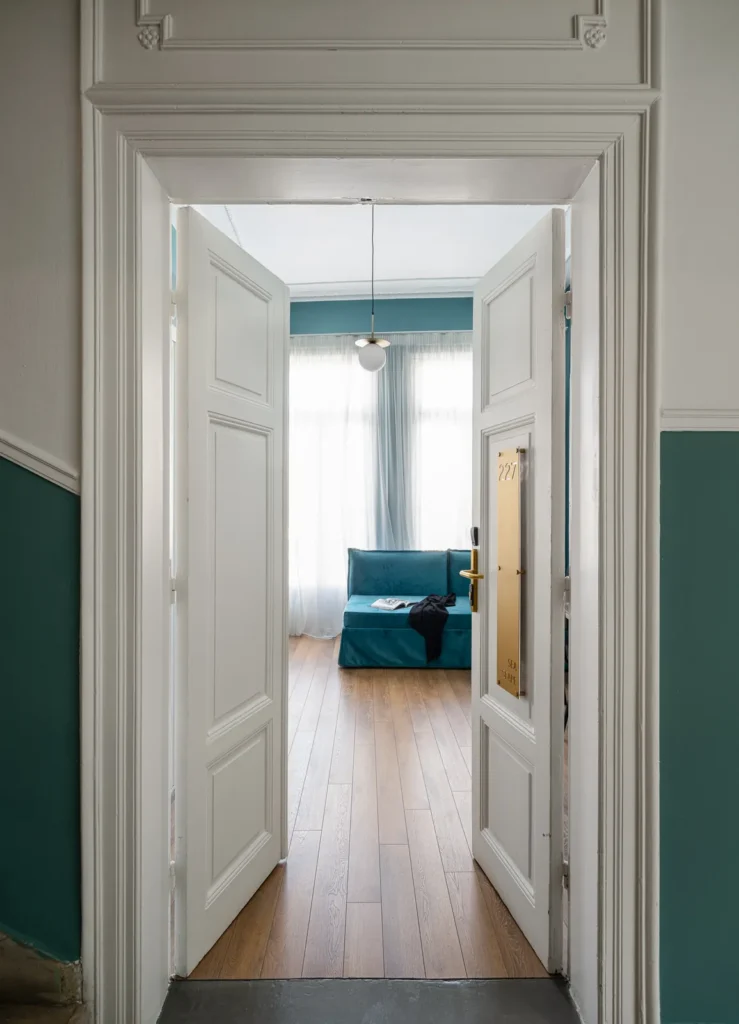
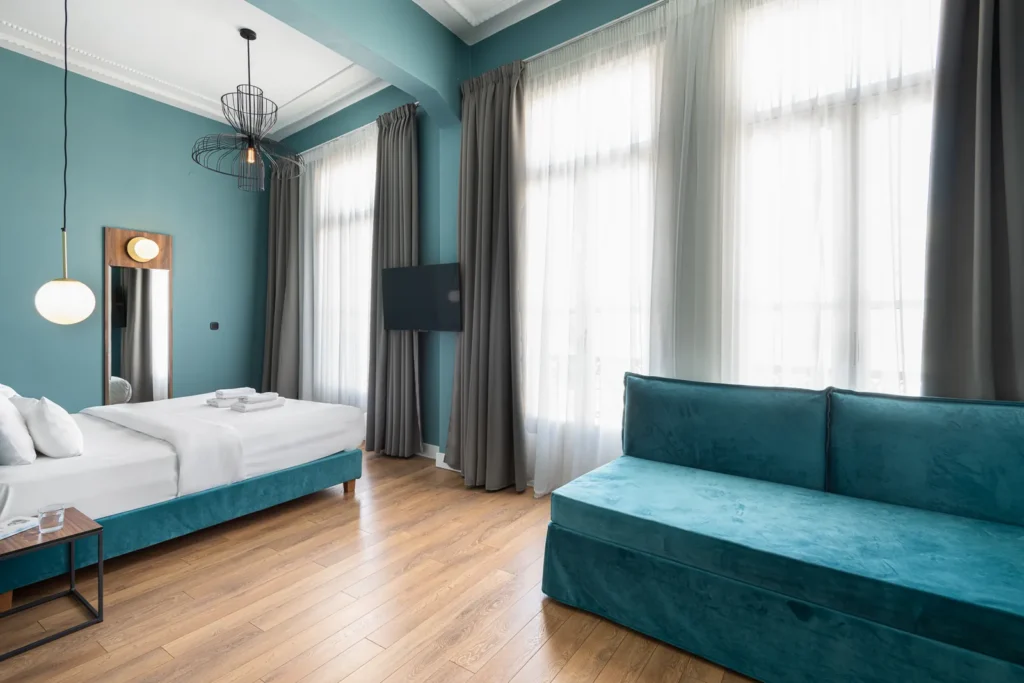
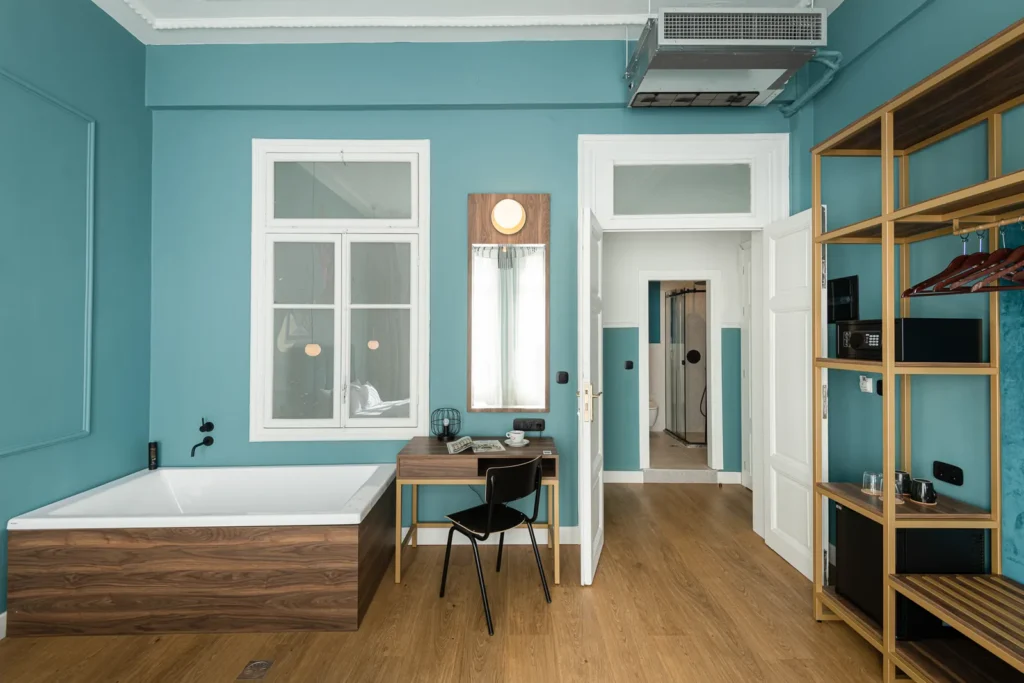
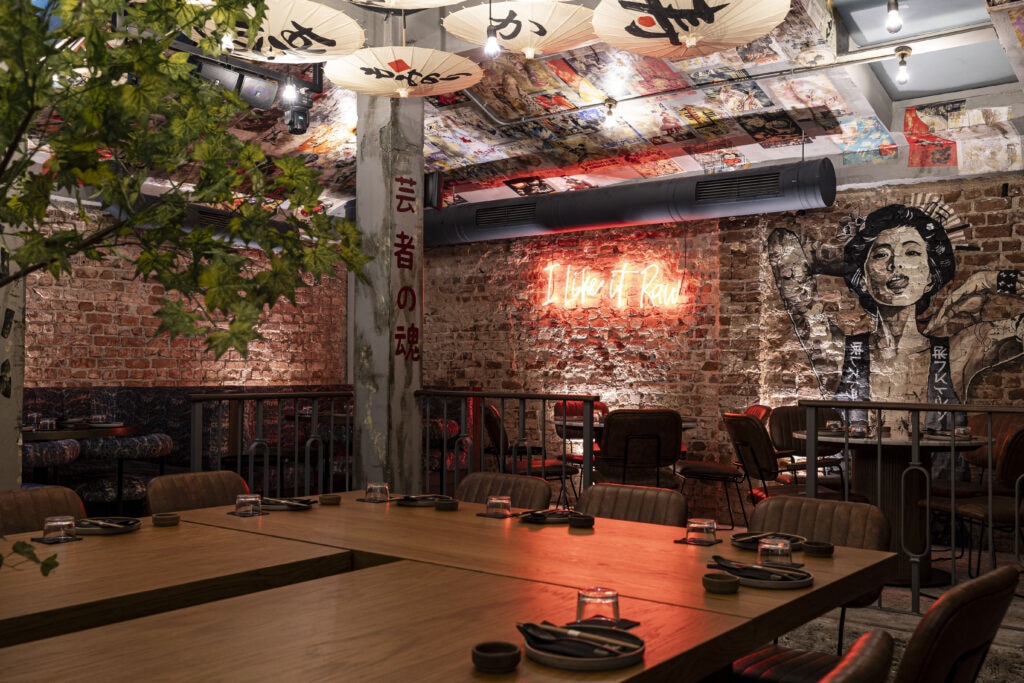
The historic structure is defined by a three-part façade articulated through wide openings and pilasters, generous interior heights, and a large central atrium that organizes circulation and light. Key architectural elements—including decorative details and ornate ceiling plasterwork—were preserved and left visible, establishing a direct dialogue between past craftsmanship and contemporary intervention. This conservation-driven approach informed the decision to expose mechanical installations throughout the building, allowing technical systems to coexist honestly within the historic envelope rather than being concealed.
A distinctive copper-toned elevator and matching railings further reinforce this contrast, functioning both as circulation infrastructure and as sculptural elements within the atrium. Their material presence adds a contemporary layer to the historic interior while remaining respectful of the building’s original character.
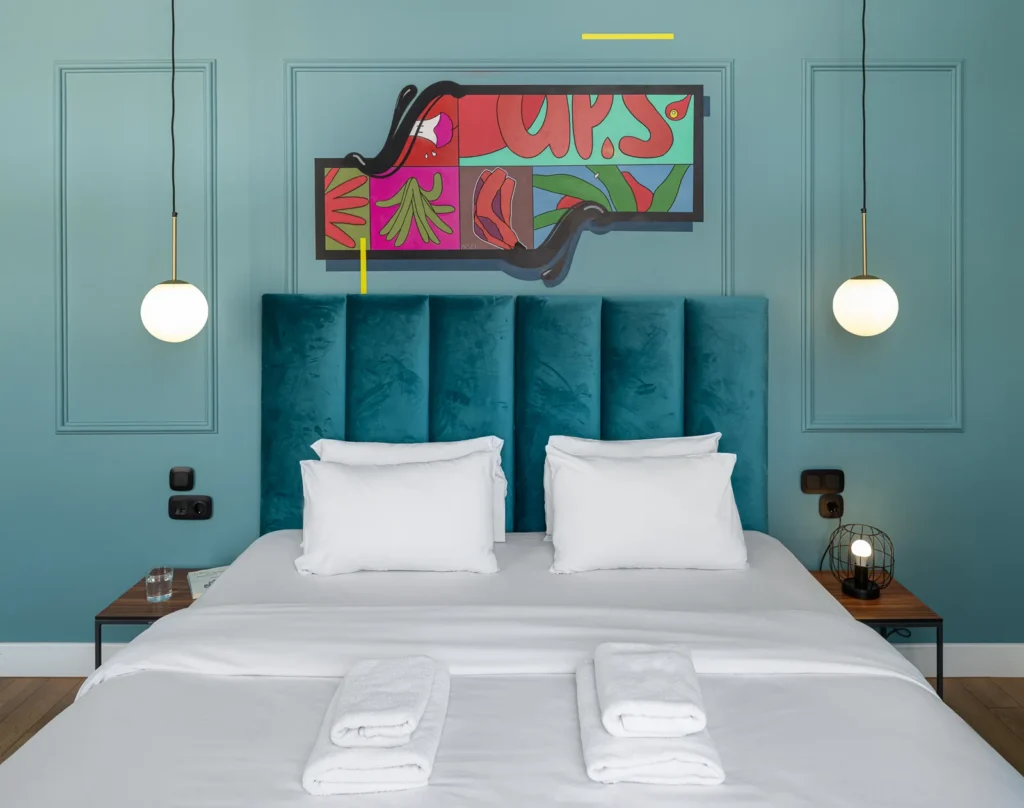
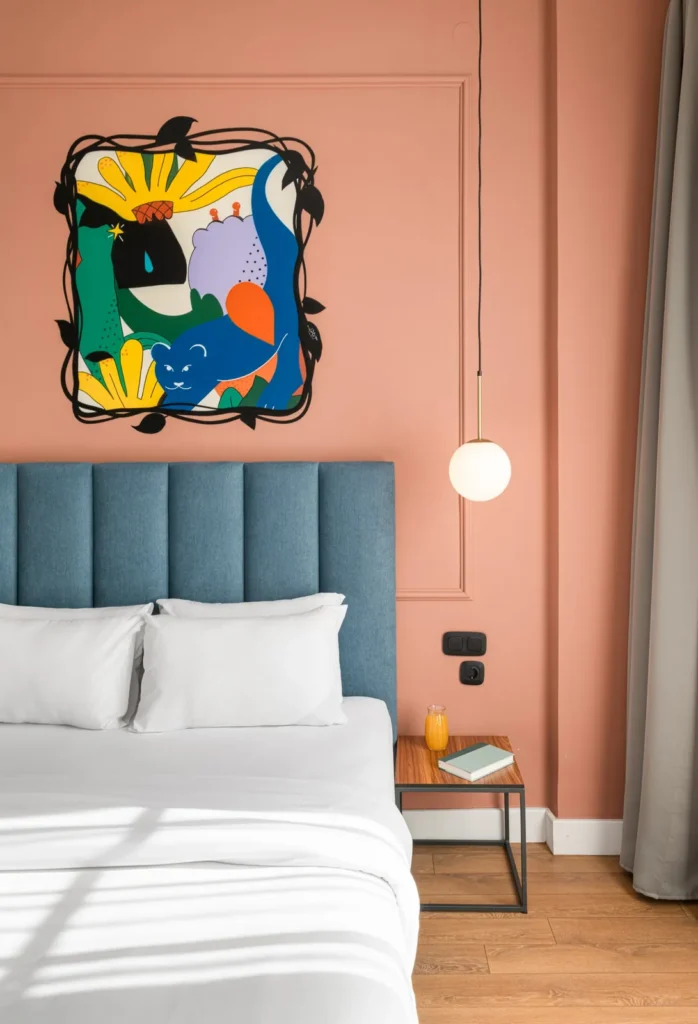
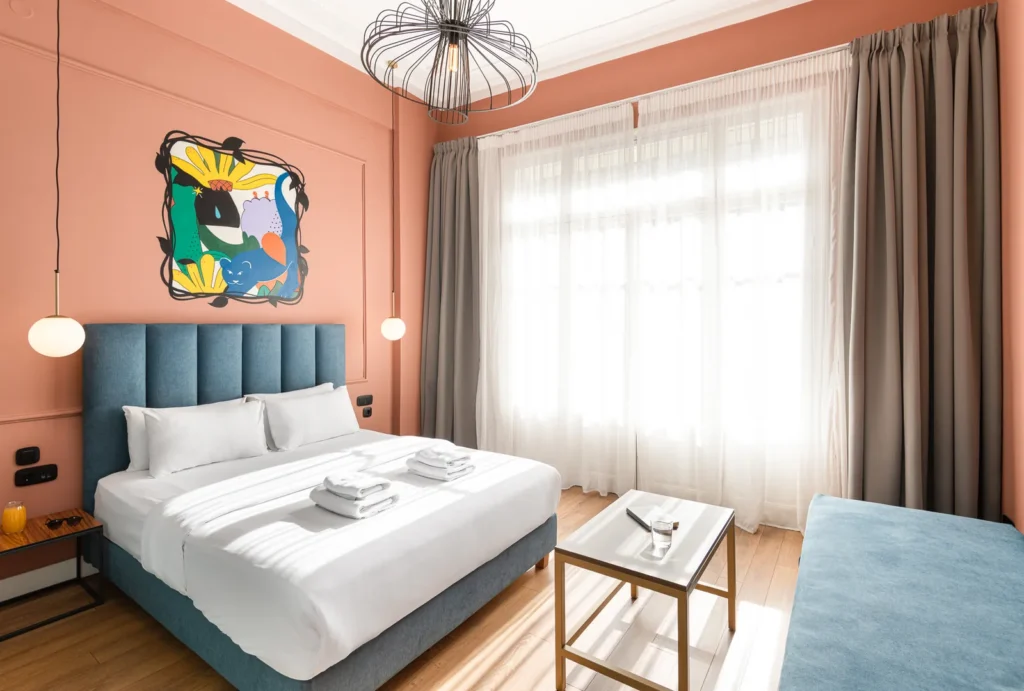
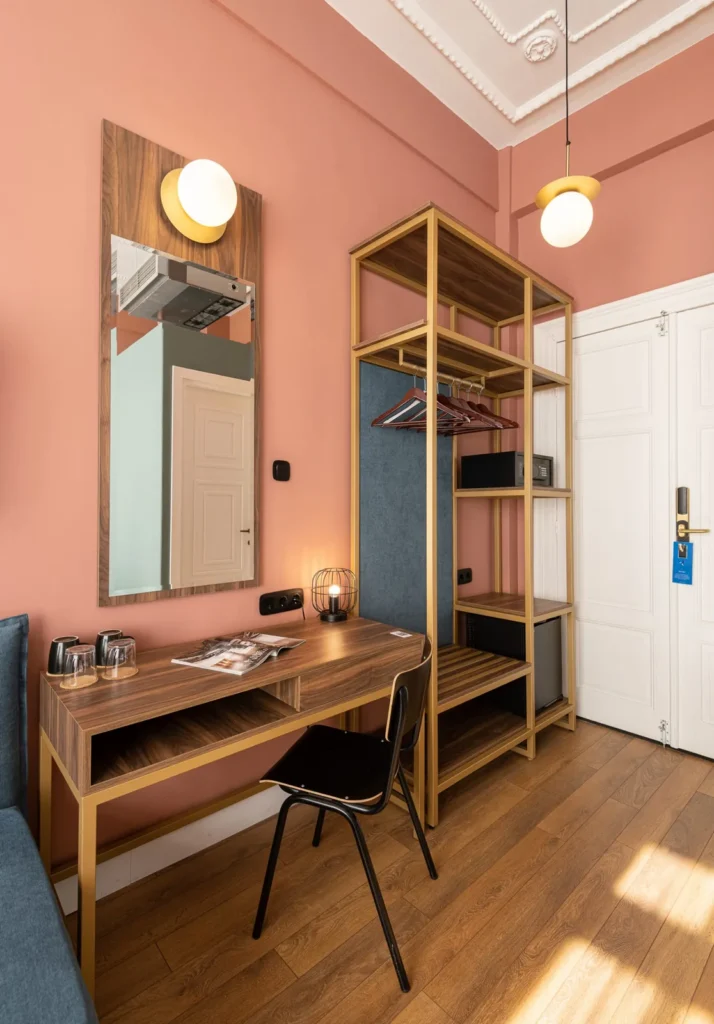
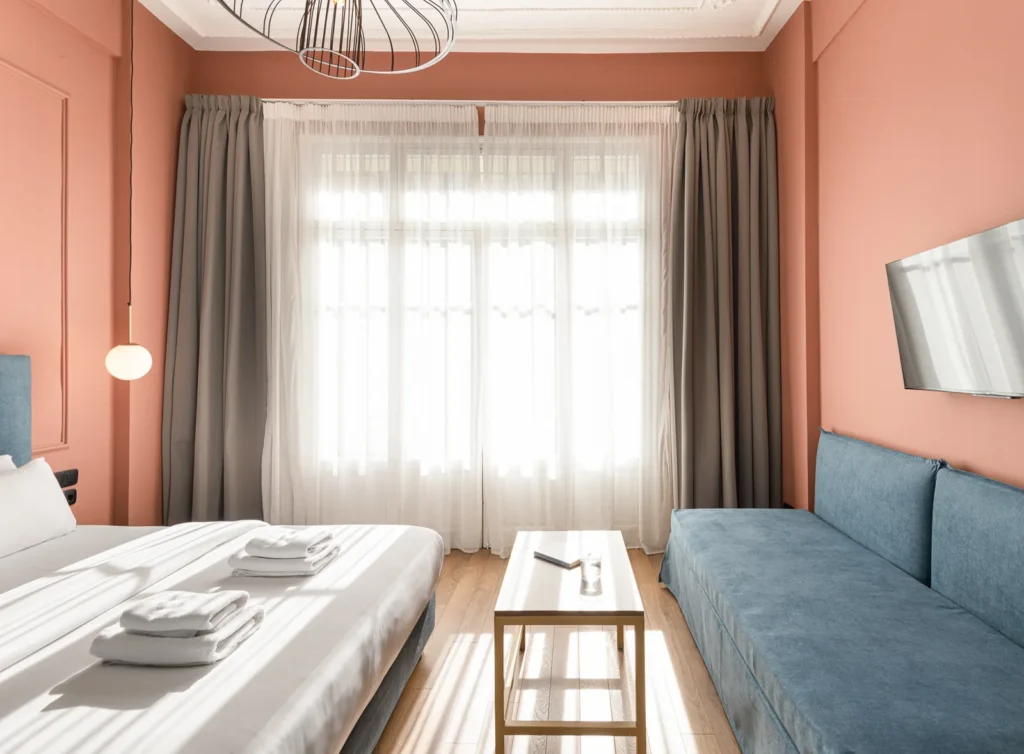
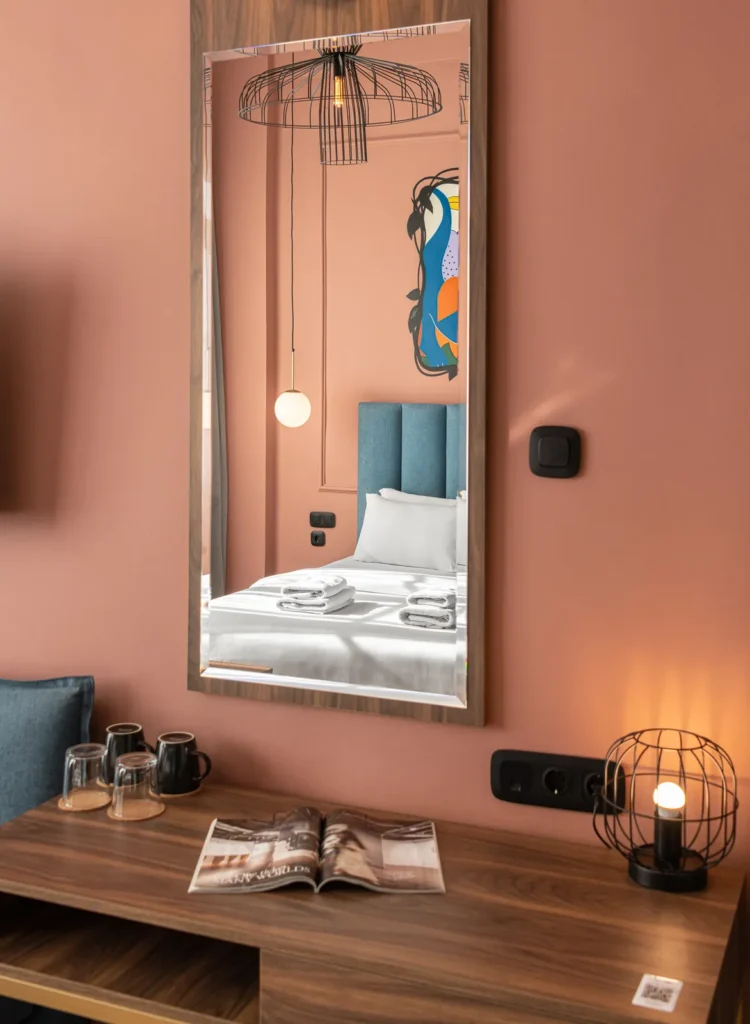
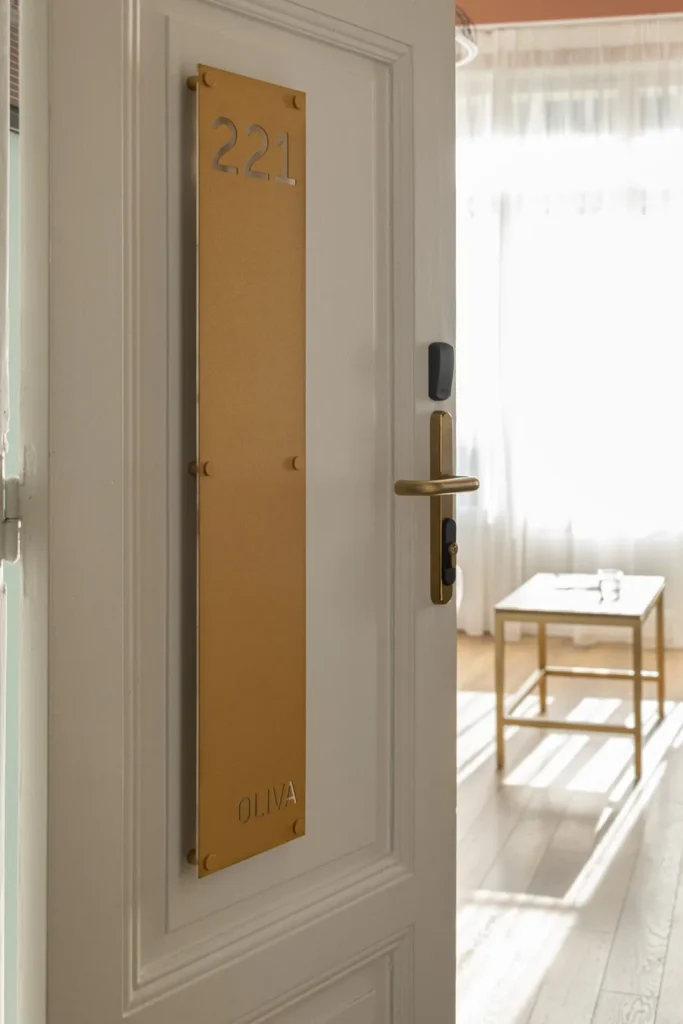
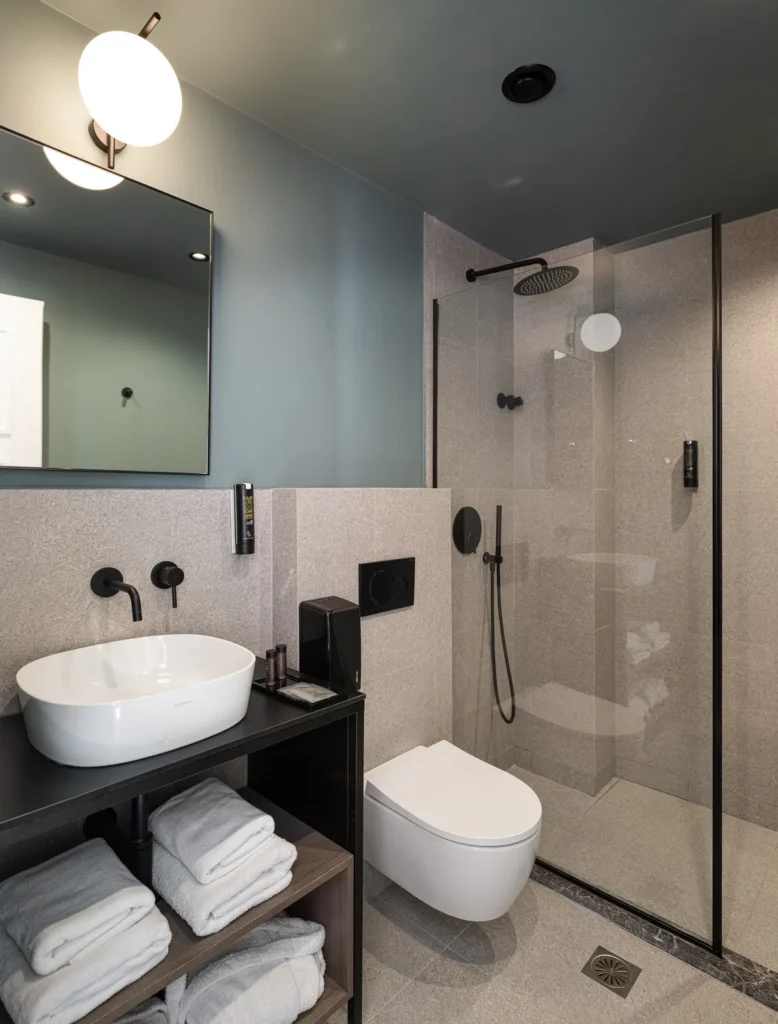
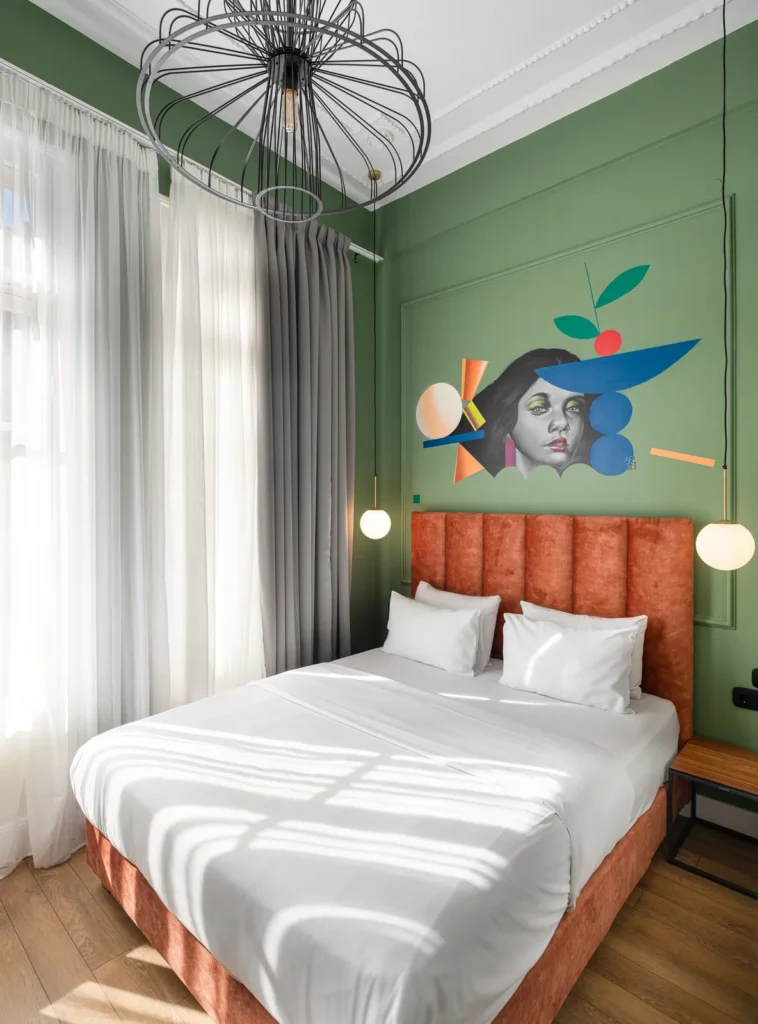
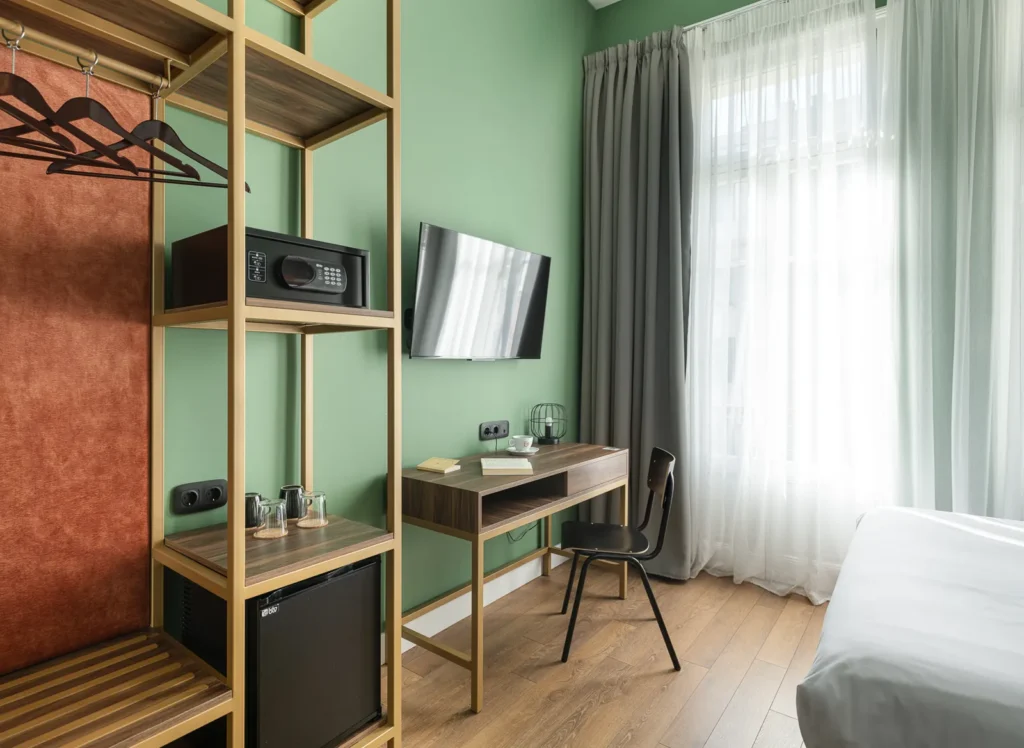
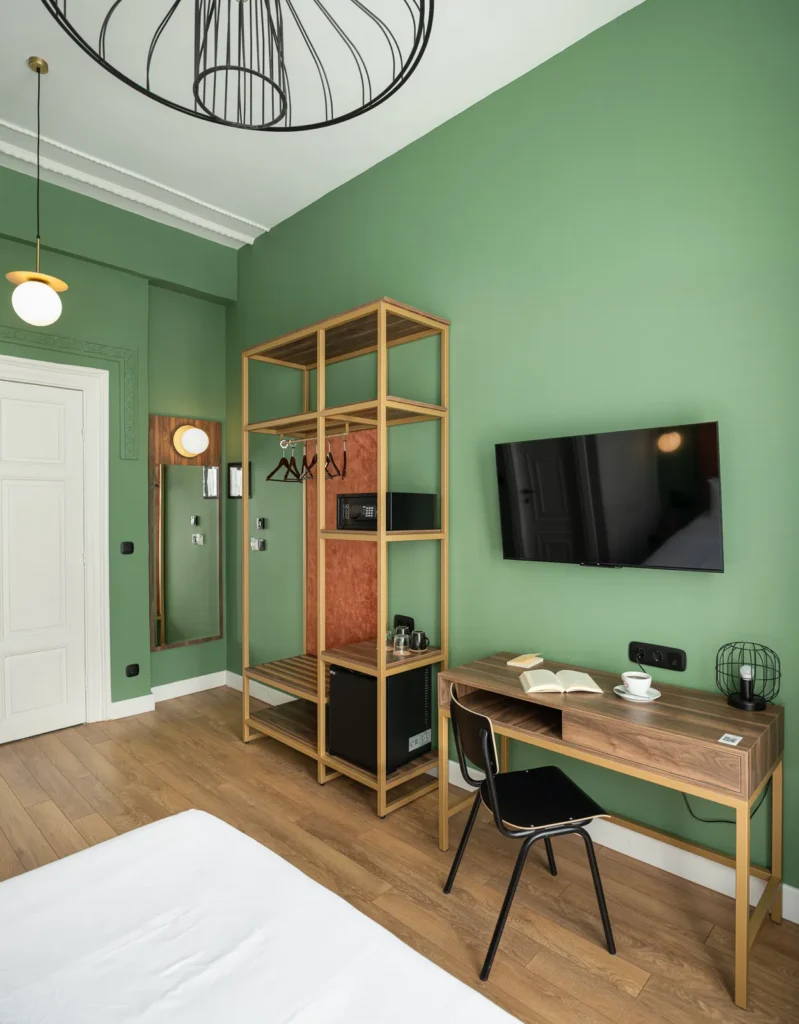
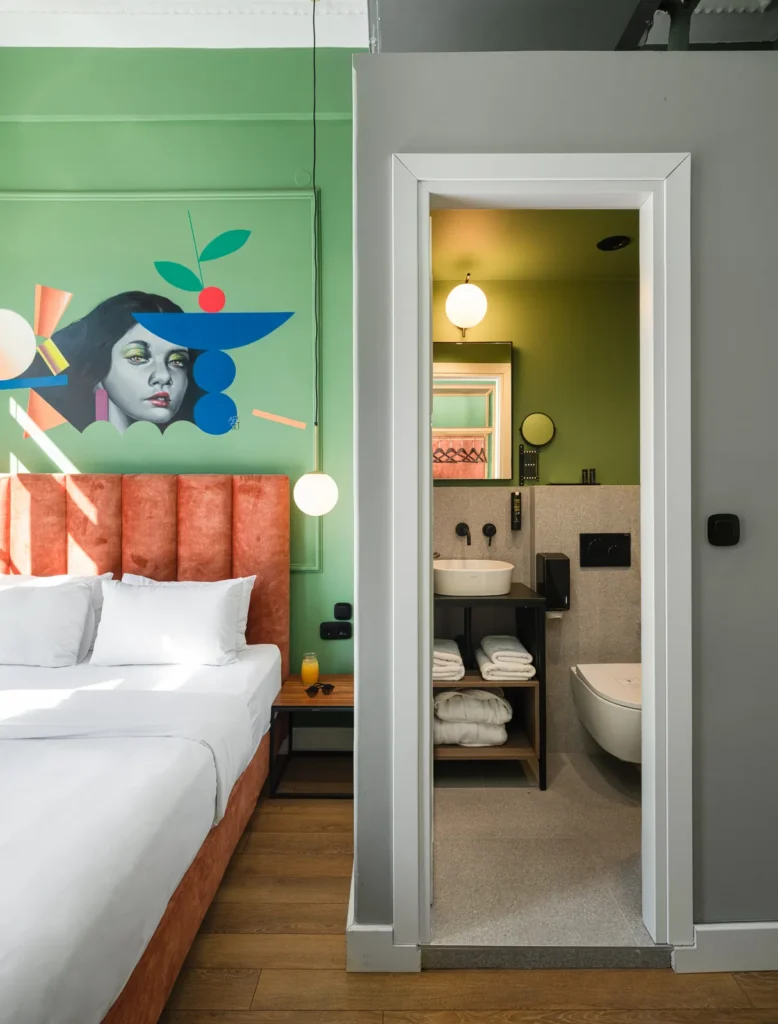
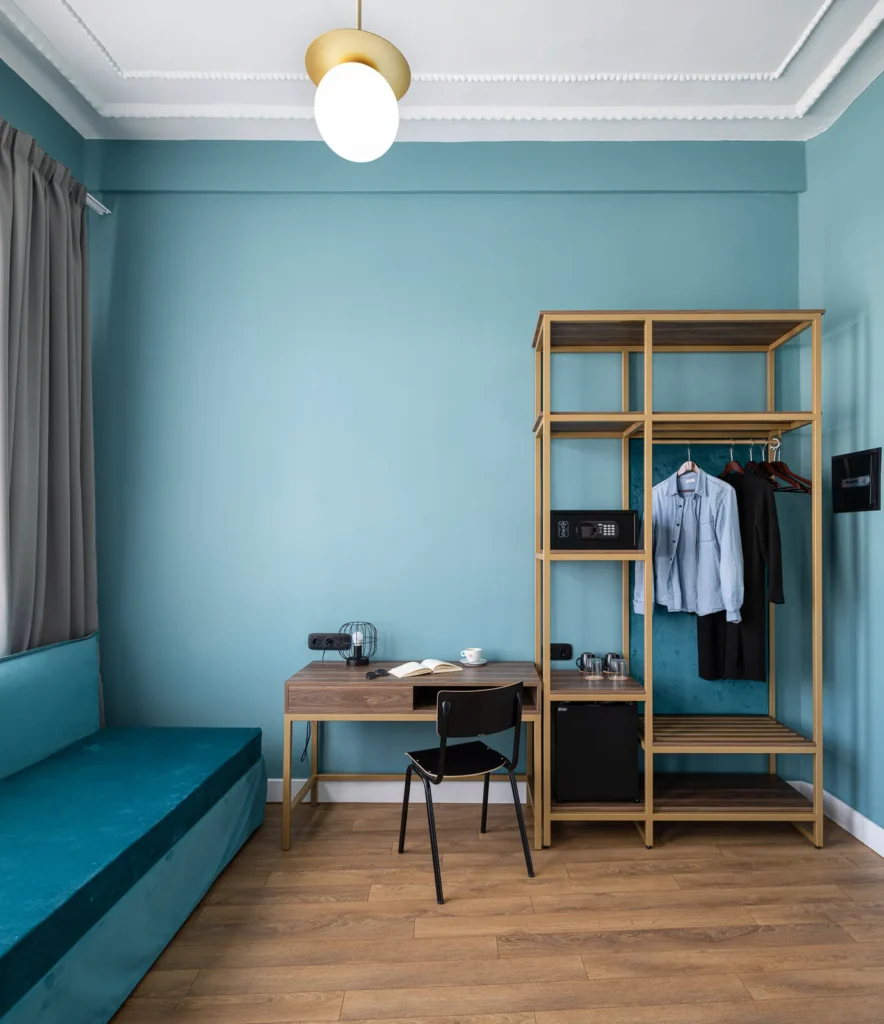
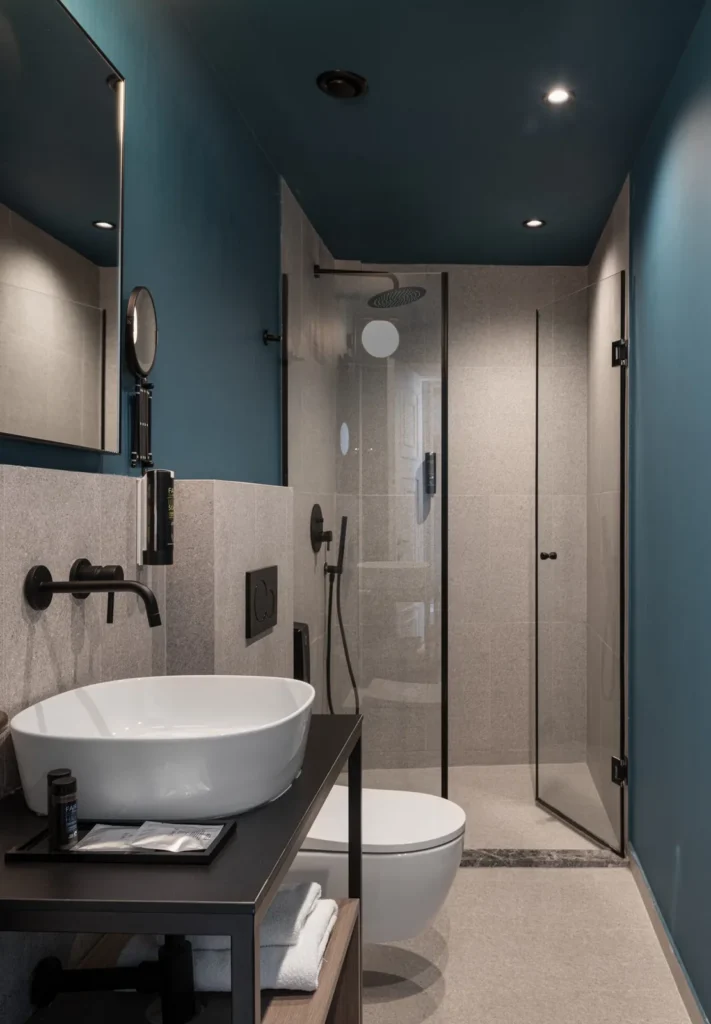
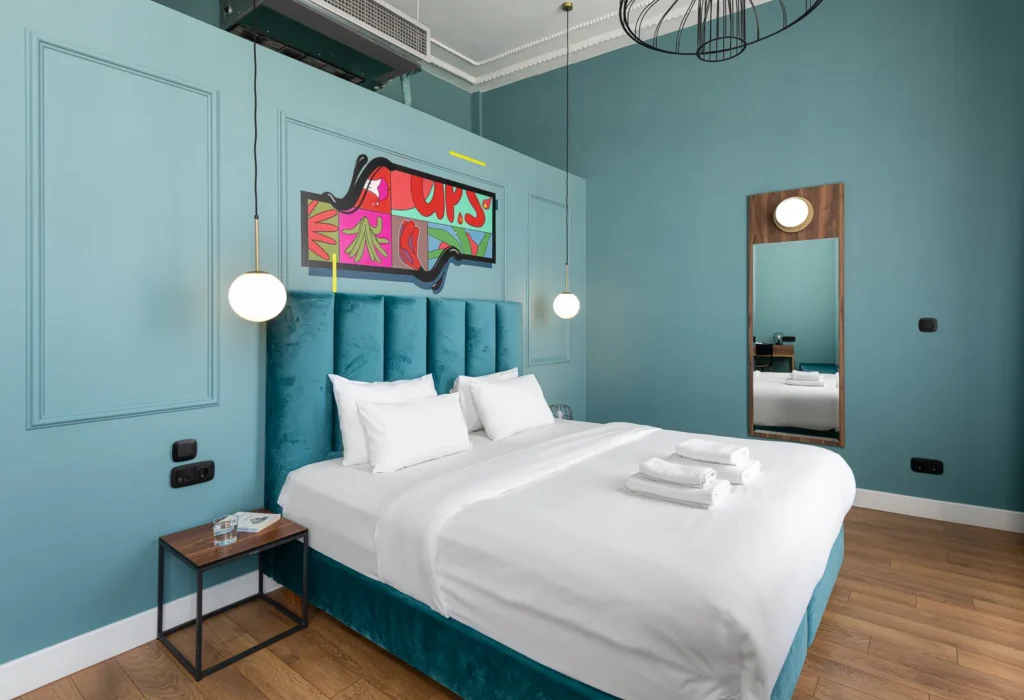
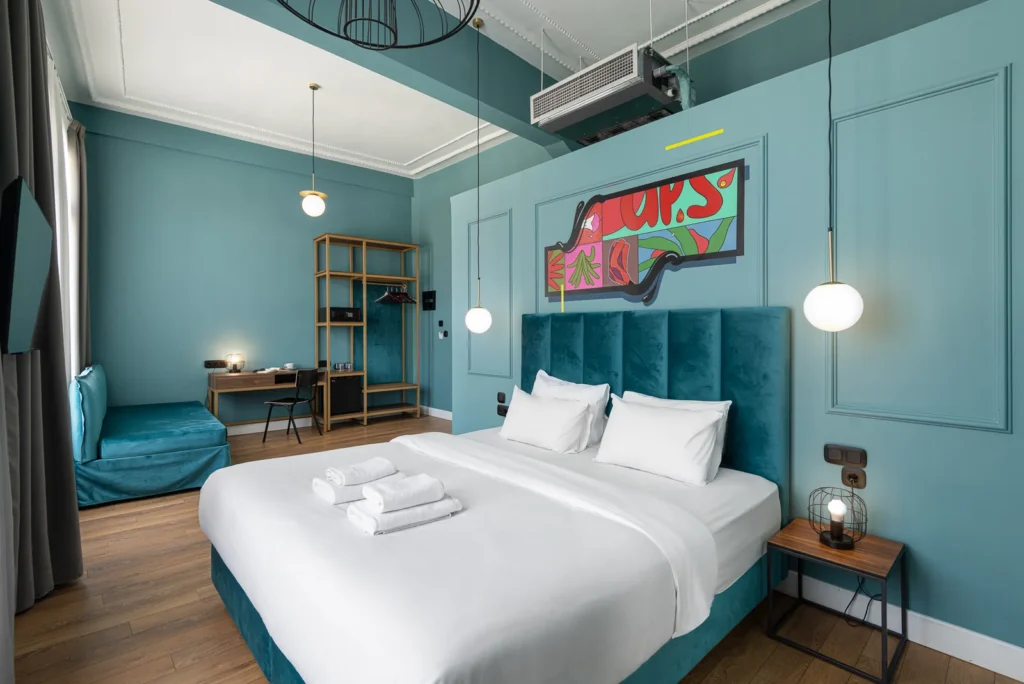
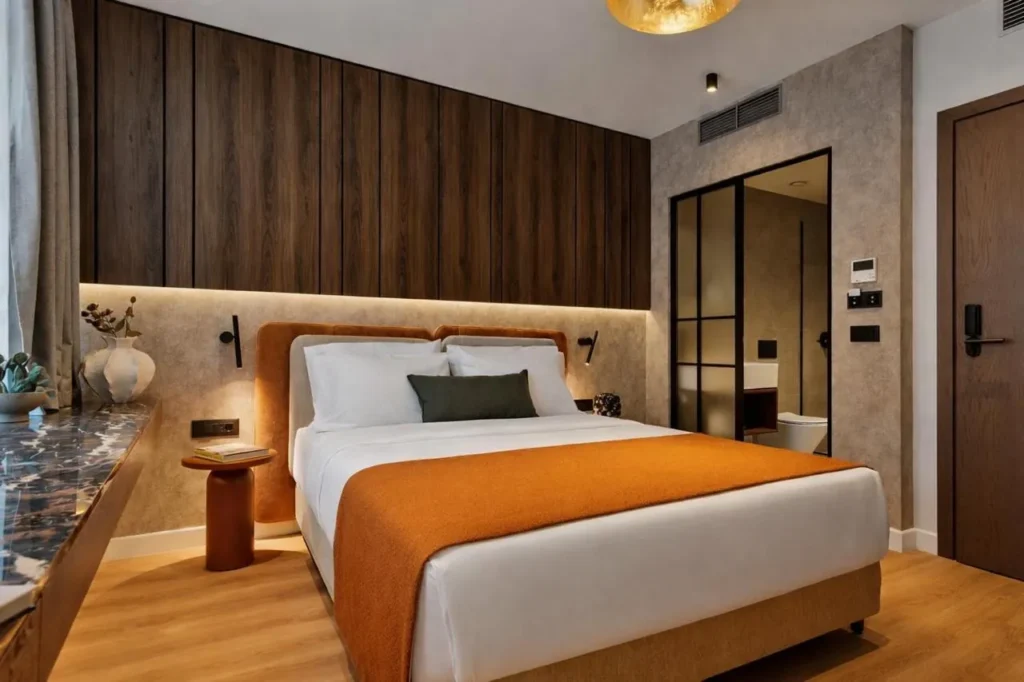
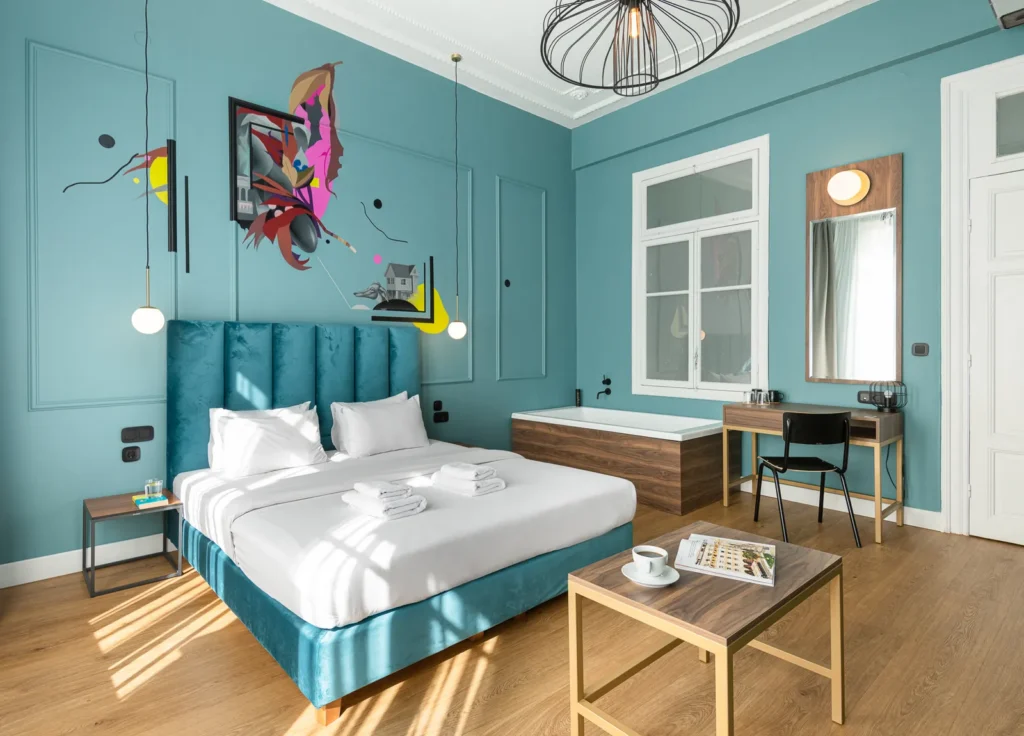
Guest rooms are conceived as individual design compositions rather than standardized units. Each room features bespoke furniture crafted from metal and wood, designed specifically for its spatial configuration. This tailor-made approach reinforces the hotel’s identity while allowing variety and personalization to become central design tools. From the vibrant and expressive Dream Rooms to the quieter, more compact Medium rooms, each typology responds to different modes of urban living—whether leisure, rest, or business travel.
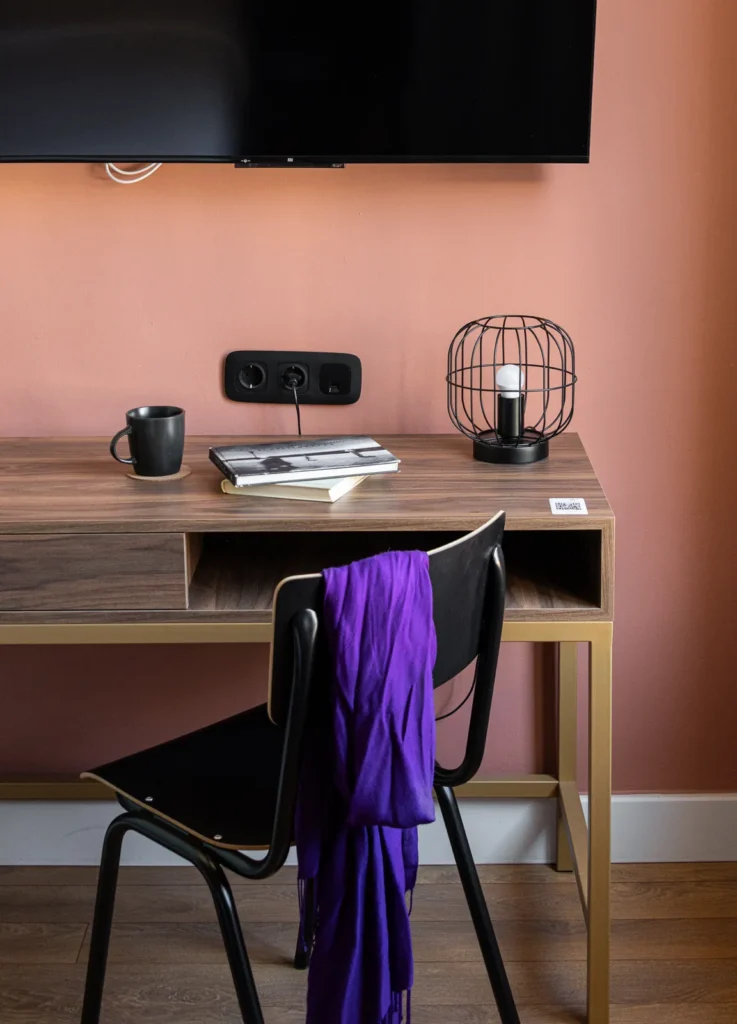
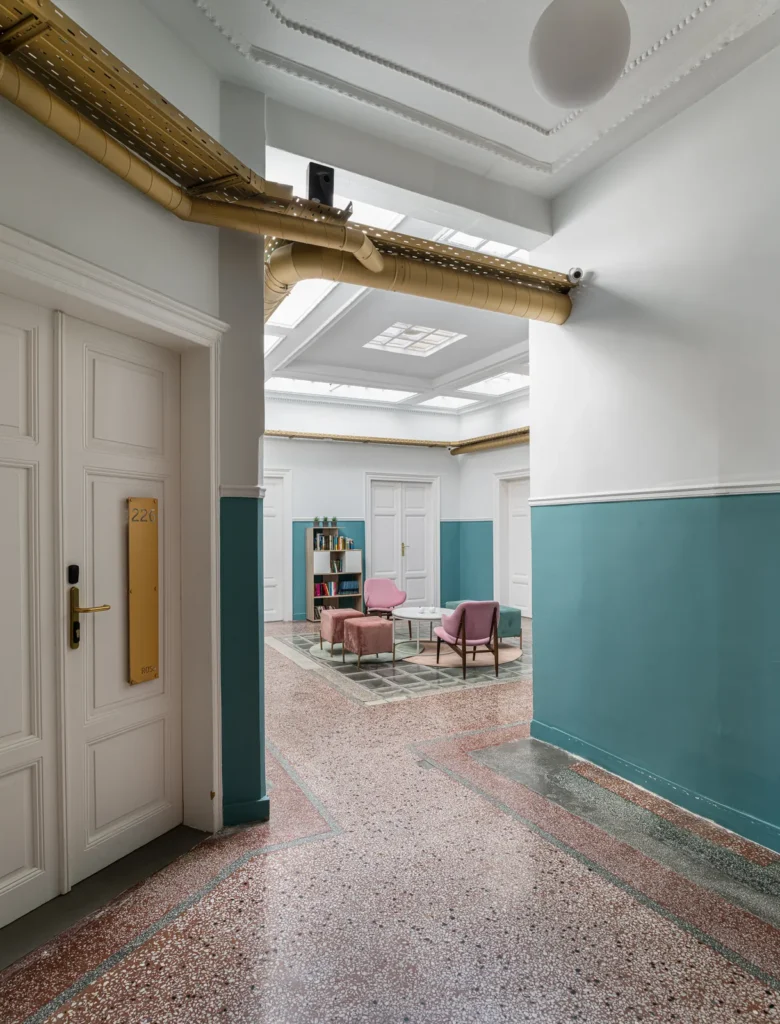
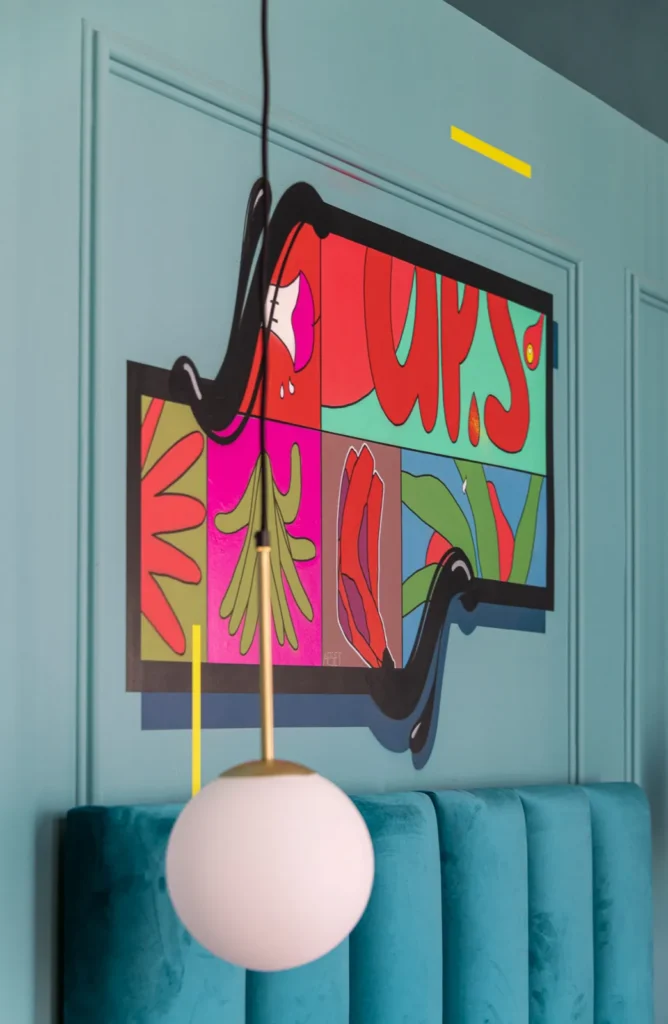
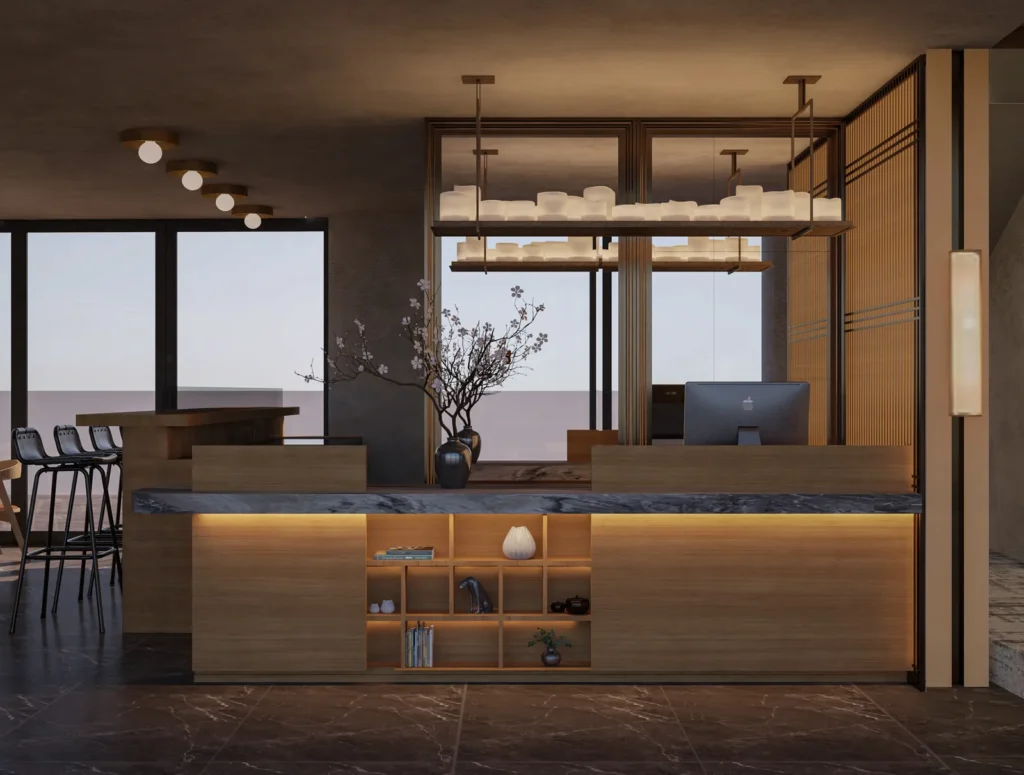
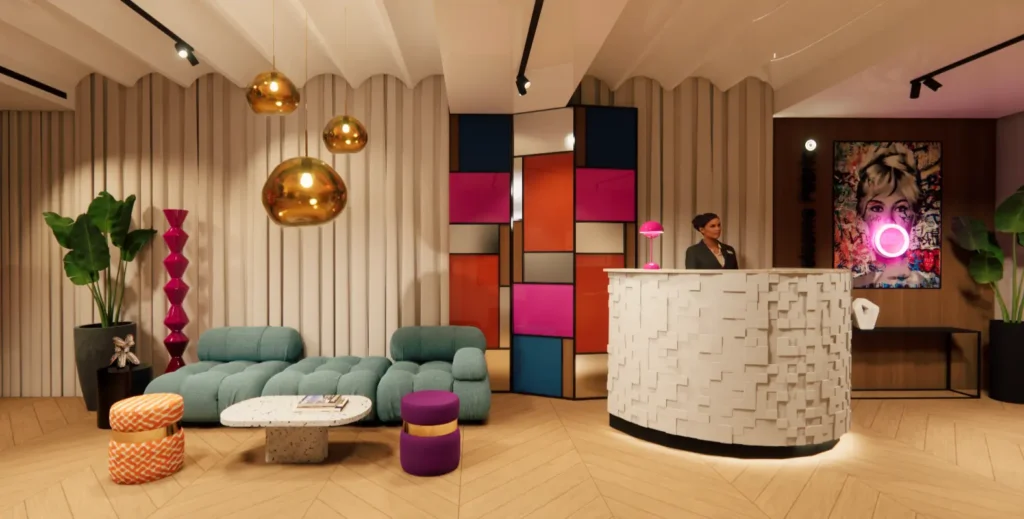
The overall design strategy reflects the evolution of the COLORS brand, expanding its modest, functional roots into a more refined yet still expressive architectural language. Strong color contrasts remain essential, but are now disciplined through material differentiation, spatial hierarchy, and graphic design elements that vary from room to room.
Colors Urban Hotel Thessaloniki emerges as a layered architectural project—where heritage preservation, contemporary design, and graphic identity converge to create a dynamic, experiential urban hotel.