Skip to content

A residential perspective from THE ARDE STUDIO®
There is a particular kind of space that does something unusual to you. You walk in and feel immediately at ease, without quite knowing why. The light falls in a way that seems obvious, yet you couldn’t have predicted it. The proportions of the room allow you to breathe. You move through it without hesitation, as though the layout anticipated you. Nothing is shouting for your attention. And yet, everything is exactly right.
This is what good residential architecture feels like from the inside. And the reason most people can’t explain it is the same reason it works: it has absorbed itself completely into the experience of living.
At THE ARDE STUDIO®, we have built a practice around this idea — that architecture is not a visible product you purchase, but a process of thinking that eventually disappears into your daily life, quietly improving it in ways you stop noticing because they become natural. When we design a residence, the goal is never for the building to announce itself. The goal is for the people inside it to feel, over time, that it could not have been any other way.
The Problem with Visible Architecture
Most people, when they commission a home or a residential building, are thinking about what it will look like. This is understandable. Images are how we communicate design before it exists. Renderings, references, mood boards — they all traffic in appearance. And appearance matters, genuinely.
But appearance is the easiest part to get right. And it is often the first thing that ages.
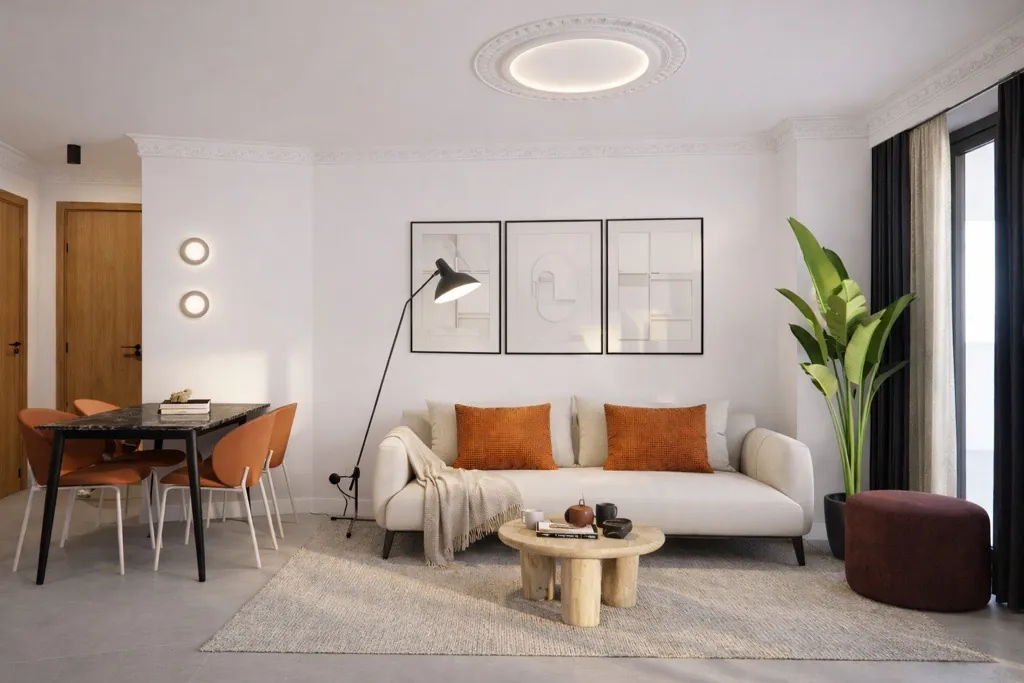
What doesn’t age is the quality of the light in the kitchen at seven in the morning. The way the bedroom feels at the end of a long day — calm, contained, separate from everything outside. The ease with which the living space opens toward the terrace in summer and closes quietly inward in winter. These are the things that define whether a home actually works — not for a photographer on a Tuesday afternoon, but for the person who wakes up inside it every day for the next twenty years.
This is the challenge that residential architecture poses to any serious studio: to design not just what is seen, but what is felt. Not just what photographs well, but what lives well.
What Defines a Well-Designed Home
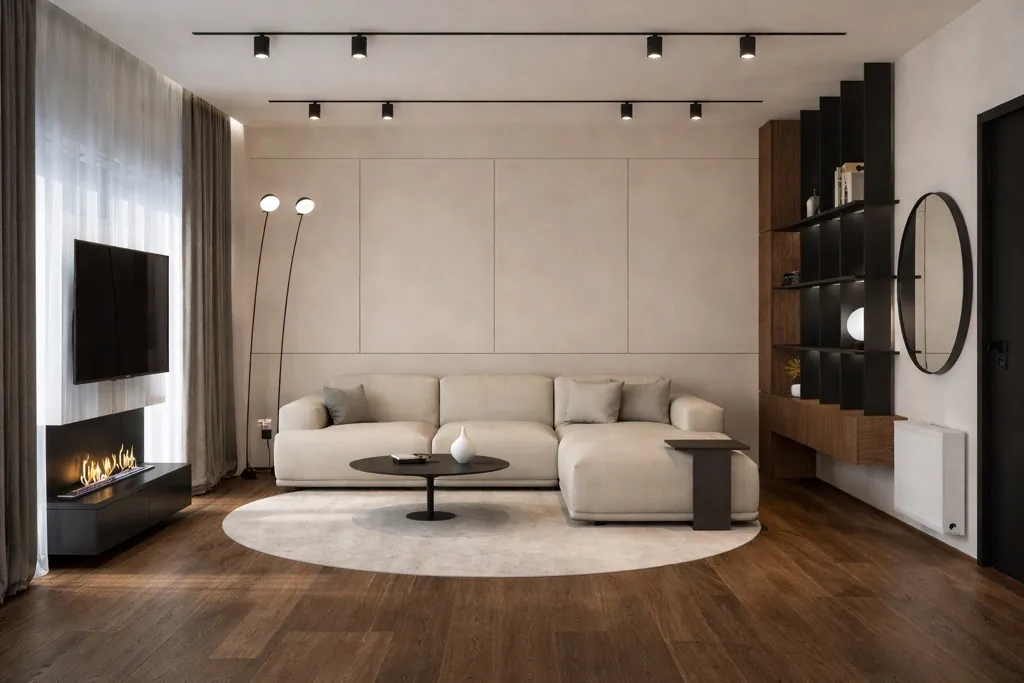
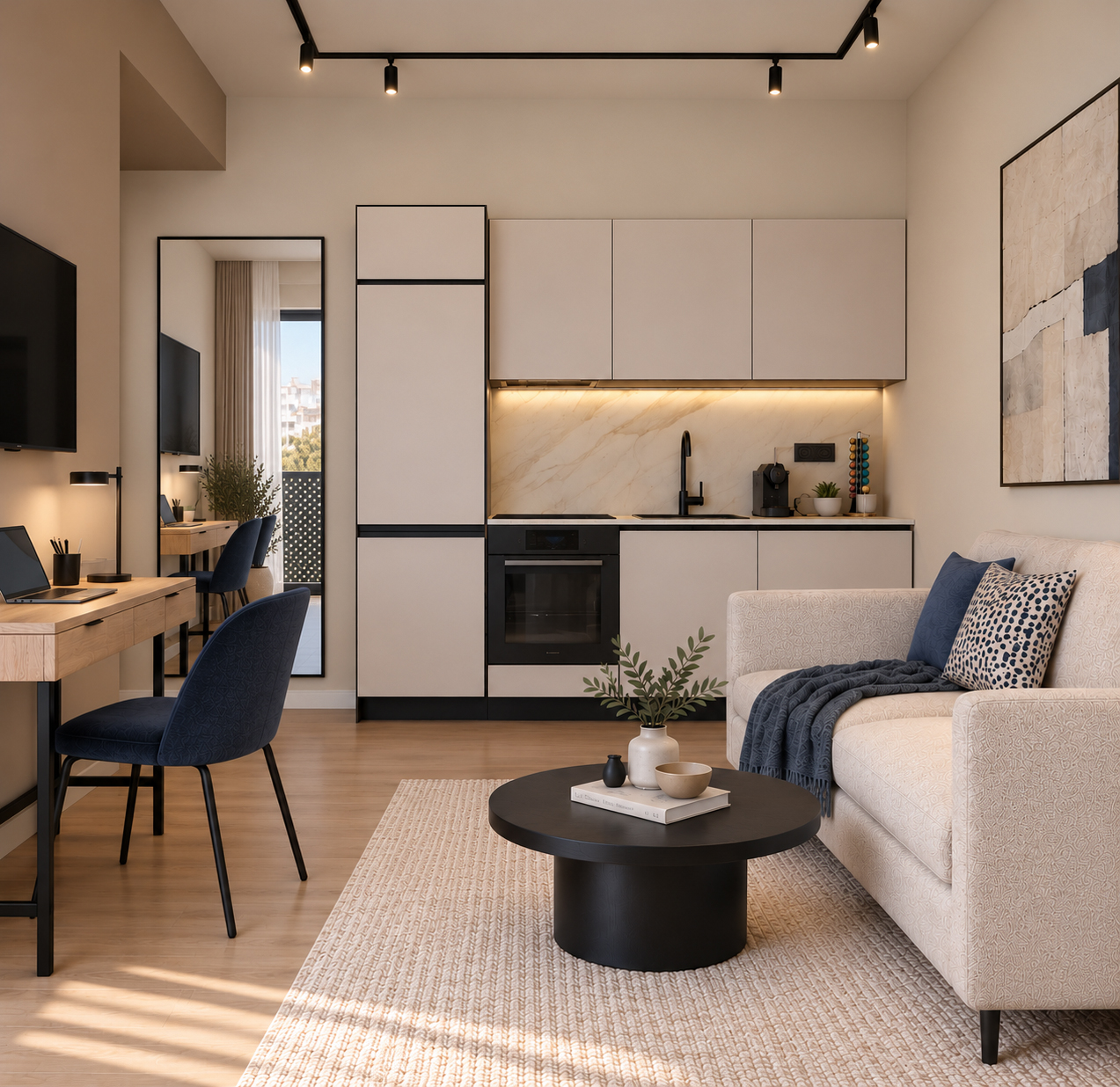
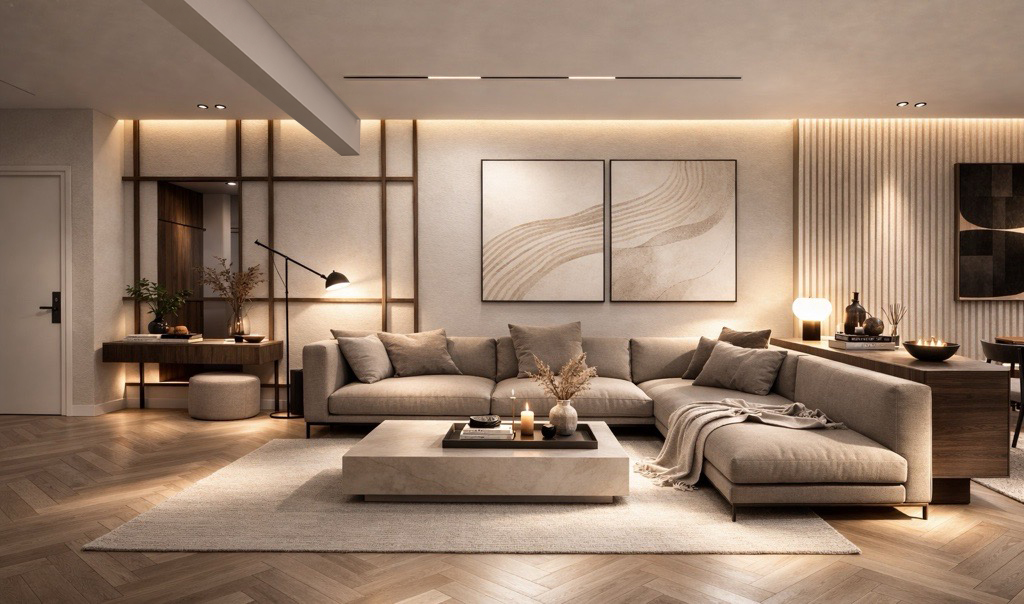
This is a question we return to constantly in our practice. Not because the answer changes, but because the specific response does — every site, every client, every program requires its own precise version of the same underlying principles. After years of working across contexts — urban apartment buildings in Athens, private villas in the Greek landscape, renovations of heritage structures in Thessaloniki — we have arrived at a set of convictions that guide every residential project we take on.
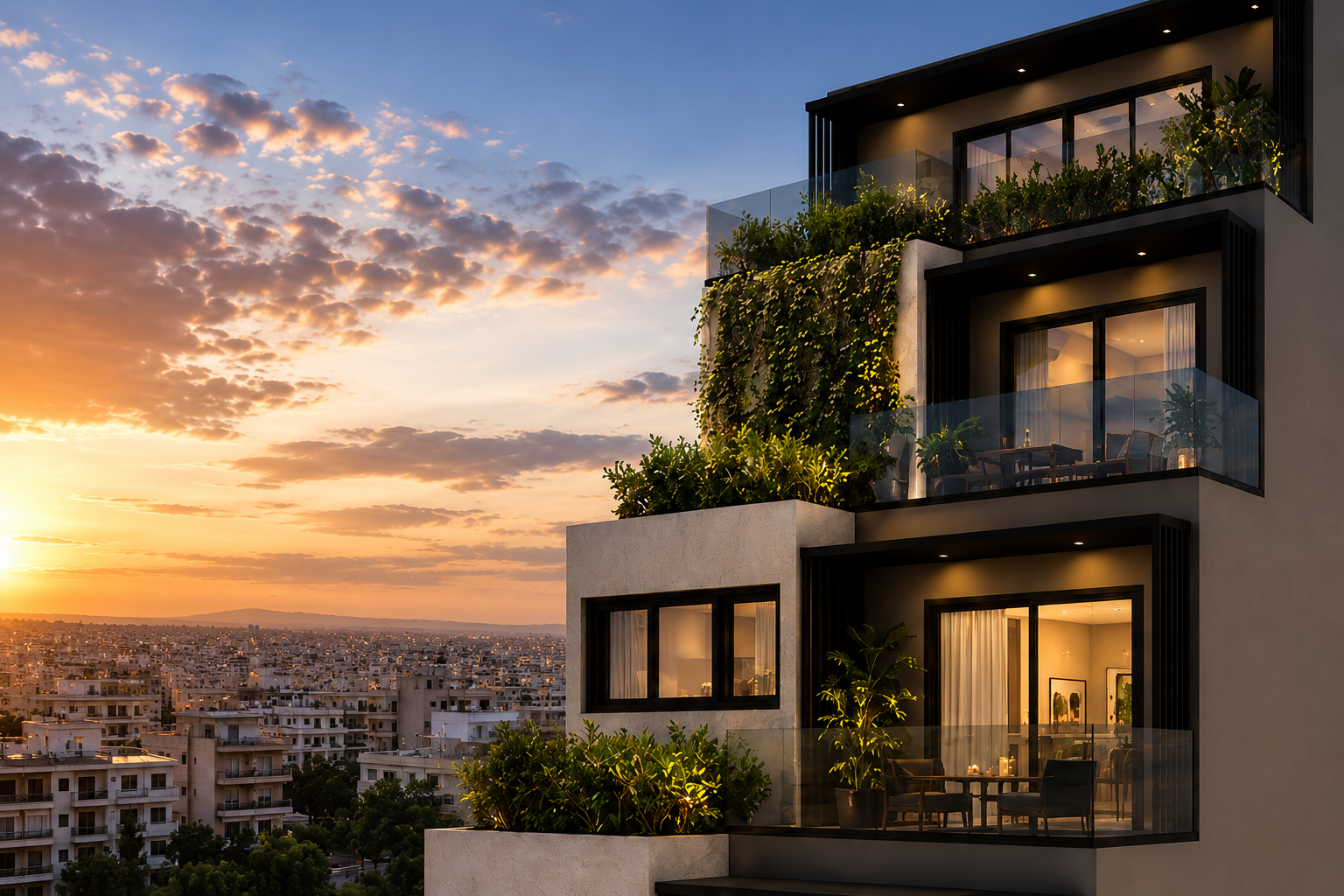
1. Natural light is not a detail — it is the primary material. Before we discuss finishes, before we discuss furniture or palette, we study how light moves through a space over the course of a day and across seasons. Light is what makes a room feel generous or compressed, warm or cold, alive or inert. In our Urban Frame Residence in Pagkrati, Athens, large openings and extensive glazing were not aesthetic choices — they were spatial decisions, designed to maintain visual continuity between interior and exterior and to ensure that every living environment within the building receives meaningful natural light throughout the day. A home that is lit well costs the same to build as one that isn’t. The difference is entirely in how it is designed.
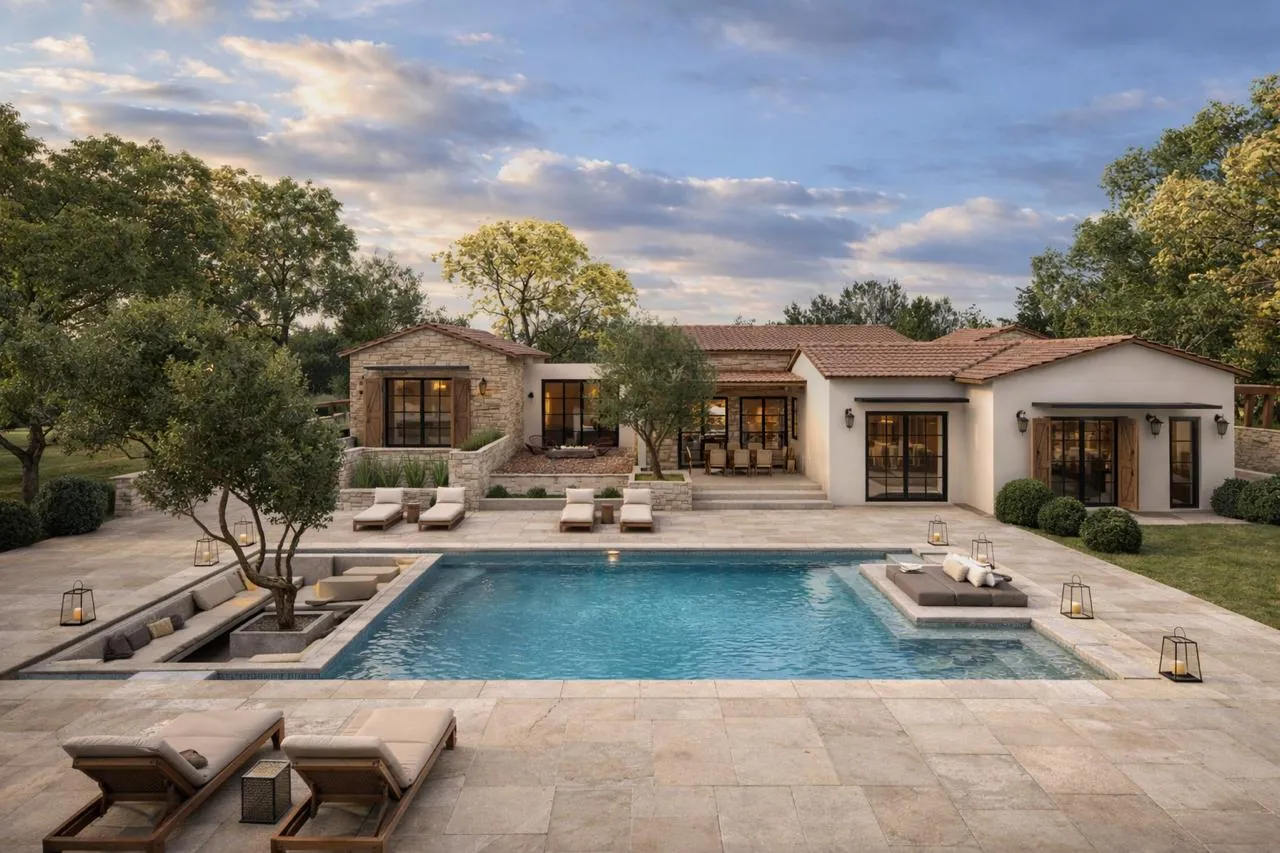
2. The boundary between inside and outside must be resolved, not compromised. The best homes are not sealed containers. They are spaces that know precisely when and how to open — and when to protect. In our Casa Serena villa in Drama, set within a 6,500-square-metre landscape, the architecture operates as a series of low-rise volumes that follow the natural terrain. Shaded terraces, pergolas, and carefully placed openings create a seamless transition between interior and outdoor living, so that the landscape itself becomes part of the everyday experience. This is not a luxury exclusive to villas. Urban residences achieve the same effect through balconies designed as genuine extensions of the interior, through recessed facades that filter light while preserving privacy, through a deliberate relationship between the building and its street edge. The question is always: where does the inside end and the outside begin — and is that boundary serving the people who live here?
3. Spatial clarity matters more than spatial complexity. More rooms, more features, more square metres — these are the instincts that lead to homes that feel exhausting to live in. What we find, consistently, is that the homes people love most are those in which every space has a clear purpose, a clear proportion, and a clear relationship to the spaces around it. Complexity without intention is noise. The discipline of restraint — of deciding what a room needs to do and then designing precisely for that — is what creates spaces that feel generous, even when they are not large. Clarity is the real luxury.
4. Material choices are long-term decisions, not cosmetic ones. The materials in a home will age. They will be touched, cleaned, marked by use, exposed to weather. The question is whether they age well — whether the passage of time makes them richer or merely tired. Natural stone, timber, textured concrete, clay: these are materials that develop character over time. They connect a residence to its place and climate. They improve thermal comfort. They do not require constant replacement. In both our urban residential projects and our villa work, we return repeatedly to a material vocabulary that is honest about what it is, durable in how it performs, and warm in how it feels. This is not nostalgia — it is precision.
5. Environmental performance is embedded in the design, not added to it. Passive shading strategies, cross-ventilation, optimized orientation, pilotis that allow airflow at ground level — these are not sustainable credentials to be listed in a brochure. They are design decisions that directly determine whether a home is comfortable to live in across all seasons, and what it costs to run year after year. In the Urban Frame Residence, the projecting frames and recessed balconies function simultaneously as sun-shading devices and spatial extensions of the interior. The environmental strategy and the architectural expression are the same move. This integration is always available — but it requires thinking about a building as a system, not as a collection of individual decisions.
6. Acoustics shape how a space feels, even when you don’t notice them. We rarely talk about sound in the way we talk about light or material, but it governs the character of a space just as decisively. A home that transmits every sound from adjacent apartments or from the street is a home in which you can never fully rest. Conversely, a room with the right acoustic mass — thick walls, soft surfaces in the right places, considered layout — creates a sense of calm that residents experience as comfort, without being able to name its source. In dense urban contexts especially, the management of sound is not a technical afterthought. It is part of what separates a residence that is liveable from one that merely looks good in photographs.
7. Circulation is the invisible architecture of daily life. The way you move through a home — how you enter, how private spaces are separated from shared ones, whether the kitchen feels connected to or isolated from the rest of the living area, how children can move independently while adults have their own quiet — these are questions of circulation. And yet circulation is almost never what a client asks about when they first describe what they want. It is, however, almost always what determines whether a home feels right to live in day after day. A well-resolved circulation plan is one you never think about. A poorly resolved one is something you feel every morning.
8. Scale is felt in the body, not measured on a plan. A room’s dimensions on paper tell you almost nothing about how it will feel to be inside it. Ceiling height relative to floor area, the proportion of a window opening relative to the wall it sits in, the depth of a corridor, the size of a threshold — these are the calibrations that determine whether a space feels human, monumental, intimate, or cramped. This is why residential architecture requires physical intuition as much as technical knowledge. The capacity to anticipate how a body will experience a space — not how a plan will read — is one of the rarest and most important skills in the discipline.
9. A home must be able to change. The family that moves into a residence is not the same family that will live in it five or ten years later. Children arrive, grow up, leave. Work patterns shift. Relationships evolve. A home designed with rigid specificity — every room locked into a single function, no capacity for reinterpretation — will eventually fight the life being lived inside it. Good residential design builds in a degree of spatial generosity: rooms with proportions that allow for multiple uses, layouts that can absorb change without requiring structural intervention, storage that is genuinely adequate. Adaptability is not a compromise on design quality. It is a form of long-term respect for the people the building serves.
10. The threshold between public and private is one of the most important design decisions in any residence. How a home is entered — what it offers to the street, how it manages the transition from the world outside to the life inside — establishes the entire psychological register of the building. A poorly designed entrance creates a sense of exposure or abruptness. A well-designed one creates a sense of arrival: a moment of decompression, a shift in atmosphere, a feeling that you have genuinely left the outside behind. In urban buildings this transition happens in millimetres — in the design of a lobby, a corridor, the positioning of a door. In a villa it operates across the entire approach sequence. In both cases, the quality of that threshold shapes how the home is experienced from the very first moment of entering it.
A well-designed home is not defined by any single element. It is the result of dozens of decisions — about light and material, about sound and scale, about how spaces connect to each other and to the world outside — all made with the same underlying intention: to create an environment that serves the life being lived within it, precisely and durably, over time.
The ten principles above are not a checklist. They are a way of thinking. Each project The Arde Studio takes on applies them differently, because every site is different, every client is different, and every life that will unfold inside a building is different. What remains constant is the rigour of the question: not what will this look like, but what will it be like to live here — in ten years, not ten days after handover.
This is the standard we hold ourselves to. And it is the standard we believe every person commissioning a residence — whether a private home or a building designed to offer others a place of rest — deserves to expect.